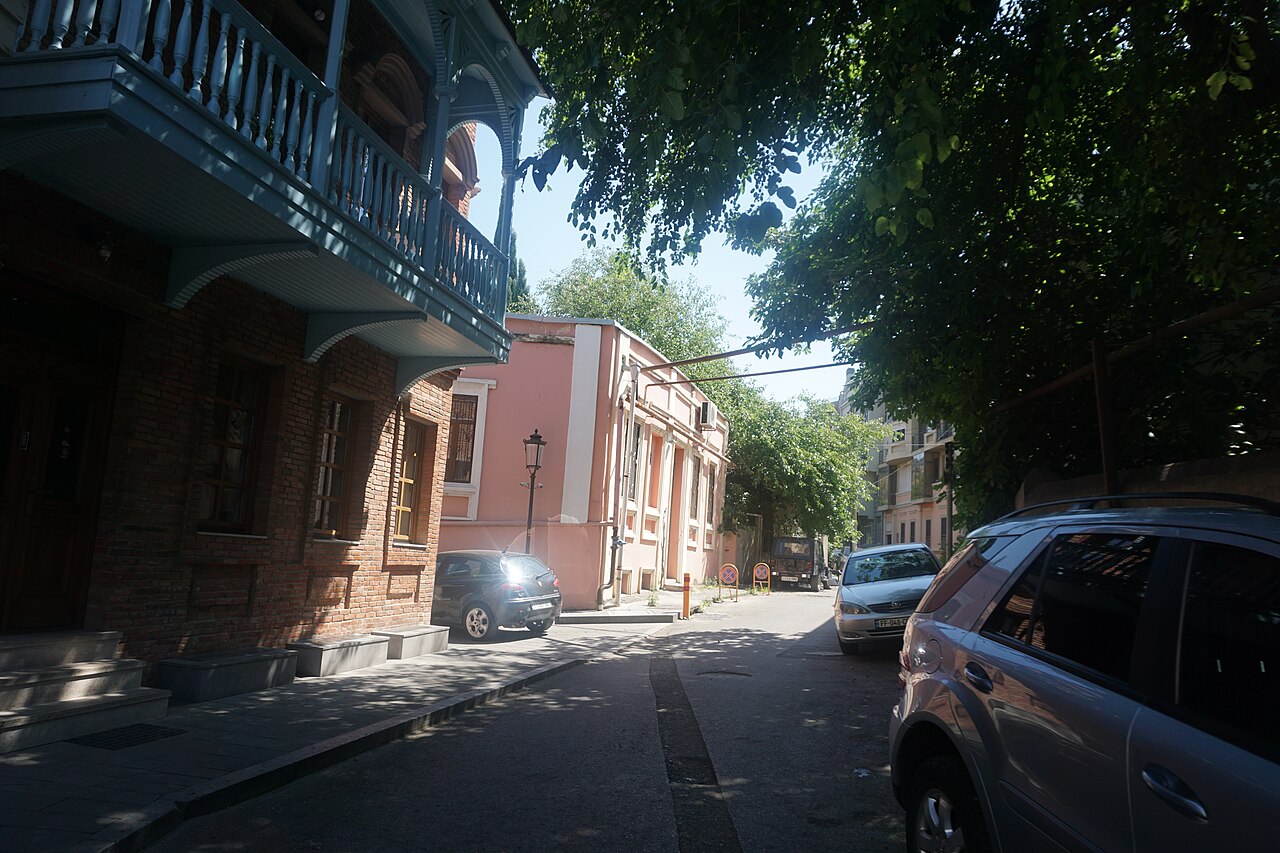
Book Sololaki, or the upper edge of the Old Town, if this is your first trip to Tbilisi. Marjanishvili and Fabrika if you came for the bars, Vera if you want quiet streets and the best everyday eating in the city, and Vake only if you are staying long enough that a fifteen-minute drive to the sights stops mattering.
One thing to settle before anything else. Rustaveli Avenue, the address most first-timers reach for, is dug up: vehicle traffic on the two-kilometre stretch between Tamar Chovelidze Street and Freedom Square was closed on 23 July 2026 for a four-month rebuild of the underground utilities, due to finish around the end of November, checked August 2026 against Civil Georgia. Hotels there are open and reachable on foot. Getting a taxi to the door is another matter.
First trip, three or four nights: Sololaki over the Old Town
Sololaki’s flaw is the hill. Amaghleba and Lermontov climb steadily, the pavements are patchy, and dragging a wheeled case up from Freedom Square after a 4am landing is the kind of thing you only do once before switching to a Bolt for the last 400 metres. A second flaw, less obvious in photos: some of those magnificent 1880s stairwells with painted ceilings lead to flats nobody has touched since 1985. Read the interior photos, not the entrance-hall ones.
What the hill buys is silence. The bar noise stops about three streets below you, Freedom Square is a five-to-ten-minute walk downhill, and the neighbourhood has quietly picked up most of the city’s better small coffee places. It suits couples, second-time visitors who found the Old Town exhausting, and anyone who plans to be out by 9am. The name that surfaces most often in the mid-range design bracket here is Communal Hotel Sololaki, in a restored house a few minutes off the square.
The Old Town’s flaw is louder and more literal. Bars on Shardeni and the lanes below the sulfur baths run past 2am on Fridays and Saturdays, restaurant touts work the main streets from about six in the evening, and the cobbles that make the district photogenic are genuinely hostile to luggage and to anyone with a dodgy knee. Weekend day-trippers from Armenia and Azerbaijan fill it out further.
Accept all that and you get the shortest walk in the city to Narikala, the baths, Rike Park and the cable car. It works for two-night stays where every extra ten minutes of walking matters. The best-known upper-tier stay in the district is Vinotel, thirteen rooms in an 1880s merchant house with a wine cellar under it.
Our advice: stay in the Old Town only if you will be out most evenings anyway. If you plan to sleep, walking 400 metres uphill into Sololaki is the cheapest upgrade available in Tbilisi.
Here for the bars: Marjanishvili and Fabrika
The Fabrika courtyard does not stop. On a Friday it is still going at four in the morning, and the sound bounces off the old factory walls straight into any room facing in. Beyond the courtyard, the left bank around Marjanishvili is scruffier than the right — broken pavements, unlit stairwells, and a lot of fourth-floor apartments with no lift.
It is also the best-value central district in Tbilisi and the one with the densest cluster of bars, natural wine places and clubs, which our Tbilisi nightlife guide covers street by street. Marjanishvili metro puts Rustaveli two stops away, and the walk over Saarbrucken Bridge to the Old Town takes about fifteen minutes. Fabrika Hostel & Suites is the district’s social anchor, with dorms and private suites in the same converted sewing factory; Moxy Tbilisi, on Saarbrucken Square, is the mid-range brand alternative for people who want the location without the courtyard soundtrack. Book a room on the far side of the building either way — see our Tbilisi hostels roundup for which dorms are actually quiet, and the solo travel guide if you are arriving alone.
Quiet nights and better food: Vera
Vera is not a sightseeing base, and pretending otherwise is how people end up disappointed. The Old Town is a 25-minute walk or a short taxi, there are very few full-service hotels, and the stock is mostly apartments and small guesthouses on streets that climb harder than the map suggests.
The trade is straightforward: you eat better and sleep better. Bakeries, small Georgian kitchens and third-wave coffee sit within three or four blocks of each other, prices drop the moment you cross out of the tourist lanes, and nothing wakes you at 3am. Vera also holds the two stays people argue about most — Stamba Hotel, built into a Soviet publishing house with the printing machinery left in place, and Rooms Hotel Tbilisi next door, both firmly in the upper bracket. Repeat visitors keep coming back to this neighbourhood, which tells you something.
A week or longer: Vake, with one real cost
Vake is far from the sights. Ten to fifteen minutes by car to the Old Town on a clear road, closer to twenty-five at 6pm, and there is no metro station in the heart of the district, so you will be ordering taxis daily. For a three-night trip that is a bad deal.
For a fortnight it flips. Apartments are larger and newer, Vake Park and the walk up to Turtle Lake are on your doorstep, the delis and restaurants along Abashidze are among the best in the city, and the streets are wide, flat and green in a way central Tbilisi never is. Families and people working remotely settle here for a reason.
Rustaveli and Freedom Square: central, but it is the protest route
Pro-European demonstrations have gathered outside parliament on Rustaveli every evening since November 2024, passing their 630th consecutive day on 19 August 2026 according to Caucasian Knot. They are peaceful and orderly, but they close the avenue, reroute taxis and make noise, and the renovation works have pushed part of the crowd towards City Hall. Add ordinary traffic on the side streets and rooms that face the main road, and this is not the restful choice it looks like on a map.
What it still does better than anywhere else is convenience: two metro stations, the National Gallery and the museums on the same pavement, the Old Town ten minutes south, Vera ten minutes north, and the biggest concentration of full-service hotels with lifts, luggage rooms and 24-hour reception. Business travellers and anyone with mobility issues should start here. Paragraph Freedom Square is the headline luxury address; ibis Styles Tbilisi Center is the reliable budget-to-mid pick a minute from Freedom Square metro. Ask for a courtyard-facing room, in writing, at booking.
Cheapest base you can still walk from: Avlabari
Avlabari’s weakness is dinner. The restaurant scene up on the hill is thin compared to the right bank, so you will cross the river most evenings, and the streets below Sameba Cathedral are steep and unevenly lit. Parts of it feel more lived-in than polished.
In exchange you pay noticeably less than in the Old Town for the same walking distance, you get your own metro station, and the cable car from Rike Park up to Narikala starts a few minutes downhill. For a fuller street-by-street breakdown of every district here, our Tbilisi neighbourhoods guide goes deeper than this comparison does.
Hotel, guesthouse or apartment
The answer flips at about the fourth night. Below that, take a hotel or a family-run guesthouse: someone holds your bag before check-in, the towels get replaced, and you are not buying a bottle of oil for a two-day stay. Georgian guesthouses are the real speciality of the city — a breakfast you did not order, a hand-drawn map of where to eat, an uncle who insists on driving you to the airport. The plumbing is a lottery. Accept that and they are the best value in Tbilisi.
Past four nights, or with two people, an apartment wins on arithmetic and on floor space, and Vera, Vake and Sololaki hold the strongest stock. Confirm three things before you pay: the floor number, whether the building has a lift, and whether the heating is a proper central system or one wall-mounted unit in the living room. A flat with a single air conditioner is not a July flat.
One factor matters less than people assume, and it is worth a short detour. Metro proximity. The network runs two lines and reaches maybe half the places a visitor wants to go, while a Bolt across the city costs a few lari and shows up in about three minutes. A listing eight minutes from a station, on a street a car can actually turn into, usually beats one directly above the platform on a lane that is stairs only. That gap widens while Rustaveli is shut to traffic.
What a bed actually costs in 2026
Accommodation is the fastest-moving line in a Georgia budget right now, and summer 2026 rates jumped again. The figures below are checked August 2026 against Wander-Lush’s Georgia budget breakdown, converted at 1 USD to about 2.70₾.
- Hostel dorm bed: $8–15, around 22–40₾. Cheapest on the left bank.
- Guesthouse or budget double: $30–50, around 80–135₾ — rising to $45–60 at the height of summer.
- Three-star hotel double: $55–75, around 150–200₾, which is the bulk of what you see around Rustaveli and the Old Town.
- Whole apartment on Airbnb: $65–100 in Tbilisi, around 175–270₾, and the better value once there are two of you or the stay runs past four nights.
- Boutique and five-star: $150–220, around 405–595₾, which still undercuts equivalent rooms in Western Europe by a wide margin.
July is the most expensive month across the city and April the cheapest. Shift your dates into late September and the same room drops a tier without the weather getting worse.
The five things that go wrong at booking
- The floor, and whether there is a lift. Fourth-floor walk-ups are standard in old Sololaki and left-bank buildings. Listings rarely say so; ask.
- Noise, in the reviews rather than the description. Search the reviews for the word music. If three people mention it, believe them.
- Heating and air conditioning. Tbilisi hits the high thirties in July and drops below freezing in January, and old apartments swing hard in both directions.
- Cash in lari. Family guesthouses often prefer it, and a few still add a card surcharge. ATMs are everywhere central.
- The actual pin on the map. Neighbourhood labels sprawl. A listing calling itself Sololaki can sit 700 metres further up the hill than you pictured.
Our advice: for anything under four nights, pay the central premium and stop optimising. The 60₾ a night you save in Gldani or outer Saburtalo goes straight back out in taxis, and you lose the thing that makes this city pleasant — being able to change your mind about the afternoon and walk somewhere else.
Frequently asked questions
What is the best area to stay in Tbilisi for the first time?
Sololaki. It sits one street back from the tourist core, so you keep the short walk to Narikala, the baths and Freedom Square without the bar noise, and the room rates run below equivalent Old Town listings. The catch is the gradient and the number of buildings without lifts.
Is Rustaveli Avenue closed in 2026?
To cars, yes. A two-kilometre section shut to all vehicles on 23 July 2026 for a rebuild of the pipes, cabling and pavement, with completion targeted for late November. Pedestrians pass through and the hotels along it are trading normally, but plan on being dropped a few blocks away.
How much is a hotel per night in Tbilisi?
Budget on about 150–200₾ ($55–75) for a three-star double in a central district in 2026. Dorm beds start near 22₾, a simple guesthouse room lands in the 80–135₾ band, and the design hotels begin around 405₾. Every band shifts up in July.
Which area of Tbilisi is best for nightlife?
The left bank around Marjanishvili metro, with Fabrika as its centre of gravity. Bars, clubs and wine places sit within a few minutes of each other, it is cheaper than the right bank, and the walk home over the bridge takes a quarter of an hour. The cost is sleep, so put a wall or two between your room and the courtyard.
Before you confirm anything, drop the listing’s pin onto a map and measure the walk to Freedom Square in metres. That single check catches more bad Tbilisi bookings than any neighbourhood shortlist, this one included — and once the room is settled, our guide to the best things to do in Tbilisi will tell you how far you actually need to go.
Featured image: Andrew Milligan sumo (CC BY 2.0) via Wikimedia Commons.

Leave a Reply