There is no best month to visit Tbilisi. There are four seasons, each charging you something different, and the only question worth asking is which bill you mind paying least.
Spring hands you the cheapest good weather of the year and then locks the high mountains behind snow. Summer gives you fifteen hours of daylight and afternoons in the low thirties, in a city where air conditioning is something you pay extra for rather than something you assume. Autumn produces the best weather Georgia has, which is precisely why everybody else turns up for it. Winter empties the city and charges you nine hours of daylight for it.
Spring: the cheapest good weather, but the mountains are still shut
Start counting spring from mid-April. March highs sit near 12°C and the hills above the city hang on to their snow, so the season only turns when April lifts Tbilisi to about 18°C and May settles around 23°C, checked August 2026 against Weather Spark’s Tbilisi averages. Those May afternoons are the best value weather in the Georgian year: warm enough for the Old Town stairs, cool enough to want a jacket by ten.
May is also the wettest month here, which nobody puts on the postcard. The rain arrives as short violent downpours rather than all-day drizzle, so it costs you an hour, not a trip.
What spring charges you is altitude. The Georgian Military Highway north to Kazbegi is open in principle all year, but through spring the Jvari Pass at 2,379 m is still under avalanche management, and the closures do not announce themselves a week ahead. Your marshrutka can leave Didube on time and still turn round.
- The pass above Gudauri. Open most days, shut after heavy snowfall for anything from a few hours to several days, and nobody refunds the 15–20₾ you paid at Didube.
- The 4×4 track from Stepantsminda up to Gergeti Trinity, 25₾ a head or 70–100₾ for the vehicle once it runs. It holds snow, then mud, long after the city is in shirtsleeves. The walk up takes 1.5 to 2 hours and ignores the road entirely.
- Trails above 2,000 m, which hold snow in the gullies through April and often into May.
So is a May trip worth booking? Yes, if the city is the point and the mountains are a bonus. No, if you have flown in for one photograph of Gergeti against the glacier and given yourself three days to get it.
Summer: long days, but the city is 33–35°C and the flats have no air conditioning
July averages a daily high near 31°C and delivers worse in bursts. This July the city topped out at 34.5°C and ran 0.8°C above its long-term normal; recent heat waves have pushed past 38°C. Tbilisi sits in a bowl, so the heat has nowhere to go. The pavements store it and hand it back at midnight.
The part visitors underestimate is the housing. Air conditioning is not standard in the Soviet-era blocks and Old Town conversions that make up much of the short-let stock, and a fourth-floor flat with two south-facing windows and no unit on the wall is rough from mid-July onwards. Our advice: in July and August, book the dull modern building with AC listed in the amenities and give up the balcony with the view. You will be in that room during daylight more than you expect.
What the heat buys you is time. Mid-June gives Tbilisi fifteen hours and twelve minutes between sunrise and sunset, so a 6am start and a 9.30pm dinner both work, and the city relocates outdoors after eight. It is also the one season the high country is fully open, which is why locals with any flexibility treat Tbilisi as somewhere to sleep and spend the daylight at 2,000 m. Our Tbilisi in summer guide has the hour-by-hour version.
Autumn: the best month is here, and so is everyone else
September is the best month in Tbilisi, and it isn’t close. Days come down to about 25°C, October to 18°C, the light stretches out long and low across the river, and Kakheti is picking. The cost is simple arithmetic. August, September and October are the city’s peak occupancy band, with short-let occupancy hitting 51.5% in August against a 30.2% floor in February, per AirROI’s Tbilisi market data as of August 2026, and Georgia logged close to 6.9 million international visits across 2025.
One correction, because plenty of pages get this wrong: Rtveli is not a mid-October event. Picking in Kakheti frequently starts in the last days of August or the first week of September and moves east to west across the country, with the western regions still going in November. If a family winery day is the reason for the trip, September is the safer booking, and since the dates shift with the weather you confirm with the winery, not the calendar. Regional timing is laid out in our Rtveli grape harvest guide.
Tbilisoba, the city’s birthday weekend, lands at the end of October and takes the last central rooms with it. For late September and October, book six to eight weeks ahead. Odd advice for a city this cheap, and the only stretch of the year we would give it.
There is one autumn bonus that will not repeat. Rustaveli Avenue has been closed to vehicle traffic since 23 July 2026 and stays closed to the end of November, two kilometres from Tamar Chovelidze Street down to Freedom Square, so the main boulevard is a walking street for this season only. The other half of that picture: pro-EU demonstrations have gathered outside Parliament on Rustaveli nightly since November 2024. They are peaceful and easy to walk around, but the noise carries to hotels on that block.
For the rainfall figures and sunshine hours underneath all this, our Tbilisi weather by month guide breaks it out properly.
Winter: half the visitors, nine hours of daylight, and skiing two hours away
The winter discount is real, and smaller than the internet claims. Nightly short-let rates slide from about $64 in August to $55 in February, while occupancy falls by nearly half. Your leverage in January is not a slashed list price. It is an empty city where the good places still have rooms in the window you want and hosts will negotiate on a full week.
Daylight is the harder cost. Late December gives Tbilisi nine hours and nine minutes against fifteen in June, so the light is gone by half five and a real sightseeing day runs five hours. January highs of 6°C and nights near −2°C are nothing a coat can’t handle. The grey stretches wear people down.
Two things earn the season back. The sulfur baths are a different proposition in the cold: 15–40₾ for a plain private cabin, around 60–70₾ at Chreli-Abano, 150–300₾ for spa-grade rooms, and single figures for the public halls. And Gudauri sits 120 km north up the Military Highway, two to two and a half hours by car, with an adult day pass at 70₾ for the 2025/26 season, lifts turning 10:00 to 17:00 from the 27 December opening and weekend night skiing on Pirveli for 30₾, per the resort in August 2026.
The exception to every price argument above is the New Year block. Late December is the most expensive month of the year for Tbilisi hotels, and Georgian Orthodox Christmas on 7 January keeps the city full for a week after the rest of Europe has gone back to work. Book that window in October or avoid it. Our Tbilisi in winter guide covers what stays open through the quiet weeks.
Our verdict: the two weeks to book, and the month nobody books
Best two-week window: 18 September to 2 October. The passes are still open, so Kazbegi and the Gergeti walk are live options rather than weather bets. Kakheti is mid-harvest. The city has dropped to the mid-twenties, walkable in a way August is not. And it sits just before Tbilisoba takes the last central rooms. Buy the flights in July.
Most underrated month: February. It is the cheapest and emptiest month to sleep in Tbilisi, the sulfur baths make more sense at 8°C than at 30°C, Gudauri is at its best snow depth, and the cold air gives the city a clarity the summer haze never allows. You pay in daylight and grey afternoons, and it will not suit a first visit built around long walks. For a second trip it is the best value fortnight on the calendar.
One box gets ticked whatever dates you choose. Since 1 January 2026 every visitor to Georgia needs health and accident cover worth at least 30,000₾, about $11,000, in Georgian or English. Sort that before you spend another minute on the weather.
Frequently asked questions
What is the single best month to visit Tbilisi?
September, narrowly. It pairs 25°C days with mountain passes that are still open and wineries that are actively picking, which no other month manages at the same time. October is the runner-up and gets you Tbilisoba, but it also gets you the crowds and the tightest room availability of the year.
Is it worth visiting Tbilisi in August?
Yes, on one condition: your accommodation has working air conditioning. August highs sit around 30°C with spikes well beyond that, and the valley holds the heat into the night. Sightsee before eleven and after six, and use the long evenings, which are the best thing about a Georgian summer.
Can you get to Kazbegi in April?
Most days, yes, but treat it as a gamble rather than a plan. The Jvari Pass above Gudauri closes for avalanche control after heavy snow, sometimes for hours and sometimes for days, and the 4×4 track towards Gergeti Trinity clears later still. Give yourself a spare day or go in June.
How much cheaper is Tbilisi in winter?
Less than you have been told on nightly rates and much more on availability. Short-let prices drop by around 15%% between the August peak and the February low, while occupancy nearly halves, so the saving shows up as better rooms at the same money and real room to negotiate a weekly rate. New Year is the loud exception and prices spike.
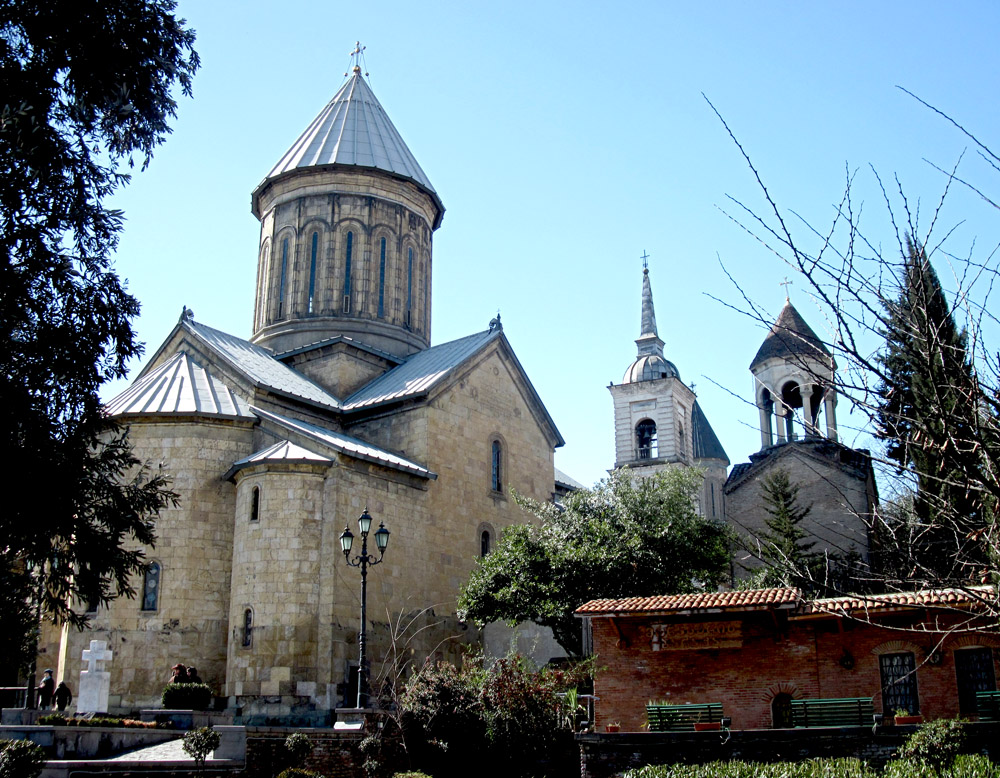
Featured image: savl_ukr from Kyiv, Ukraine (CC BY-SA 2.0) via Wikimedia Commons.

Leave a Reply