Every autumn, Georgia quietly empties out. Offices in Tbilisi run short-staffed, cousins drive east with empty car boots, and villages that looked half-asleep in July suddenly have ladders against every vine. This is rtveli — the grape harvest — and calling it farm work undersells it badly. It is closer to a national holiday that nobody officially declared: several weeks of picking, crushing, arguing about sugar levels, and eating at a table that goes on far too long.
If you have ever wondered when to come to Georgia, this is the honest answer. Here is what rtveli actually involves, when it happens where, and how a traveller joins in without being a nuisance.
Key facts at a glance
- Rtveli means grape harvest in Georgian — a season, not a fixed date
- Main window: early September to mid-October, with edges running from late August to early November
- Kakheti goes first; higher and western regions such as Racha and Imereti run later
- Best bases: Telavi for logistics, Sighnaghi for looks
- Rough costs: guesthouse-based DIY 150–350 ₾, organised day experience 180–400 ₾, polished winery packages 300–700 ₾+
- The biggest fixed-date event is the free Gurjaani Wine Festival, confirmed for 10 October 2026
- Book beds weeks ahead; September weekends in Kakheti fill fast
What rtveli actually is
Georgia has been making wine for roughly eight millennia, and the harvest sits at the centre of that calendar the way Christmas sits in others. Families who have moved to cities for work come back to their village for a few days. Neighbours swap labour: you pick my rows this weekend, I pick yours next. Children are handed buckets. Somebody’s grandmother supervises everything and approves of nothing.
The practical goal is straightforward — get ripe fruit off the vine and into fermentation before weather or birds get to it. The cultural layer around that goal is what makes rtveli worth planning a trip around. Songs get sung in the rows, usually polyphonic and usually improving as the day goes on. The harvest ends with a supra, the Georgian feast, complete with a tamada, or toastmaster, working through a sequence of toasts that will eventually include you.
When does rtveli happen?
There is no national rtveli day, and anyone selling you one has simplified something. Harvest timing depends on grape variety, altitude, rainfall, summer heat, and what each winemaker is chasing — freshness, sugar, tannin, or a particular style. It moves broadly east to west as different varieties ripen.
Rough regional timeline
- Kakheti — late August through October, with the bulk in September. This is the big one, and where most visitors go
- Kartli — September into October
- Imereti — late September into October
- Racha-Lechkhumi — October, sometimes stretching into early November, because it sits higher and colder
- Far western Georgia — pockets of picking as late as November and December
For 2026, organised harvest programmes advertise dates spanning roughly 22 August to 7 November, which tells you how wide the real season is. The safest booking window for a first visit is the second week of September through the first week of October. Even then, treat your dates as approximate: a hot fortnight can pull picking forward by a week, and rain can push it back. Wander-Lush’s rtveli events roundup tracks confirmed dates as producers announce them.
What happens on a harvest day
A typical day starts early, often by seven, because the afternoon heat in Kakheti in September is real. You are handed secateurs and a crate and shown which rows are yours. Cutting bunches is easy for twenty minutes and less charming after three hours of bending. Full crates get carried or tractored to the crush area.
Then comes the part everyone photographs: the satsnakheli, a hollowed log trough where grapes are trodden by foot. Juice runs off into a channel and down into the qvevri — the enormous egg-shaped clay vessels buried up to their necks in the floor of the marani, or wine cellar. In the traditional Kakhetian method, skins, stems and pips go in with the juice and stay there for months, which is where amber wine gets its colour and grip. The qvevri is sealed and largely left alone until spring.
Work usually wraps in the afternoon, and the supra begins. Expect mtsvadi grilled over vine cuttings, khachapuri, mountains of herbs and cheese, churchkhela being strung up from the day’s juice, and last year’s wine poured with no interest whatsoever in your pacing. Eat early and steadily. This is not a tasting; it is an endurance event with singing.
How travellers can join in
Three routes, in rough order of authenticity and effort.
Stay at a village guesthouse
Many Kakhetian guesthouses make their own wine and will happily put a guest to work during harvest week. Message hosts directly in August, say plainly that you want to help rather than watch, and ask when their fruit is likely ready. Beds run roughly 60–120 ₾ a night with breakfast, and a couple of nights plus food, transport and tips lands most people in the 150–350 ₾ range. This is the cheapest option and usually the best story.
Book an organised harvest day
Small operators run single-day and two-day rtveli trips from Tbilisi and Telavi, typically 180–400 ₾ including transport, picking, treading, tastings and the feast. 2026 programmes from operators such as Eat This! Tours start around 375 ₾ for family-harvest days, with shorter weekend departures advertised nearer 220 ₾. Good for a tight schedule or if you have no Georgian and no car.
Go to a winery or festival
Larger estates run polished harvest packages, roughly 300–700 ₾ and up, with less mud and more explanation. And if you would rather drink than pick, the free Gurjaani Wine Festival on 10 October 2026 gathers a hundred-plus producers with food, music and an outdoor mtsvadi grill of frankly absurd scale — see Red Fedora Diary’s festival calendar for the wider event list.
What to wear and what to expect
- Old clothes you genuinely do not care about — grape juice stains permanently
- Closed shoes with grip; vineyard rows are dusty, uneven and often on a slope
- Layers: cold at 7am, 28°C by noon in September Kakheti
- A hat and sunscreen, plus more water than you think
- Gloves if your hands are soft, though nobody local will be wearing any
- Cash in small notes for guesthouses, roadside churchkhela and village vendors
Expect physical work, mild disorganisation, and enormous warmth. Nobody will mind if you are slow. They will mind if you refuse the third toast.
Where to base yourself
Telavi is the practical choice. It sits in the middle of the Alazani Valley with easy reach of family cellars, big estates and village guesthouses, has enough restaurants and ATMs, and is the better call if harvest is the actual reason you came.
Sighnaghi is the prettier one — walled hilltop town, balconies, Caucasus views at sunset — and better if you want a romantic base with wine on the side. It is a longer drive to many working wineries. Plenty of visitors split: two nights Sighnaghi, two nights Telavi. Our Kakheti wine tour guide maps out the routes between them, and the Georgian wine guide covers the grapes and styles you will meet.
Why autumn is the best time to visit Georgia
September and October give you warm days without August’s flattening heat, mountain trails still open in Svaneti and Kazbegi, Tbilisi at its most pleasant for walking, and the whole country in a good mood because there is new wine coming. Prices sit below midsummer peaks and the light is better for photographs. Our take on the best time to visit Tbilisi lands in the same place for much the same reasons.
One caveat: book early. Kakhetian guesthouses and the better small tours sell out for September weekends, sometimes months ahead. Reserve beds and transport first, keep your harvest day loosely defined, and confirm with your host a week before you arrive. Flexibility is the whole trick — the grapes decide, not the calendar.
Frequently asked questions
Do I need to speak Georgian to take part?
No. Younger hosts often have English or Russian, and vineyard instructions are demonstrated rather than explained. Learning gaumarjos (cheers) and madloba (thank you) will carry you an unreasonable distance.
Is it suitable for children or older travellers?
Generally yes — families bring their own kids, and the pace is self-selected. Anyone with knee or back trouble should say so upfront; hosts will happily reassign you to sorting fruit, stringing churchkhela or minding the grill instead of bending in rows.
Can I do it as a day trip from Tbilisi?
Possible, and plenty of operators sell exactly that, but it means roughly four hours in a vehicle bracketing the good part — and you will be leaving the table just as it gets interesting. An overnight changes the experience completely.
What if I do not drink alcohol?
Say so once, early and cheerfully, and it is accepted. Grape juice straight from the trough is served all day, and non-drinkers are usually handed the honour of pouring for everyone else.
Last checked: August 2026. Harvest dates shift with the weather every year — confirm directly with your guesthouse or operator before booking flights around a specific week.
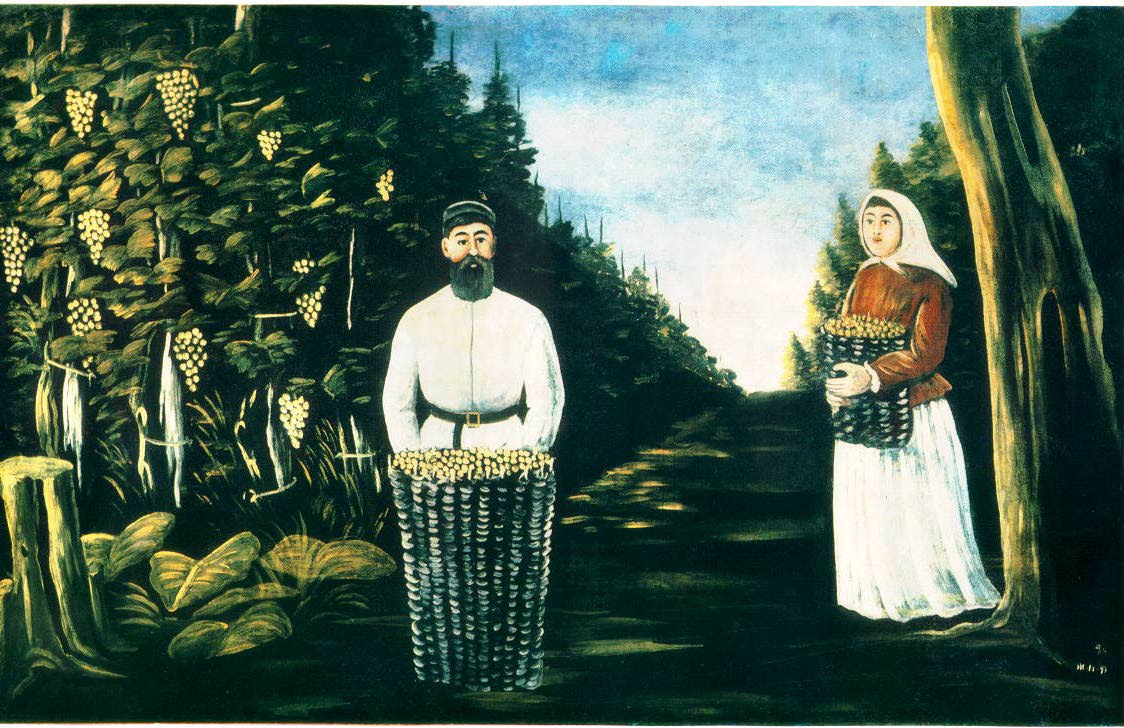
Featured image: Niko Pirosmani (Public domain) via Wikimedia Commons.


Leave a Reply