
The awkward part lasts about thirty seconds. If the Tbilisi sulfur baths are on your list but the nudity, the smell and the idea of a stranger scrubbing you are holding you back, book a private room in Abanotubani and almost none of that applies to you.
What happens down there is simple. Hot, mineral-heavy water rises out of the ground under the Old Town already at bathing temperature, and the bathhouses are built on top of it, pools sunk below street level with brick domes pushing up through the pavement. You rent a room by the hour, or a place in a communal hall. No treatment menu to decode, no robe, no waiting lounge.
First decision: private room or public hall
Everything else follows from this one, so settle it before you walk down there.
A public hall is a big tiled room shared with other bathers of the same sex, everyone undressed, no photographs, and it costs single-digit lari at most houses: around 5₾ an hour at Queen’s Bath, 6–10₾ on the communal side of Bathhouse No. 5, nearer 20₾ at a couple of the smarter places. A private room means a door that locks, your own pool, and a price charged per room rather than per head. Starting rates run from about 15–40₾ an hour in the plain cabins on the lanes off Abano Street, from around 60–70₾ at Chreli-Abano, and 150–300₾ at the spa-grade houses such as Gulo’s Thermal Spa and the Royal Bath House, checked in August 2026 against Wander-Lush’s 2026 bathhouse roundup. The full house-by-house breakdown, scrub and towel costs included, is in our Tbilisi sulfur bath prices comparison.
Our advice: private room for a first visit, and it is not a close call. Split between two people, a mid-range room costs each of you less than a cinema ticket back home, and it turns the whole thing from a social exam into a bath. Save the public hall for a second visit, once you know the choreography. That is when it becomes interesting rather than intimidating.
The door does not look like a spa
This throws people first. Several bathhouses announce themselves with a small sign and a flight of steps going down, and reception can be a window cut into a wall with an unsmiling person behind it. Chreli-Abano, the one with the blue-and-turquoise tiled front and two minarets, is the exception: it looks like the photograph you have already seen. The rest look like municipal buildings, which for most of their working lives is what they were.
An unpromising doorway is not a warning sign here. It is the norm.
How booking and paying actually work
Walk in and you will get a room nearly everywhere except the famous one. Chreli-Abano takes reservations through its own online booking system, which verifies you by SMS (international numbers work fine) and asks for prepayment around public holidays. Gulo’s, Bohema and others take bookings over Facebook Messenger; No. 5 and the Royal Bath House still do it by phone. Friday and Saturday evenings are the crunch, when a walk-in turns into a wait or a flat no.
Bring cash in small notes. Some smaller houses do not take cards, and the scrub is almost never bundled into the room price: you pay separately, in cash, straight to the attendant. Arrive fifteen minutes early, because your hour starts when you go through the door of the room, not when you join the queue at the desk.
The smell, said plainly
It smells of boiled eggs. Not faintly, and it is strongest in the corridor before you even reach your room, because that is where the warm air pools. Your nose stops reporting it after two or three minutes and you forget it is there. It does hold in hair, so rinse properly before you leave, and do not wear swimwear you are attached to: sulfur water marks some fabrics.
Clothes, lockers, and the question you are too polite to ask
Do you have to be naked? In the shared halls, yes. Everyone is, the sexes are in separate rooms, and nobody is looking at anybody. In a private room it is your call: most visitors wear swimwear, plenty wear nothing, and behind a locked door it makes no difference to anyone but you. The one moment it comes up is the scrub, when the mekise will ask you to take off whatever you have on, because the mitt has to reach everywhere.
Is it awkward? For roughly half a minute in the changing corner, then it stops. What defuses it fastest is understanding that the attendants have done this several thousand times and find your body neither interesting nor surprising. Storage is low-tech: a locker in the public halls, a hook or bench in a private room. Leave valuables at your accommodation.
The kisa scrub is rougher than you are picturing
That is not a warning. It is a calibration, because people book it expecting a spa treatment and get something closer to being sanded.
You lie face down on a marble slab and the mekise works over you with a coarse mitt (kisa, also written kese), hard, in long repeated strokes, front and back, for ten to fifteen minutes. Grey rolls of dead skin come off in genuinely startling quantities, and there is a moment about ninety seconds in when most first-timers open their eyes to check whether this is normal. It is. It finishes with a soapy foam rinse that feels wonderful by comparison.
Reckon on 10–30₾ per person, cash to the attendant, and another 5–10₾ as a tip. Anyone with sunburn, a fresh tattoo or sensitive skin should skip it.
Our second opinion, and this one divides people: take the scrub in a private room, skip it in the public hall. The communal version is quick and perfunctory, done on a shared slab rinsed with a bucket of hot water between customers. The private-room version, with the same attendant giving you the full quarter of an hour, is the one worth paying for.
How long people actually stay
An hour, and plenty of visitors are dressed and back on the street inside forty-five minutes. That surprises anyone who booked imagining a long wallow.
The pools sit at 38–40°C, hotter than a domestic bath and not somewhere you can lie for sixty minutes straight. Fifteen or twenty minutes in the hot water, out to cool under a cold tap or plunge, then back in: that is the rhythm that works, and local guidance puts a relaxed visit with a scrub at 60–90 minutes door to door. Drink water before and after. Light-headedness is the only real risk, and it arrives with little warning, so if the room starts tilting, get out and sit down.
What to bring, and what is already there
- Flip-flops or sandals — floors are wet, hot and slippery. Many houses hand out plastic slippers free.
- A towel, or 2–5₾ to rent one at the desk.
- Small notes for the scrub, the tip and the towel. Cards are not universal here.
- Dry underwear — the most commonly forgotten item, and the one people regret on the walk home.
- Water. Better rooms bring you tea; a few sell cold drinks and beer.
- Shampoo if your room is at the cheap end. Mid-range and upper rooms have soap, a shower and a hairdryer; budget cabins often have none of it.
Is it clean?
Clean enough, and worth being honest about where the line sits. The water is not recirculated: it comes from the spring, flows through and drains away, and sulfur is hostile to bacteria, which is much of why these springs were prized in the first place. Staff rinse the room between bookings, and showering before you get into the pool is expected rather than optional.
What varies is everything around the water. Mid-range and upper houses look properly maintained. The cheapest cabins show every one of their decades in the grouting, and no amount of hot water hides that. If old tiling bothers you, spend another 30₾ on the room rather than skipping the baths.
How you feel afterwards
Pink, slightly unsteady, and cleaner than you have been in years. The skin claim is real: after a kisa it stays noticeably smooth for two or three days, and that is what converts sceptics.
Less advertised is the tiredness. A soak flattens you for an hour or two, so this is a poor plan immediately before a long uphill walk or a big night, and an excellent one before dinner or bed. Sleep afterwards tends to be heavy. Georgians treat the baths as a winter thing and a hangover cure, in that order, and both make sense once you have tried it.
Where a bath fits in the day
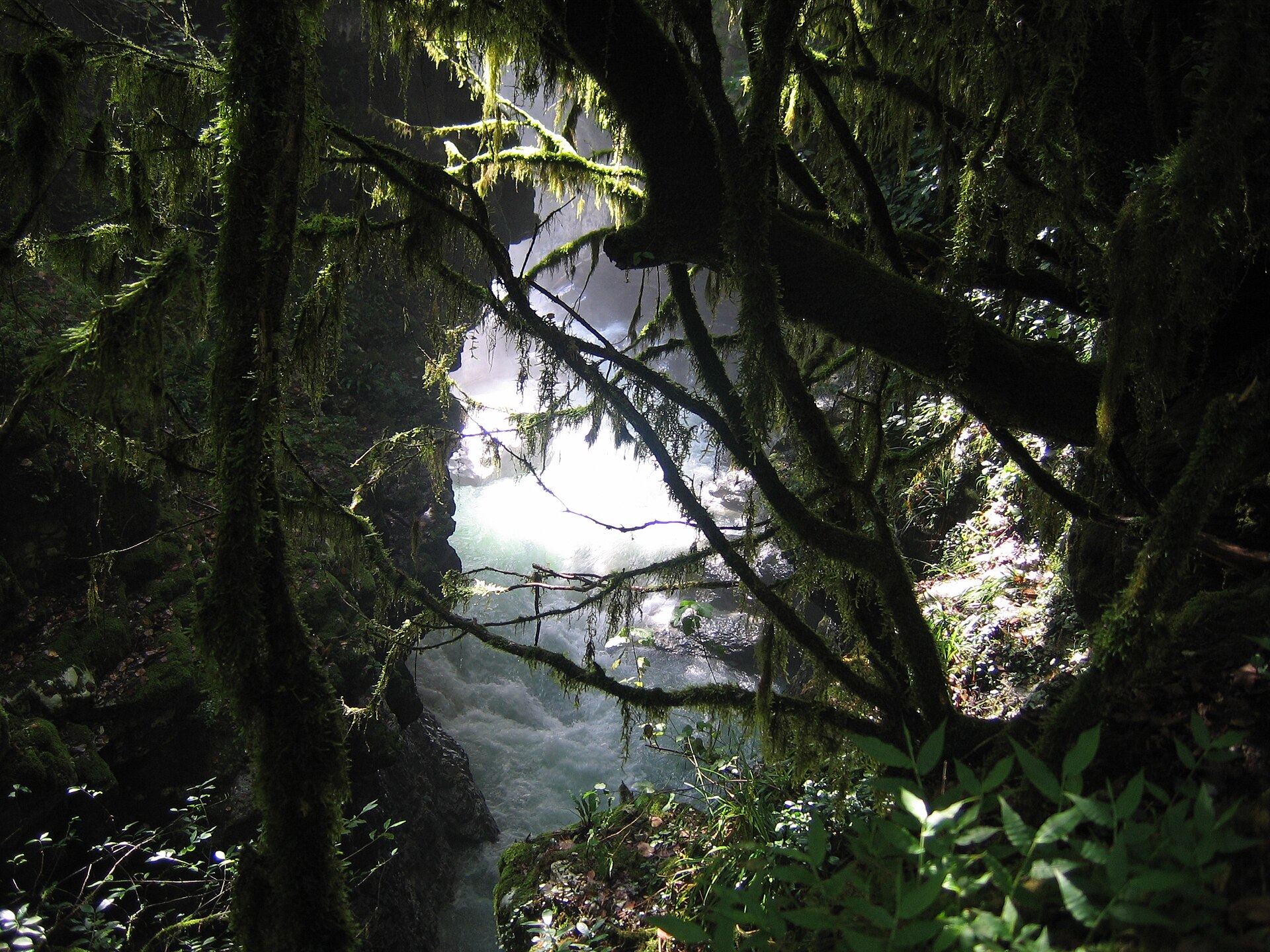
Behind the bathhouses, a short path runs up a narrow gorge to the Leghvtakhevi waterfall: five minutes, free, and walked past by most of the people photographing the domes. Do that while you are still dry. Then bathe late in the afternoon and eat in the Old Town lanes afterwards, a five-minute stroll on the flat until you decide to climb to Narikala.
Check before you climb: the fortress itself has been fenced off for a rehabilitation programme and was still closed to visitors as of spring 2026, per reporting on the works (checked August 2026). The cable car, the ridge path to Kartlis Deda, St Nicholas Church and the Botanical Garden below are all still open, so the trip up is not wasted — but do not count on walking the walls. Our Narikala guide has the detail.
The baths take an afternoon slot in our 3-day Tbilisi itinerary, and they sit near the top of our list of the best things to do in Tbilisi if you are still assembling the trip.
Frequently asked questions
Do you have to be naked in the Tbilisi sulfur baths?
In the shared halls, yes, and since those are divided by sex you are only ever undressed among your own. Rent a private room and nobody dictates anything: swimwear, underwear or nothing all work behind a locked door. The exception is the scrub itself, when the attendant will want everything off for that quarter of an hour.
Is the kisa scrub painful?
Not painful, but brisk enough to make newcomers flinch. Picture firm sandpaper rather than a massage: ten to fifteen minutes face down on marble, 10–30₾ in cash to the attendant, and skin that stays smooth for days afterwards. Give it a miss if you are sunburnt or carrying a fresh tattoo.
How much is a private sulfur bath room in Tbilisi?
Plain cabins on the side streets let a whole room for 15–40₾ an hour, Chreli-Abano opens at around 60–70₾, and the polished spa houses ask 150–300₾. Since the charge is per room and not per head, four friends can each pay less than one person spends in some communal halls.
Do you need to book the Tbilisi sulfur baths in advance?
Only Chreli-Abano really needs it, and it has its own website for the job. Everywhere else a walk-in works most of the week, with Friday and Saturday evenings the obvious exception. A phone call or a Messenger note earlier the same day saves you standing about in a corridor waiting for a room to free up.
One last practical thing: put the bath at the end of your day, not the start. Wet hair on a Tbilisi street in January is a mistake you only make once.
Featured image: Marcin Konsek (CC BY-SA 4.0) via Wikimedia Commons.

Leave a Reply