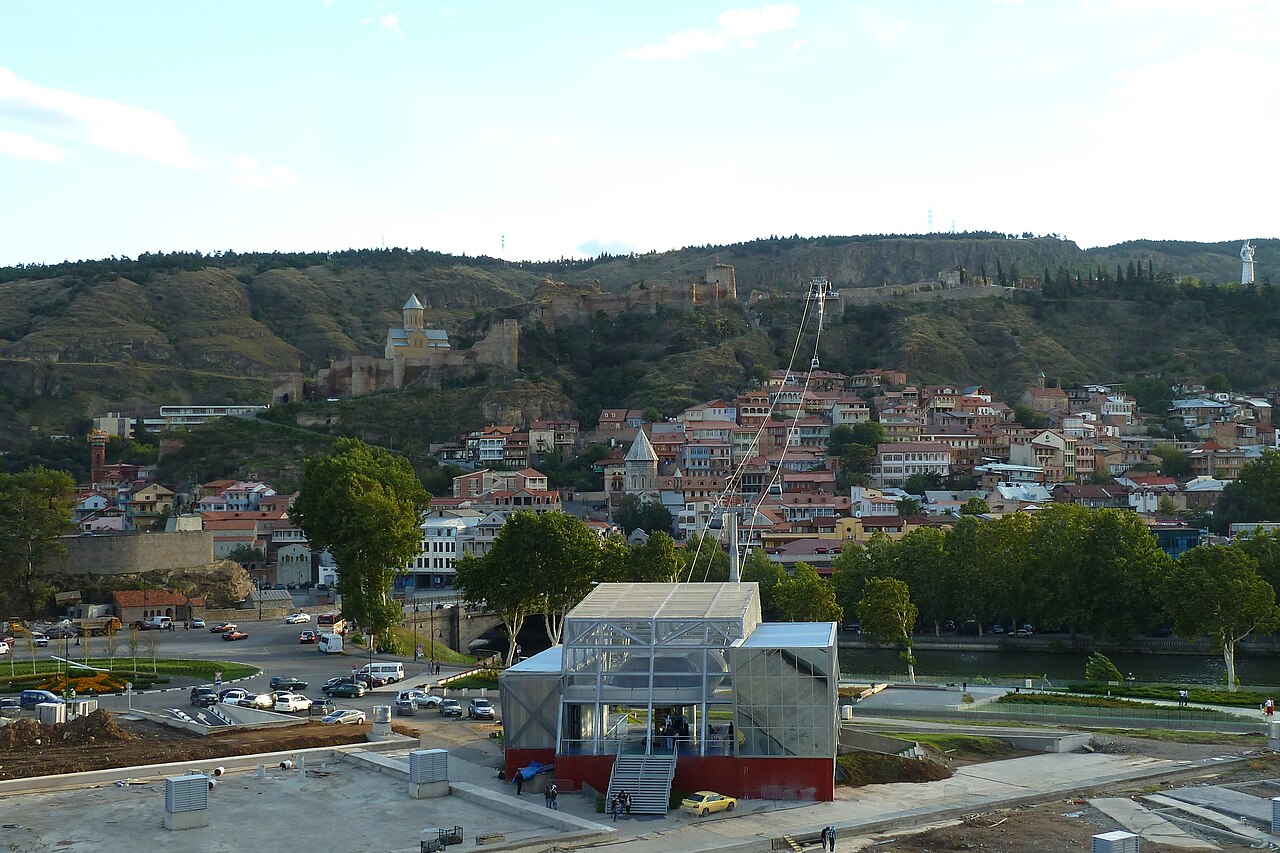
Eight things in Tbilisi are genuinely unmissable: the Old Town, the sulfur baths, Narikala and its cable car, the Chronicle of Georgia, the Dry Bridge Market, a khinkali dinner and a night on qvevri wine. The other seventeen on this list run from very good to honestly skippable, and we’ve ranked them that way instead of pretending all 25 deserve equal billing.
Check before you climb: the fortress itself has been fenced off for a rehabilitation programme and was still closed to visitors as of spring 2026, per reporting on the works (checked August 2026). The cable car, the ridge path to Kartlis Deda, St Nicholas Church and the Botanical Garden below are all still open, so the trip up is not wasted — but do not count on walking the walls. Our Narikala guide has the detail.
Prices below are in Georgian lari (₾, about 2.7 to the US dollar). Every figure that can go stale was re-verified in August 2026, and one of them, the National Museum ticket, has changed enough to wreck an old budget.
The eight worth building your days around
Do these and you’ve done Tbilisi, even on a two-day trip. They’re ordered by how much we’d protest if you skipped them.
1. Get lost in the Old Town (Kala)
Half a day minimum, no map. The Old Town rewards aimless walking more than any checklist: carved wooden balconies sagging over the lanes, courtyard staircases spiralling around fig trees, a tiny basilica wedged between wine cellars. Wear real shoes, because the cobbles turn slick the moment it rains, and read our Old Town guide if you want the landmarks named. The point, though, is getting lost on purpose.
2. Soak in the Abanotubani sulfur baths
Tbilisi is named for these springs (tbili means warm), and an hour in a private bath room is still the most Georgian thing you can do indoors. Private rooms now start around 60₾ per hour and climb past 200₾ for the royal rooms at Chreli-Abano, the blue-tiled bathhouse everyone photographs; the 50₾ rooms of a few years back are gone. Pay extra for the kisa scrub, a mitt exfoliation that borders on assault and leaves your skin brand new. Our advice: book a morning slot; the good rooms sell out by evening, and our bathhouse-by-bathhouse comparison is worth ten minutes before you commit.
3. Climb Narikala Fortress
The 4th-century walls above the Old Town are free, unfenced and unstaffed, which is half the charm and all of the danger: some drops have no railing, so mind children. From the top you get the one panorama that puts the whole city in order: the Mtkvari River, the rooftops of Kala, Sameba’s gold dome across the water.
4. Ride the cable car from Rike Park
Ninety seconds of glass-floored theatre up to the fortress, still 2.5₾ each way, paid with the same Metromoney card that runs the metro and buses (the card itself costs 2₾ — fare checked August 2026 against Wander-Lush’s Tbilisi transport guide). It operates 11:00 to 23:00. The sunset queue can eat half an hour of your evening, so ride up mid-afternoon and walk down through the Old Town instead.
5. Stand under the Chronicle of Georgia
Our favourite single sight in Tbilisi, and it isn’t close. Sixteen pillars, each over 30 metres tall, carved with kings, saints and the life of Christ, stand on a bare hill above the Tbilisi Sea — and on a weekday you might share them with five other people. Nothing else in the city delivers this much scale for zero lari. It’s a 20-minute Bolt ride from the centre; go in late-afternoon light, and read up on the monument’s strange history first.
6. Haggle at the Dry Bridge Market
Soviet cameras, enamel badges, daggers, hand-painted teacups, someone’s entire crystal cabinet: the Dry Bridge flea market is an open-air museum where everything is for sale. It runs daily, but Saturday and Sunday bring out the serious sellers. Carry small notes; cards are useless here and nobody has change for a 100.
7. Eat khinkali properly
Grab the dumpling by its doughy topknot, bite a small hole, drink the broth, then eat the rest. The topknot goes back on the plate; that’s how Georgian tables tally who ate how many, and eating it marks you as a first-timer faster than any accent. A dinner of khinkali, a khachapuri and a jug of house wine still lands under 40₾. Our Georgian food guide covers what to order once you’re past the famous two.
8. Drink amber wine where wine began
Georgia has fermented grapes in buried qvevri clay vessels for some 8,000 years, and Tbilisi’s wine bars pour amber wines that taste like nothing from France or Italy: tannic, apricot-skinned, faintly wild. Ask for a qvevri flight rather than ordering by the glass. Three small pours teach you more than one bottle ever will.
The middle thirteen: pick by taste
None of these are mistakes; they’re choices. Which ones deserve your remaining hours? Match them to what you came for: views, faith, Soviet history or food. No marching through all thirteen.
9. Kartlis Deda and the ridge walk
The 20-metre aluminium Mother of Georgia has held her wine bowl (for friends) and her sword (for the rest) over the city since 1958. The statue takes two minutes; the reason to come is the ridge path between her and Narikala, which has fortress-grade views and almost no foot traffic.
10. Leghvtakhevi waterfall
A 20-metre waterfall in a canyon directly behind the bathhouses. Free, five minutes from the Old Town, and a flat walkway rather than a hike — see it when you’re already at the baths.
11. The funicular up Mtatsminda
The 1905 funicular is the attraction; the amusement park at the top mostly isn’t. A ride now costs 12₾ each way, and, annoyingly, the funicular refuses your Metromoney card and makes you buy its own 2₾ park card (fares checked August 2026 against Tbilisi Local Guide). Our advice: ride up, take the terrace view and a khachapuri at the old restaurant, skip the Ferris wheel, and come down before the evening crowds.
12. Holy Trinity Cathedral (Sameba)
One of the largest Orthodox cathedrals anywhere, finished in 2004, free to enter and genuinely vast inside: candlelight, gold, echo. Cover shoulders and heads (wraps hang at the door). Skip it only if church fatigue has set in, because the interior is the point, not the photo.
13. Metekhi Church and the Gorgasali statue
The best classic postcard angle in the city: the clifftop church and the equestrian statue of King Vakhtang Gorgasali, Tbilisi’s 5th-century founder, looking straight across the river at Narikala and the bath domes. Ten minutes at dusk is all it needs.
14. Rustaveli Avenue
Tbilisi’s parade street: the Opera House, Parliament, plane trees, and most of the country’s protests when they happen. Walk it once, end to end from Freedom Square. Coffee is better and cheaper one street back.
15. The Georgian National Museum
A correction worth money: entry to the Simon Janashia Museum of Georgia on Rustaveli is now 30₾ for foreign visitors and 15₾ for Georgian citizens, not the 10–15₾ many guides still quote — checked August 2026 against Red Fedora Diary’s museum roundup. It earns the price with the Archaeological Treasury alone, a basement of pre-Christian goldwork older than Rome, and the Soviet Occupation hall upstairs comes on the same ticket. Closed Mondays.
16. Fabrika
A Soviet sewing factory turned courtyard of bars, studios and a hostel in Chugureti. By day it’s laptops and flat whites; after dark it’s the easiest place in the city to fall into conversation with strangers. Free, obviously.
17. The Botanical Garden
161 hectares of valley behind Narikala with a waterfall and a Japanese garden, for a 4₾ ticket. Enter by the upper gate near the fortress and walk downhill. Best on a hot afternoon when the Old Town stones are baking.
18. The Gabriadze clock tower and puppet theatre
On the hour, an angel pops out of the leaning clock tower and strikes the bell; a crowd gathers, the angel retreats, everyone leaves. That part is free. The real prize is a seat at Rezo Gabriadze’s marionette theatre behind it; shows sell out weeks ahead, so book before you fly.
19. Sololaki’s doorways
The faded art-nouveau quarter below the fortress keeps painted entrance halls, stained glass and century-old staircases behind unmarked doors. Some stand open. Enter quietly (it’s people’s housing, not a museum) and look up constantly, because the balconies are the show.
20. Deserter’s Bazaar
The city’s real food market, near the main station: towers of churchkhela, wheels of guda cheese, buckets of pickles, sellers pressing samples on you. Loud, cramped, zero curation. Go hungry and leave with spices.
21. Use the city as a day-trip launchpad
Mtskheta, the UNESCO-listed old royal capital, sits 30 minutes away and fits in half a day; Kazbegi’s mountains and Kakheti’s wine country each take a full one. If your trip runs four days or more, our day trips from Tbilisi guide ranks every option with the same honesty as this list.
The overrated four: go if they’re on your way
Every Tbilisi list includes these, so here they are, with the caveat that none would make our top fifteen. They photograph better than they feel.
22. The Bridge of Peace
The LED-covered glass bridge earned its local nickname, the “Always Ultra” (after the sanitary pad it resembles), and still divides the city. Cross it at night, since it links Rike Park to the Old Town anyway; just don’t schedule it as an event.
23. Rike Park
A pleasant modern lawn with a musical fountain and chess tables. It’s also the cable car’s lower station, which is the actual reason you’ll end up here. Fifteen minutes is plenty.
24. Turtle Lake
Locals love it, and on an August Sunday you’d see why. But on a three-day visit, a small lake with pedal boats can’t out-rank anything above it on this page. Save it for a second trip or a heatwave.
25. Street-art hunting
Tbilisi’s murals are real and some are excellent, but chasing them as a standalone activity means long walks between scattered walls. You’ll pass the best cluster around Fabrika anyway. Keep the camera out; skip the pilgrimage.
Frequently asked questions
Is 3 days enough for Tbilisi?
Yes. Three days covers the eight essentials plus a decent slice of the middle list at an unhurried pace. Add a fourth day for Mtskheta, which is the one excursion almost everyone ends up wanting.
How much money do you need per day in Tbilisi?
A comfortable mid-range day runs 100–150₾ (about $37–55) per person before accommodation: two restaurant meals with wine, transport, a museum ticket and a bath room split between two. Backpackers manage on half that.
What month is best to visit Tbilisi?
September and October win: warm days, cool nights, and the rtveli grape harvest filling the wine bars with fresh vintages. May and early June come a close second. Late July and August regularly push past 35°C.
Do people speak English in Tbilisi?
In the centre, yes: almost anyone under 35 working in cafes, bars and hotels does. Older Georgians default to Russian as their second language, so keep destination names written in Georgian, or use the Bolt app and skip the conversation entirely.
One last practical thing, and it’s the most useful on this page: buy a Metromoney card at any metro station the day you land. It costs 2₾, one card covers a whole group, and it runs the metro, the buses and the Narikala cable car. That turns every crossing of the city into a 1₾ decision instead of a taxi negotiation.
Featured image: TheFlyingDutchman (CC BY 3.0) via Wikimedia Commons.

Leave a Reply