Here is the whole plan in one breath: two city days taken slowly, one mountain day in Kazbegi, one wine day in Kakheti, and one day you refuse to plan at all. That last day is the point of spending 5 days in Tbilisi rather than three. Three days is the sprint, and we’ve written that version already; five is the first duration where the city stops being a list of sights and starts behaving like a place you briefly live in.
This is not our 3-day itinerary with two days stapled on, and it’s not a compressed version of the 7-day Georgia loop either. The 3-day guide is built around walkable city routes; the 7-day one moves you around the country with nights outside the capital. This one keeps a single Tbilisi base for five nights and uses the extra time to slow down, not to see more.
Book one base for all five nights
Settle this before anything else, because a bad base taxes every one of the five days. You want somewhere you can walk home from dinner and reach Didube and Samgori metro stations without a taxi, since both day trips start at a metro-adjacent van yard. That points to Sololaki, Vera, or the Marjanishvili side of the river; our full where to stay in Tbilisi guide argues the trade-offs street by street.
Our advice: don’t move accommodation mid-stay, even if a second neighbourhood tempts you. Packing, checking out and re-orienting eats half a day, and half a day is exactly what this itinerary is designed to give back to you.
Buy a Metromoney card on arrival (2₾ refundable deposit, then 1₾ per metro or bus ride with 90 minutes of free transfers). You’ll use it constantly, and the Narikala cable car takes nothing else.
Days one and two: the city, slowly
The 3-day sprint covers the Old Town, the left bank and Rustaveli in tight, efficient loops. With five days you cover the same ground in two, and the difference isn’t what you see, it’s what you notice. A courtyard door left open in Sololaki. The 40-minute lunch that becomes two hours because the tone-deaf accordion player outside is actually quite good. Khinkali eaten at 2–3₾ a piece without checking the time.
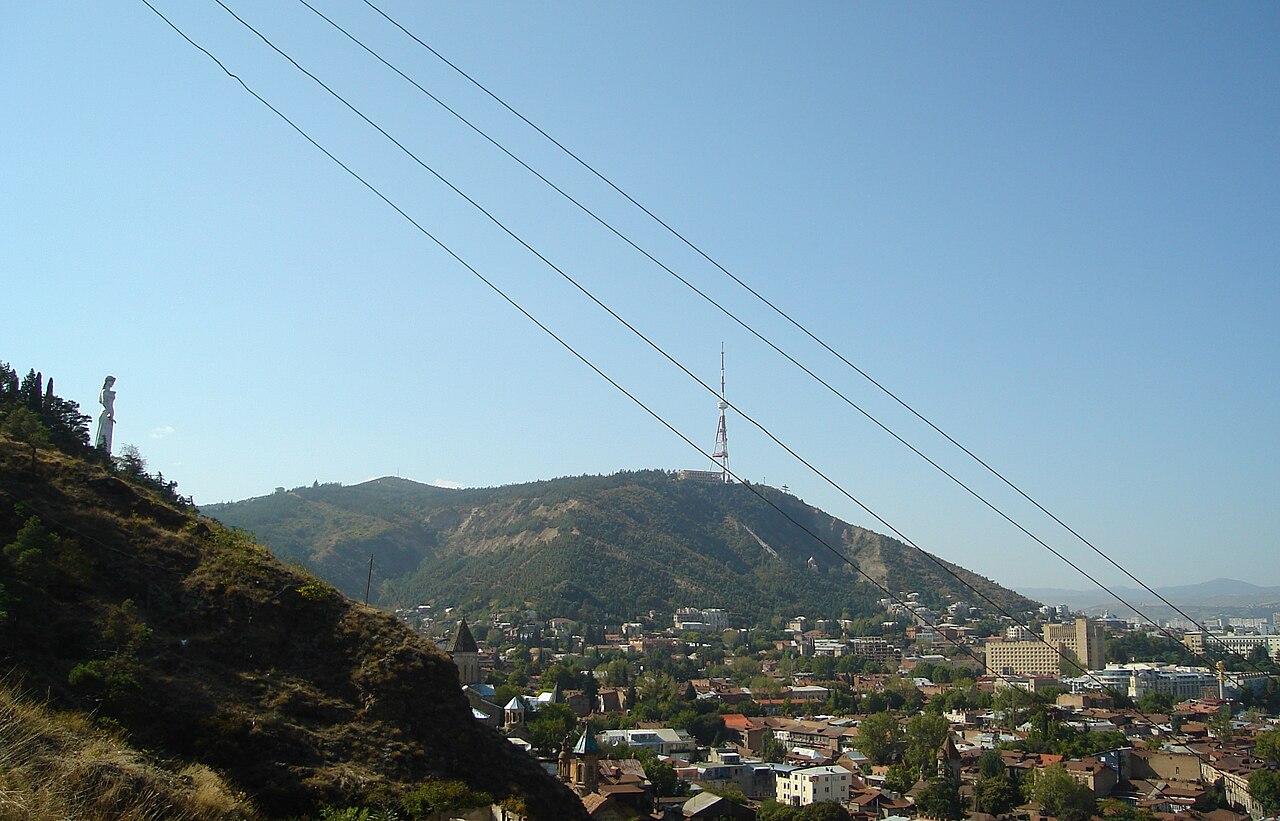
Day one belongs to the right bank: Sololaki’s carved balconies, Freedom Square, then the cable car up towards Narikala (2.5₾ each way, Metromoney only, no cash). One honest correction to older guides: the fortress itself has been fenced off for restoration since spring 2026, so you ride up for the ridge, Kartlis Deda and the Botanical Garden (4₾), not to walk the walls. The view is not diminished. The crowds are.
Day two crosses the river: the Dry Bridge market in the morning, then Marjanishvili and Fabrika’s courtyard on the Chugureti side, and back over for Rustaveli Avenue in the late afternoon. Through the end of November 2026 the avenue is closed to cars along its full 2 km, which turns Tbilisi’s grandest street into an accidental promenade. Walk it while that lasts. Be aware, too, that peaceful pro-EU demonstrations gather outside Parliament most evenings; they’re part of the city’s current texture, not a reason to avoid the street.
End day two at Mtatsminda if your legs agree: the funicular is 12₾ each way plus a separate, non-refundable 2₾ park card that Metromoney won’t cover.
Day three: Kazbegi
The one non-negotiable day trip. Marshrutkas leave Didube station from early morning for 15–20₾ each way, or a seat on an organised tour runs 80–120₾ with stops at Ananuri and the Gudauri viewpoint built in. The van is cheaper and faster; the tour actually stops at the things you’d otherwise watch blur past the window. For a first visit we’d take the tour, and that’s a minority position among budget travellers.
At Stepantsminda you choose: hike up to Gergeti Trinity Church (1.5–2 hours, about 400 m of ascent) or share a 4×4 at around 25₾ per person return. The road up is sealed asphalt now, so the 4×4 is a convenience, not a necessity, whatever the drivers at the square tell you. Entry to the church is free. Our separate Kazbegi day trip guide has the full timing maths, including the last-van-back problem.
Do Kazbegi on your best-weather day, not on a fixed day. Check the forecast the night you arrive and shuffle days three and four freely; the itinerary survives it.
Day four: Kakheti
Wine country runs at a different speed from the mountains, which is why the two trips sit well side by side. The vans for Sighnaghi and Telavi leave from Navtlughi, beside Samgori metro, not from Didube; a Sighnaghi marshrutka costs about 15₾ and takes 2–2.5 hours, checked September 2026 against Wander-Lush’s transport guide, and shared taxis from Isani cut that to under two hours for 25–30₾ per person.
In Sighnaghi itself, a glass of everyday qvevri wine is 6–8₾ and a proper seated tasting 45–50₾. Whether to go independent or join a cellar-hopping tour is a real decision with real money attached, and our Kakheti wine tour guide takes a side. The short version: if you want to drink freely, the tour’s driver is worth the markup.
One tangent that saves an argument later: Georgian tastings pour generously and marani hosts refill without asking. Eat the bread and cheese they put out. It’s not decoration.
Day five: the empty day, defended
Would you plan every hour of a Saturday at home? No, and this is the day Tbilisi gets to be somewhere you are rather than somewhere you’re getting through. Every traveller we’d trust says some version of the same thing: the day they remember is the one nothing was scheduled for.
An empty day still deserves a menu, so here’s what it might become:
- The sulfur baths. A plain private cabin in Abanotubani runs 15–40₾ an hour, Chreli-Abano’s entry sits around 60–70₾, and the whole experience is covered in our sulfur baths guide. Best after four days of walking, which is precisely where you’ll be.
- The Dezerter Bazaar. The city’s real food market, near the main railway station. Go hungry, buy churchkhela by the strand, and eat lunch standing up.
- Turtle Lake. A small cable car climbs from beside Vake Park to a lake with a walking loop and open-air cafés; the ride costs a single lari and runs on the same Metromoney card, per the official Georgia Travel listing, checked September 2026.
- A second neighbourhood, properly. Vera’s cafés or Avlabari’s Armenian streets, taken at the same dawdling pace you gave Sololaki.
Pick one. Two at the outside. The moment you find yourself sequencing three of them with timings, you’ve rebuilt the checklist this itinerary exists to dismantle.
Pacing and packing notes
Tbilisi is a hill city wearing a river city’s clothes, and cobbles plus staircases will find out any shoe with a thin sole by day two. Bring the pair you’d hike in. Add a warm layer for Kazbegi even in July; Stepantsminda sits at 1,740 m and the church another 400 m above that, and the temperature gap against the capital is real.
Money: cards work almost everywhere in the capital, but the marshrutka yards, the 4×4 drivers at Stepantsminda and village marani hosts run on cash. Take out lari before both day trips, not during them.
And put the slower city day (day two) after the first, not before. Day one always runs hot; you’ll want to see everything. Let it. Day two is where the pace correction actually happens.
Frequently asked questions
Is 5 days in Tbilisi too long?
Not if two of the days leave the city. Tbilisi’s own headline sights fit into three days, but the capital doubles as the best base in the Caucasus for mountain and wine country, and five days lets you use it that way without ever repacking a bag.
Can you do both Kazbegi and Kakheti in one trip?
Yes, comfortably, as long as they get a full day each and don’t sit back to back if you can help it. They also leave from different stations, Didube for the mountains and Navtlughi for wine country, so double-check which yard your van uses before you set an alarm.
How much does 5 days in Tbilisi cost?
Outside accommodation, a mid-range traveller lands somewhere near 550–850₾ (about $210–330): city transport is pocket change at 1₾ a ride, restaurant meals with wine run 45–80₾ a head, and the two day trips together cost 60–250₾ per person from marshrutka-and-hike up to tour-plus-tasting.
Do you need to rent a car for this itinerary?
No. Every leg here runs on the metro, marshrutkas from Didube and Navtlughi, or a booked tour seat, and parking in the Old Town is its own punishment. A rental only starts earning its keep on multi-day loops through Svaneti or Tusheti, which belong to a longer trip.
One last thing before you book
Leave the empty day for last, day five, not day three. By then you’ll know which corner of the city has been quietly pulling at you all week, and the itinerary’s best decision will make itself.
Featured image: Kober (Public domain) via Wikimedia Commons.




Leave a Reply