One week is the sweet spot for a first trip to the Caucasus. It is long enough to see the capital properly, sleep a night in the high mountains, and drink wine where wine was invented — and short enough that you do not need to hire a car for the whole stretch. This georgia itinerary 7 days plan is built around Tbilisi as a base, with two overnights outside the city where they genuinely improve the trip and marshrutka or shared-taxi hops everywhere else.
It is written for the way people actually travel here: late breakfasts, roads that take longer than the map says, and at least one evening that dissolves into a supra. Nothing below assumes you speak Georgian or hire a guide, though a driver for a day or two makes the middle of the week much easier.
Key facts at a glance
- Route: Tbilisi ×2 nights → Tbilisi ×1 (day trip to Mtskheta, Gori, Uplistsikhe) → Kazbegi ×1–2 nights → Kakheti ×1–2 nights → Tbilisi
- Total ground distance: roughly 600 km, all on paved main roads
- Longest single drive: Tbilisi to Stepantsminda (Kazbegi), about 150 km and 3–3.5 hours
- Typical marshrutka fares: ₾20 to Kazbegi, ₾15 to Sighnaghi, ₾20 to Telavi
- Rough budget: ₾160–260 per person per day mid-range; ₾100–140 on a tight budget
- Best season: late May to early July, or September to mid-October
- Currency: Georgian lari (₾); cash is essential for minibuses and village wineries
- If you only have 5 days: cut Gori and one Kakheti night, keep the Kazbegi overnight
Days 1–2: Tbilisi, slowly
Give the capital two full days before you leave it. Day one belongs to the old town: the sulphur bath domes of Abanotubani, the climb or cable car to Narikala fortress, Metekhi church on its cliff, and the tangle of Betlemi Street stairs above them. Day two is for the parts visitors skip — the Soviet-modernist blocks along Rustaveli, the Dry Bridge flea market, Fabrika in Marjanishvili, and a long lunch somewhere that serves khinkali by the plate rather than the piece.
Check before you climb: the fortress itself has been fenced off for a rehabilitation programme and was still closed to visitors as of spring 2026, per reporting on the works (checked August 2026). The cable car, the ridge path to Kartlis Deda, St Nicholas Church and the Botanical Garden below are all still open, so the trip up is not wasted — but do not count on walking the walls. Our Narikala guide has the detail.
Two things worth booking early: a private sulphur bath room (₾60–120 an hour for the room, not per person) and a table at a proper wine bar, because the good ones fill up by 8pm. If you want the hour-by-hour version of these two days, our 3-day Tbilisi itinerary breaks the city down neighbourhood by neighbourhood.
Where to sleep
Base yourself in Sololaki, Chugureti or Vera rather than directly on the tourist strip — you get the same walking distances with quieter nights. Guesthouse doubles run ₾90–160; a decent boutique hotel is ₾200–350. Keep the same room for nights one, two and three so you are not repacking before the mountain leg.
Day 3: Mtskheta, Gori and the cave city
This is the day the country opens up. Mtskheta, the old capital, sits 25 minutes from Tbilisi and holds two UNESCO-listed sites: Svetitskhoveli cathedral in the town and Jvari monastery on the ridge above the confluence of the Mtkvari and Aragvi rivers. An hour and a half covers both comfortably.
Then push west to Gori for the Stalin Museum — an oddly unreconstructed piece of hagiography, worth seeing precisely because of that — and finish 10 km further on at Uplistsikhe, a rock-hewn town carved into a sandstone bluff above the river. Late afternoon light there is the best of the day, and the guidance from Against the Compass to time Uplistsikhe for sunset is sound.
How to do it
- Hired driver (best): ₾180–250 for the whole loop, split between up to four people. Jvari and Uplistsikhe are both awkward without one.
- Marshrutka: Didube station to Mtskheta (₾2) and to Gori (₾5), then a taxi from Gori to Uplistsikhe and back for about ₾40. Cheap, but you will feel rushed.
- Group tour: ₾90–140 per person including all three stops and a guide.
Sleep in Tbilisi again tonight.
Days 4–5: Kazbegi, and why you should stay the night
Most people do Kazbegi as a day trip and regret it. Seven hours of driving for ninety minutes at the church is a poor trade, and the mountains are at their best at dawn and dusk when the tour vans are gone. Stay one night in Stepantsminda; two if you want to hike.
Leave Tbilisi mid-morning on day four. The Georgian Military Highway climbs past the Ananuri fortress on the Zhinvali reservoir, the Russia–Georgia Friendship Monument on its cliff at Gudauri, and over the Jvari Pass at 2,379 m before dropping into the Tergi valley. The whole drive is the attraction, so budget stops.
Afternoon of day four: settle in, then walk or 4×4 up to Gergeti Trinity Church, the 14th-century silhouette under Mount Kazbek that ends up on every postcard. Day five morning: either hike further towards the Gergeti glacier — a serious full-day effort — or take a shorter walk to the Gveleti waterfalls, then travel onward in the afternoon. The Kazbegi day trip guide covers the walking routes and 4×4 pricing in more detail.
Getting there and sleeping
Marshrutkas leave Didube station roughly hourly from 8am, cost about ₾20 in cash, and take three to four hours according to Wander-Lush, which also prices a GoTrip private car with unlimited stops from around ₾190 for the vehicle. For two or more people the private car is the better value once you factor in the roadside stops the minibus will not make. Accommodation in Stepantsminda ranges from ₾70 guesthouse rooms to ₾400-plus for the view hotels; book ahead in July and August.
Days 6–7: Kakheti and Sighnaghi
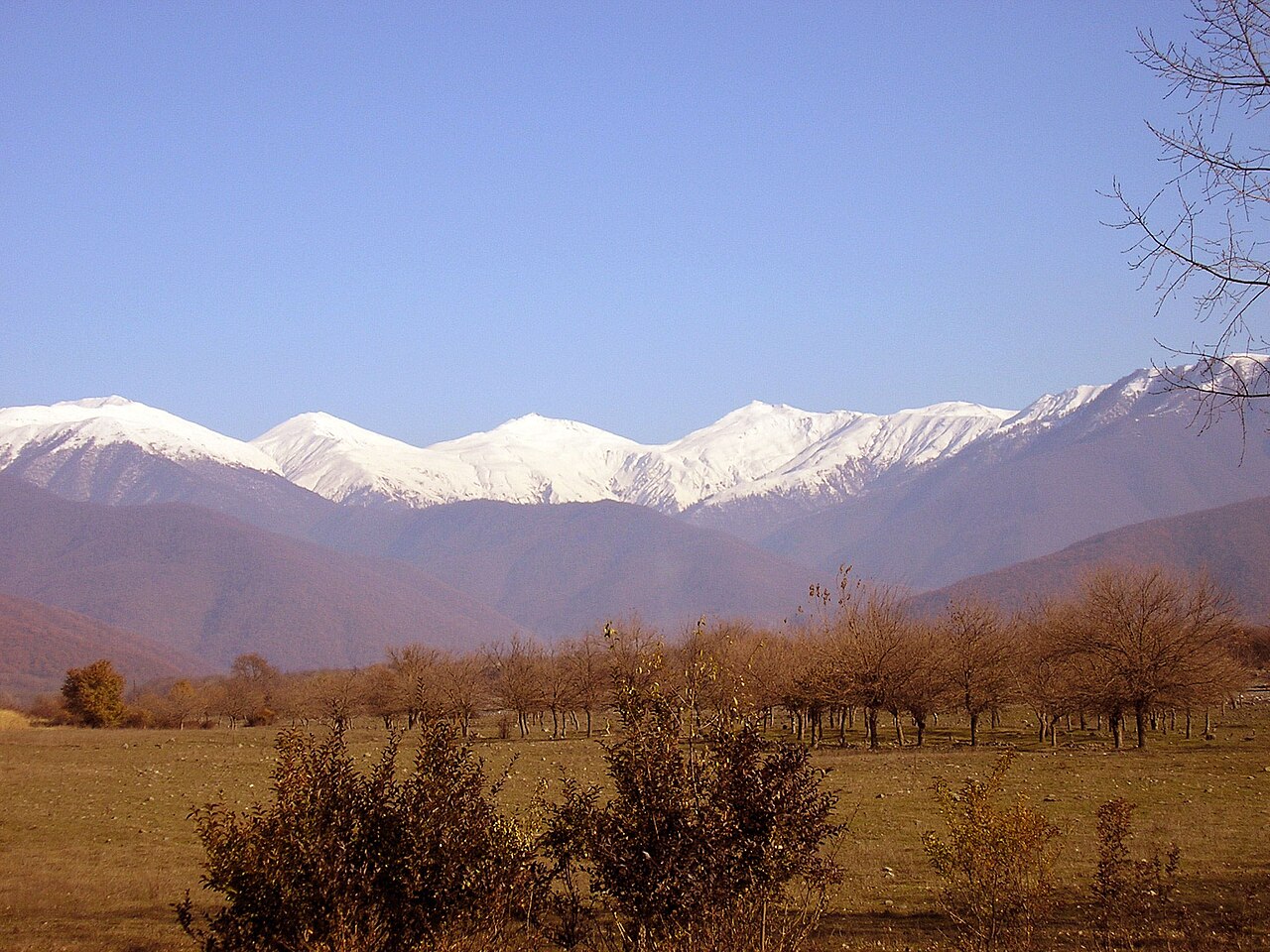
Come down from the mountains and go east instead. Kakheti is the qvevri heartland, where wine has been fermented in buried clay vessels for around 8,000 years, and the landscape shifts to vine rows against the wall of the Greater Caucasus.
Two workable shapes for these final days. The first: return to Tbilisi from Kazbegi on day five evening, then take a marshrutka from Samgori station to Sighnaghi on day six — ₾15, two to three hours, with departures roughly every two hours from 9am per this Kakheti transport guide. Sighnaghi is the walled hill town with the ramparts and the terrace views over the Alazani valley; Bodbe convent is a 20-minute walk below it. Day seven, visit one or two family marani on the way back to the city.
The second shape swaps Sighnaghi for Telavi (₾20 by minibus over the Gombori Pass), which puts you closer to the bigger estates and Alaverdi cathedral. Telavi is the more workaday town; Sighnaghi is the prettier one. Choose Telavi if wine is the point of the trip, Sighnaghi if the setting is. Guided wine day-tours from Tbilisi run about ₾80–150 per person including tastings, which is often cheaper than assembling the same day yourself with taxis. Our Kakheti wine tour guide lists cellars that take walk-ins.
The Black Sea alternative
If you are travelling in July or August, or if mountains are not your thing, swap days four and five for Batumi. The fast train from Tbilisi covers the 370 km in about four hours since an 8.3 km tunnel opened in August 2026, cutting roughly ninety minutes off the old timing — check tkt.ge for your date, as the timetable is still being reissued for ₾30–55 in second class, which is far more pleasant than the same distance by road. Batumi gives you a pebble beach, a boulevard of gleefully strange architecture, and easy half-days into the subtropical Adjara hills — Makhuntseti waterfall, the Mtirala rainforest, and the botanical garden north of town.
Be honest with yourself about the trade, though. Batumi eats two travel half-days and the coast is humid and crowded in high summer. Most people who make the swap say the Kakheti days were the ones they should have protected.
What a week actually costs
Per person, excluding international flights, assuming two people sharing a room:
- Beds, 6 nights: ₾300 budget guesthouses / ₾700 mid-range / ₾1,600 upper
- Food and drink: ₾45–120 per day. A bakery breakfast is ₾5, a full restaurant dinner with wine ₾50–80
- Transport: ₾150–250 if you mix marshrutkas with one or two shared drivers; ₾450-plus if you hire a car and driver for three days
- Entries, tastings, 4x4s, baths: ₾200–350 across the week
- Realistic mid-range total: ₾1,300–1,900 for seven days, or roughly $480–700
Card payment is normal in cities and unreliable in villages. Withdraw lari from a Bank of Georgia or TBC ATM and keep small notes for minibus drivers, who rarely have change for a ₾100.
When to go
Late May to early July and September to mid-October are the two clear windows. High-altitude trails around Kazbegi need the warmer months to be reliably snow-free, and Kakheti in late September lands you inside rtveli, the grape harvest, when family cellars open their doors and the whole region smells of crushed fruit. Winter is not off-limits — the Military Highway stays open year-round for freight — but the Jvari Pass closes at short notice in avalanche conditions, so build slack into any January or February plan.
Cutting it to five days
Drop Gori and Uplistsikhe first — they are the most easily replaced stop, and Mtskheta alone makes a half-day. Then reduce Kakheti to a single long day out of Tbilisi. Protect the Kazbegi overnight above everything else; it is the one part of the week that a day trip genuinely cannot replicate. That leaves: two days in the capital, a Mtskheta half-day, one night in the mountains, one wine day. Compressed, but not frantic.
Frequently asked questions
Do I need to rent a car for this trip?
No. Every stop on this route is reachable on public minibuses, and self-driving in the capital is genuinely unpleasant — parking is scarce and local driving habits are assertive. Rental makes sense only if you plan to detour into Tusheti or Svaneti, and those need a 4×4 rather than a standard hatchback. A driver hired for a single day costs less than most European car rentals and comes with someone who knows which mountain turnoffs are passable.
Is Georgia a safe place to travel independently?
Violent crime against visitors is rare and solo travellers, including women, generally report feeling comfortable. The real hazards are vehicular and topographic: overtaking on blind mountain bends, unlit road edges after dark, and sudden weather above 2,000 m. Avoid arranging long drives that finish after nightfall, carry a layer even in August, and note that the administrative boundaries with Abkhazia and South Ossetia should not be approached.
Will language be a problem?
Rarely, in practice. Hospitality staff under 40 usually manage English, older Georgians often speak Russian, and menus in tourist areas are translated. Village cellars are the exception, and there a phone translator plus goodwill covers everything. Learning to read the Georgian alphabet is unnecessary, though recognising the word for wine on a sign is a small pleasure.
Can I extend the week to ten days?
Yes, and the obvious additions are Svaneti in the northwest — medieval defensive towers under glaciers, reached via an overnight or a short flight to Mestia — or a slower loop through Borjomi and the cave monastery at Vardzia. Neither fits into seven days without wrecking the pacing, but three extra nights absorbs either one comfortably.
Last checked: August 2026
Featured image: dare from tbilisi, Georgia (CC BY-SA 2.0) via Wikimedia Commons.

Leave a Reply