
Don’t rent a car for Tbilisi. Do rent one the moment your plans involve Kakheti’s back lanes, Racha, Svaneti, or any village the marshrutka network serves once a day at seven in the morning.
That’s the decision. What follows is the part rental pages skip — what driving here actually feels like — because that decides whether the freedom is worth it. Risk first, paperwork second.
Where a car earns its keep, and where it’s dead weight
In the capital a car is a liability. Old Town’s streets were laid out for carts, and legal parking is scarce enough that drivers double-park with the handbrake off so you can shove the car forward. The 2 km of Rustaveli Avenue between Tamar Chovelidze Street and Freedom Square is also closed to vehicles from 23 July 2026 to the end of November, pushing traffic into the side streets you’d use to escape. Our guide to getting around Tbilisi covers the car-free version.
Outside the city the maths flips on one thing: marshrutkas run village-to-capital, not village-to-village. Fine for a single town, useless the second your day involves three stops. You cannot string three Kakheti wineries and a monastery together by shared van, and the Kakheti wine route is exactly the trip people are picturing when they decide to rent.
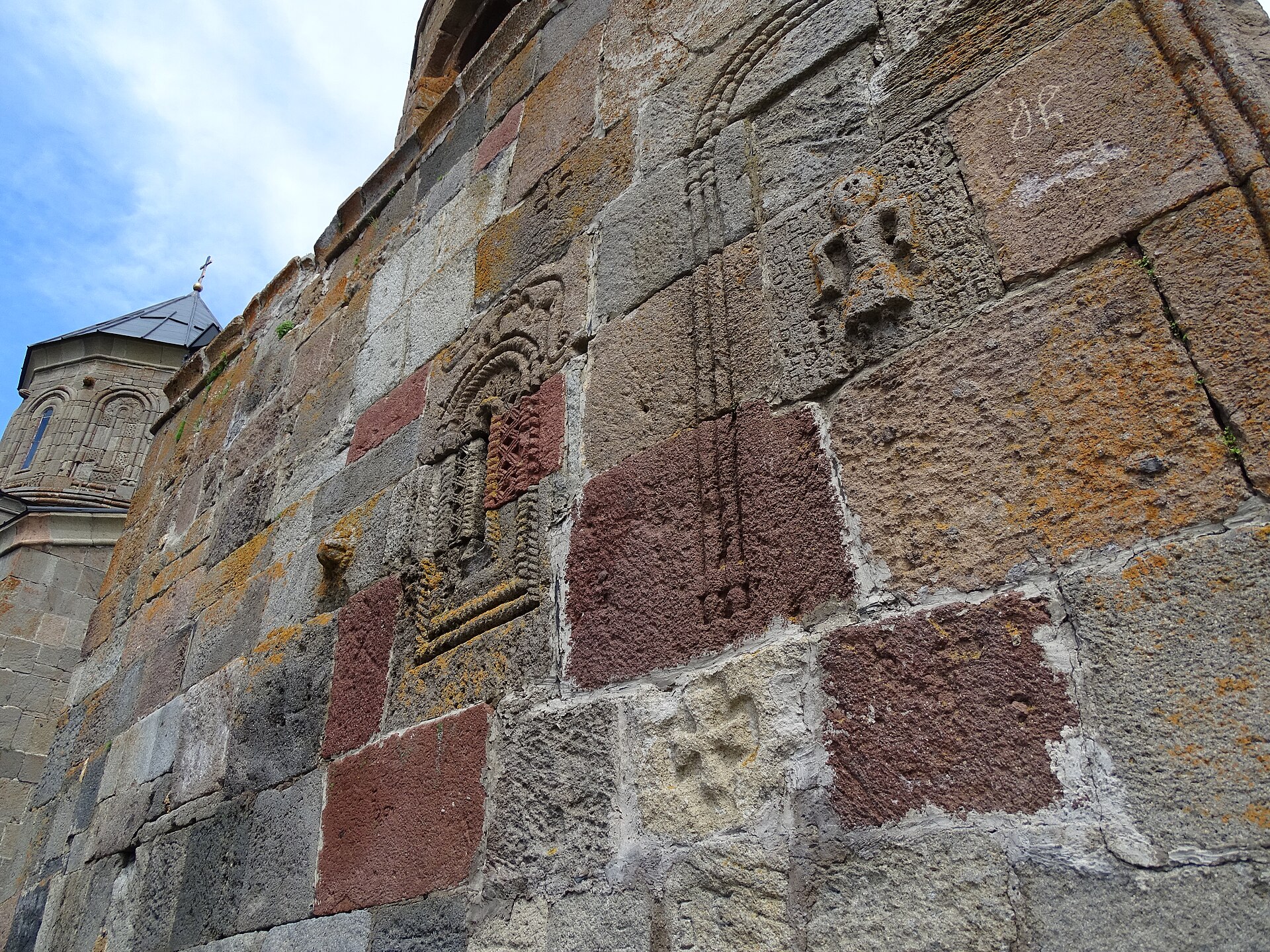
The car-optional list is longer than rental firms admit: Mtskheta, Sighnaghi, Borjomi and Kazbegi all have frequent shared transport. Gergeti Trinity Church needs a flag, because the standard advice is out of date. The road up from Stepantsminda is sealed asphalt now, an ordinary hire car makes it, and the 4×4 touts at the bottom sell something you no longer need. Our Gergeti guide has the current picture.
What the road actually feels like
The overtake
Georgian drivers overtake on blind corners. Not occasionally — as a default technique, on the Military Highway, on the Kakheti road, over solid white lines. The unwritten rule: a two-lane road is really three lanes, the overtaking car takes the middle, and both of you drift onto your shoulders.
You will be the one drifting. Hold your line right, never speed up to close a gap someone is using, and read flashing headlights as I am coming through, not after you. Tailgating at 100 km/h isn’t personal.
What you can’t see after dark
Rural Georgian roads have no street lighting, no pavement, and people walking on them. In dark clothes. At the edge of a lane with a 90 km/h limit. Add livestock — cows and pigs lie on asphalt after sunset because it holds the heat — plus unpainted speed bumps at village entrances and tractors with one tail light.
Our advice: treat sunset as a hard stop outside cities and build the day around it. A late start plus one long lunch is how people end up doing the Gudauri descent in the dark, the most avoidable risk on this list.
Surfaces, and the real 4×4 question
Main routes beat their reputation. The S1 to Batumi is motorway for long stretches and the Military Highway is paved to the Russian border. Leave them and the surface degrades fast: potholes deep enough to bend a rim, unmarked drop-offs, fist-sized loose rock, single-lane bridges with no priority sign.
What genuinely needs high clearance: the Abano Pass into Tusheti, snow-closed October to May and routinely named among the world’s most dangerous roads; the track above Ushguli; Truso Valley. What doesn’t: summer Kazbegi, Kakheti, Racha, Gergeti. A 4×4 on a paved itinerary costs 220–350 GEL a day instead of 80–120 and buys nothing.
Winter changes the answer
The Jvari Pass above Gudauri closes when avalanche conditions demand it — sometimes for hours, sometimes as a police-enforced daily window on the Gudauri–Kobi section in the spring thaw. Snow galleries keep it open most days, but most is not all, and the decision comes with no notice. Check roads.ge the morning you travel, not the night before.
Then ask the rental desk a blunt question: does this car have winter tyres, and are chains in the boot? Plenty of Tbilisi fleets run all-seasons year-round. Our Kazbegi day trip guide maps the route stop by stop.
What the crash statistics actually say
Georgia records around 12.7 road deaths per 100,000 people, per the WHO road safety country profile. The EU average sits near 46 deaths per million inhabitants — 4.6 per 100,000 — and the European Commission’s 2025 road-death update shows it inching down, not jumping. Georgia’s roads kill at close to three times the EU rate, checked August 2026 against both sources.
That doesn’t predict you’ll crash. It says the system carries less slack: fewer barriers on drops, slower mountain rescue, drivers whose moves assume everyone yields. Your margin for one lapse of concentration is thinner than at home — a reason to drive rested and sober, not a reason to stay off the road.
Insurance, and the excess trap
Almost every quoted price bundles third-party liability and a collision damage waiver. The CDW is where people get caught: it caps your liability at an excess of 1,000–3,500 GEL, not zero. Scrape a mirror on a Svaneti wall and you pay the excess, not the repair bill.
Buying that down to zero adds 30–60 GEL a day. Read the exclusions first, because the standard list is precisely the damage Georgian roads cause:
- Tyres and wheels — the pothole damage you’re most likely to collect
- Glass — loose stone off a truck on the Military Highway
- Underbody and roof — the two panels nobody photographs at pickup
- Anything sustained on an unpaved road, which can void the policy outright
Settle that last clause before you sign; Truso or Omalo puts you on gravel by definition. Get the answer into the contract, not the conversation. Our advice: buy the zero-excess upgrade for anything mountain-bound, decline it for a flat Kakheti loop.
Deposits run in reverse: basic cover means 500–1,000 GEL blocked on a credit card in the lead driver’s name for 7–14 days after return, and many local firms waive it for full-coverage renters. If you’re relying on your credit card’s own rental cover instead, check its country list first. Georgia is excluded more often than not.
Licence, IDP and age — what gets checked
Latin-script licence, no IDP needed — not at the rental desk, not for traffic police, for a visit-length stay. EU, UK, US, Canadian and Australian licences all qualify. An IDP or notarised translation only matters if your licence uses a script an officer can’t read.
Two things change that. Crossing into Armenia or Azerbaijan means border officers who want an IDP, a green card certificate and the rental company’s written permission — and plenty of firms flatly refuse, so ask before booking, not at the counter. The other is age: 21 minimum with a year of licence held, plus a surcharge under 25 at the chains.
Don’t confuse any of it with the entry rule: since 1 January 2026 every visitor needs health and accident cover of at least 30,000 GEL (about $11,000), in Georgian or English. It does nothing for your hire car. Our Georgia entry guide has the detail.
Fuel, fines and parking
Petrol sat near 3.77 GEL a litre for 95-octane in July 2026, the big chains separated by a few tetri. Filling a compact from empty runs about 180 GEL; a Tbilisi–Kazbegi return is roughly 350 km. Stations thin out above Gudauri, so top up in Pasanauri rather than trusting the map.
Enforcement is automated. Per Georgian rental operator OG’s fines breakdown, checked August 2026: 50 GEL for 15–30 km/h over the limit, 100 GEL for 30–50, 300 GEL beyond. Seatbelt and phone use are 50 GEL each. The drink-drive limit is 0.03% blood alcohol — one glass of wine breaches it, which matters on a winery day. Camera fines land on the registered owner, so the rental company pays and bills your card, usually with an admin fee and after the ten-day 20% discount window has shut.
Parking in Tbilisi is zone-based and paid by app; outside the big cities it’s free and informal. Informal includes the man who waves you into a space and expects a lari. Not a scam, just his job.
The trips where a hired driver wins
Georgia has a service that barely exists in Western Europe: a private driver at a fixed, pre-agreed price for the whole car, unlimited stops. A Tbilisi–Kazbegi day trip starts near 190 GEL for the vehicle, not per person. Against a rental at 95 GEL plus 100 GEL of fuel plus the excess risk, the gap for two is close to nothing — and your driver has done the Jvari Pass in snow.
Where we’d take the driver every time:
- The Military Highway between November and April
- Any full day in Kakheti where you intend to drink anything at all
- Tusheti and upper Svaneti, where the road is the whole reason to hire a local
For a single destination with a decent shared link, neither beats a marshrutka: Didube to Kazbegi is 15–20 GEL.
Whatever you choose, do the one thing most renters skip at pickup: film a slow walk-around with the timestamp visible — roof, wheels, underside of the front bumper — and send it to yourself before leaving the lot. Two of the four most-disputed damage categories are panels nobody photographs.
Frequently asked questions
Do I need an International Driving Permit to drive in Georgia?
Only if your licence isn’t in Latin script. UK, EU, US, Canadian and Australian licences are accepted on their own by rental desks and traffic police for a tourist-length stay. Get one anyway for driving into Armenia or Azerbaijan, where officers want it alongside green card insurance and the rental company’s written permission.
Is it dangerous to drive in Georgia?
More dangerous than the EU, but manageable if you adjust. Georgia records around 12.7 road deaths per 100,000 people against an EU average near 46 per million — close to three times the rate. The hazards are specific, not random: blind-corner overtaking, unlit pedestrians and livestock after dark, mountain edges without barriers. Sticking to daylight removes most of the exposure.
Do I need a 4×4 to drive in Georgia?
For nearly all itineraries, no. Kakheti, Mtskheta, Borjomi, the Batumi highway and summer Kazbegi are paved, and the road to Gergeti Trinity Church is now sealed asphalt rather than the rough track older guides describe. Save the 220–350 GEL daily 4×4 rate for the Abano Pass to Tusheti, the track beyond Ushguli, or winter in the mountains.
How much does it cost to rent a car in Georgia per day?
Compacts run 80–120 GEL a day from local agencies, mid-size SUVs 140–200 GEL, 4x4s 220–350 GEL. Zero-excess cover adds 30–60 GEL a day, and 500–1,000 GEL is blocked on a credit card unless you buy full cover. June to August carries a peak premium; November to February is the cheapest stretch.
Featured image: Vyacheslav Argenberg (CC BY 4.0) via Wikimedia Commons.

Leave a Reply