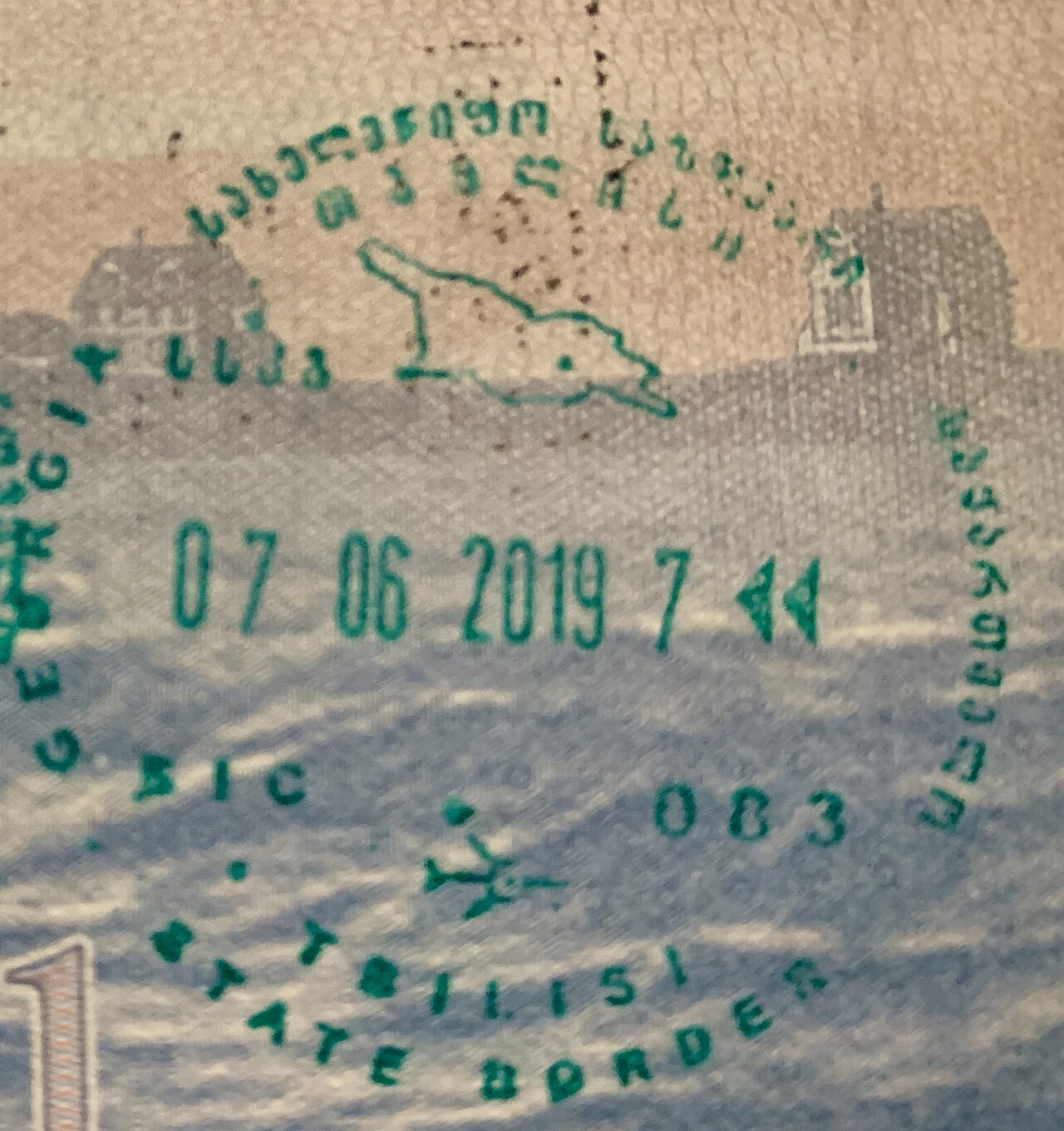
For most passports the answer takes one sentence: you don’t need a visa for Georgia, you get 365 days when you land, and since January 2026 you also need a travel insurance policy to get that stamp. Everything after this is detail, and three questions decide which details are yours.
Question 1: is your passport on the one-year visa-free list?
The list sits in Government of Georgia Ordinance No 255 and runs to about 95 countries and territories: every EU and EEA state, the UK, the US, Canada, Australia, New Zealand, Japan, Israel, the Gulf states, plus a long tail past those. If your passport is on it, you land, you get stamped, you have a year.
Read your own row, not the headline: a few nationalities sit on shorter tiers of 30 or 90 days, China among them since September 2023. If your passport isn’t listed, two other doors are open.
Door two: you hold a visa or residence permit from a listed country
This is the rule most articles get wrong. A valid Schengen, US, UK, Canadian, Australian, Japanese, Korean, Israeli or GCC visa or residence permit gets you in without a Georgian visa, under Ordinance No 256, which covers 50 countries. The allowance is 90 days in any 180-day period. Not a year. The permit must be valid on the day you cross, per the ordinance text, checked August 2026.
People arrive on this route believing they have twelve months. They have three, and that window rolls.
Door three: an e-Visa
Georgia’s electronic visa is issued through evisa.gov.ge. Check that spelling: the older visa.gov.ge address still circulates, and look-alike resellers outrank the real portal on some searches. The ordinary short-stay e-Visa allows up to 30 days inside a 120-day validity window, decisions land in about five working days, and the state fee is US$20 single entry or US$40 multiple.
Question 2: are you staying under or over 365 days?
Under a year, you’re done. The stamp is the permission: no form, no registration desk, no fee.
Over a year is where Georgia stops being casual. There’s no extension to buy, no counter that bolts a fortnight onto your stamp. Two honest routes: leave and come back, which opens a clean 365 days from the new entry date, or apply for a residence permit.
The exit-and-return route works because the allowance attaches to each entry, not to the calendar year, and nothing carries over. The catch: re-entry is a decision an officer makes, not a right you hold. Someone on their fifth reset writing the same Tbilisi address on every arrival card gets a longer conversation than someone flying in with a return ticket.
Our advice: after the second reset, stop resetting. A temporary residence permit through the Public Service Development Agency — work, study, family, a business, qualifying property — costs less in nerves than a third border run. Apply with 40 or more days still left on the stamp; applications filed from the edge of an expiry go badly.
Question 3: are you working remotely, or just visiting?
Just visiting? Skip ahead.
Working online for clients outside Georgia doesn’t change your immigration status. The visa-free stamp is an entry permission, not a tourist-only licence, and nobody at passport control asks what the laptop is for.
Cross 183 days inside any 12-month period and Georgia can treat you as a tax resident: different authority, different filing, different consequences from the stamp in your passport. Plenty of freelancers here register as an individual entrepreneur with small business status and pay 1% on turnover up to a threshold. It’s the most-repeated number in Tbilisi expat groups and the one people most often act on from a forum post instead of an accountant. Buy an hour of an accountant’s time first. A salaried job with a Georgian employer is a different question again.
What you actually need at the border
Four things, and only two get checked every time.
- A passport valid for the whole stay. Six months beyond entry is the safe habit. Children need their own document; Georgia won’t accept a child listed inside a parent’s passport.
- Insurance. New since 1 January 2026, checked on arrival. Terms below.
- Proof of onward travel. Mostly asked of people on one-way tickets.
- An address. A hostel confirmation on your phone ends the question in ten seconds.
A visa-free arrival at Tbilisi airport often takes under a minute. Land crossings run slower and chattier, and the queue at Sadakhlo or Sarpi eats an hour on a holiday weekend.
What goes wrong
The insurance rule, which is the 2026 story
Since 1 January 2026, every visitor entering Georgia must hold health and accident insurance, and border officers check for it. Government Decree No 602, signed 26 December 2025, sets the floor at 30,000 GEL, around US$11,000, with the policy covering the whole stay including arrival and departure dates, on paper or on a screen, in Georgian or English. The US Embassy in Tbilisi published the same terms to American travellers before it took effect, checked August 2026. Reporting on the decree adds a 5,000 GEL floor for emergency outpatient care on top of the 30,000 GEL inpatient figure.
Three ways people fall foul of it.
- No age exemption. A six-week-old baby needs her own policy on the same terms as the adults carrying her.
- A policy lapsing the day before your flight out doesn’t cover the stay. Buy to the departure date, inclusive.
- A certificate in Polish, Hindi or Arabic doesn’t count, whatever it says. Georgian or English only.
Exemptions are narrow: diplomatic and official passport holders, accredited mission staff, some transport crews, treaty cases. Tourists aren’t on that list, and neither are children. The penalty isn’t a fine at the desk. It’s refusal of entry.
One-way tickets
Georgian officers ask about onward travel now and then; airline check-in staff ask more often, and they’re the ones who stop you before you reach Georgian soil. A refundable Yerevan bus ticket fixes it for the price of a lunch.
The year-reset misconception, both versions
Version one: travellers treat the 365 days as a rolling allowance like Schengen’s 90-in-180 and subtract last spring’s trip from this year’s budget. Wrong. The count restarts at zero on every entry stamp.
Version two costs more: travellers on the third-country permit route assume they inherit the headline year. They don’t, and their 90-in-180 window is rolling.
Overstaying
Georgia is loose at the front door and precise at the back one. A short overrun draws a 180 GEL fine, a long one 360 GEL, payable on departure or at an Interior Ministry desk first; the tiers are set out by the immigration specialists at ExpatHub Georgia, checked August 2026. Enforcement tightened through late 2025, and an unpaid fine blocks your next entry until it’s cleared. Repeated or serious cases move into deportation, with a two-to-five-year re-entry ban.
Set the calendar alert for day 335, not day 364.
Check your own case before you fly
Rules move, and this one moved fast: the insurance decree was signed 26 December 2025 and applied six days later. None of this is legal advice. Confirm your own passport’s position with the Georgian Ministry of Foreign Affairs, with the evisa.gov.ge portal, or your nearest Georgian embassy before booking, and re-check the insurance rule a week out while enforcement settles.
Frequently asked questions
Do I need travel insurance to enter Georgia in 2026?
Yes. Since 1 January 2026 everyone arriving needs health and accident cover of at least 30,000 GEL, around US$11,000, valid for the whole stay and written in Georgian or English. No age exemption, so infants need their own policy. Officers check at passport control and can turn you away without it.
How long can Americans, Brits and EU citizens stay in Georgia without a visa?
365 days from the date of the entry stamp, free and granted on arrival under Ordinance No 255. The count starts from zero again the next time you enter rather than accumulating across the calendar year.
Does leaving and re-entering Georgia reset the 365 days?
It does. The allowance attaches to each entry, so a night over the border buys a fresh year on the way back in. Officers can still refuse anyone treating tourist entry as residency, and a residence permit is the sensible move past a second reset.
What happens if you overstay in Georgia?
A fine of 180 GEL for a short overrun, 360 GEL once it runs long, settled on exit or at an Interior Ministry desk first. Leave it unpaid and your next entry is blocked; serious cases bring deportation and a two to five year ban.
One practical thing left: buy the insurance before the flight. A compliant 30,000 GEL policy costs less than a night in Old Town, and it’s the only part of Georgian entry that can stop you at the door. Then, the trip itself — our Tbilisi travel guide, is Tbilisi safe, money in Tbilisi, and the ride in from Tbilisi airport.
Featured image: Cpenyak787 (CC BY-SA 4.0) via Wikimedia Commons.



Leave a Reply