Yes, one day in Tbilisi is enough to see the old town, eat khinkali and sit in a sulfur bath, and even a 6-hour layover buys you about two hours in the city if you plan the transfers with a clock, not with hope. The variable that decides everything is not what Tbilisi offers. It is how many hours you actually hold, minus the airport maths at both ends.
So this guide is built as three separate plans, 6, 12 and 24 hours, each with the transfers costed in and an honest list of what you will not see. Pick your number and skip the rest.
The maths that runs all three plans
Do this arithmetic before you decide anything, because it kills more layover plans than any closed museum.
The airport sits 17 km east of the centre. A Bolt runs ₾15–25 in normal hours and ₾30–40 when surge pricing kicks in at dawn, in rain or late at night, and takes 20–30 minutes to the old town. Bus 337 costs 1₾ and takes about an hour, running every 15–20 minutes across its scheduled day, roughly 07:00 to 23:00, checked August 2026 against Wander-Lush’s airport transport guide. It is not a night bus, whatever an older blog told you. There is no metro at the airport, and the occasional airport train is too rare to plan a day around. The full breakdown, including why the official taxi rank’s fixed ₾80 is always the wrong answer, is in our airport to city centre guide.
Now the rule that matters more than any sight. Call it the return buffer: be back at the airport 2 hours before an international departure, and start heading back 2 hours 45 minutes before it if you are relying on a Bolt at a surge-prone hour, because the five minutes waiting for a driver to accept is where layovers die. Write the leave-the-city time into your phone before you get in the first car.
The luggage question
Do not drag a suitcase across Abanotubani’s cobbles. The airport has a left-luggage office in the arrivals hall, open 24 hours, charging 10₾ per day for a standard bag and 20₾ for oversized ones, checked August 2026 against Georgia4You’s left-luggage listing. At ₾26 to the dollar… no, the other way round: at roughly 2.6₾ to the dollar, that is four dollars to walk free for a day. Pay it.
Six hours: the layover version
Can you even leave the airport? Yes, if you clear two gates. First, your nationality gets visa-free entry (about 95 do, for a year). Second, the sums work: from a 6-hour layover, subtract 30–40 minutes to clear passport control and drop bags at left luggage, 25 minutes in, 25 minutes out, and the 2-hour return buffer. You are left with about two hours in the city. Tight, real, and worth it.
Two hours means one neighbourhood, and the only correct pick is the old town. Have the Bolt drop you at Meidan Square. From there, everything worth those two hours is inside a 700-metre circle: the brick domes of the sulfur baths, the waterfall gorge behind them (10 minutes’ flat walk up Leghvtakhevi and most layover visitors never find it), the leaning clock tower, and a khinkali stop, ₾2–3 per dumpling almost anywhere central. Order six, not twelve; you have a flight.
What you are not going to see: Narikala fortress (fenced off for restoration through 2026 anyway, so you are missing nothing), the cable car, any museum, Rustaveli Avenue, and any restaurant meal that involves waiting for a table.
One warning for the sub-6-hour crowd. If your layover is under five hours, stay in the terminal. The stress-to-reward ratio flips, and one traffic jam on the Kakheti Highway turns a fun story into a missed connection.
Twelve hours: the real day
Twelve hours, say landing at 08:00 and flying out at 20:00, gives you about seven usable hours in the city after transfers and buffer. That is enough for the old town done properly plus one big experience, and the big experience should be a sulfur bath.
Run it in this order, because the baths decide the day. Go to Abanotubani first and book a private room for a slot two or three hours ahead; plain private cabins run 15–40₾ an hour, while Chreli-Abano, the blue-tiled one on the postcards, starts around 60–70₾ and its better rooms go for 130–200₾ at peak. Walk-ins get told “come back at nine” more often than any other Tbilisi disappointment we hear about. How the ritual actually works, including the kisa scrub question, is covered in our sulfur baths guide.
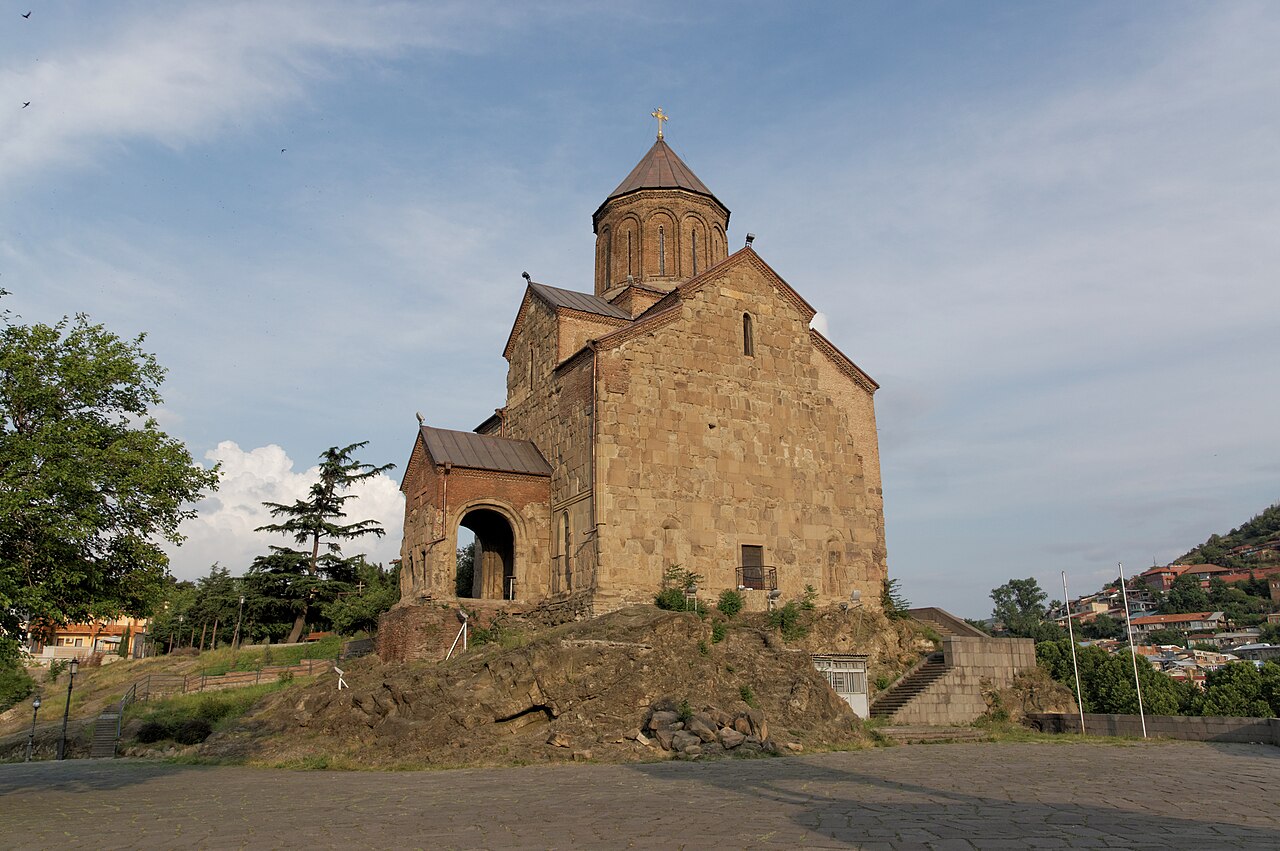
With the booking made, fill the gap: the waterfall gorge, Metekhi church on its cliff, then across the Bridge of Peace into the old town lanes for a long lunch. An Adjaruli khachapuri runs ₾15–30 and is a two-person job. If your legs have more in them, ride the cable car from Rike Park up the ridge, 2.5₾ each way and it takes only the Metromoney transport card, no cash, and foreign bank cards fail at that terminal often enough that you should not rely on one. The ridge path to the Kartlis Deda statue is open even while the fortress walls are shut.
Then the bath. One hour in the room, and you will leave with your shoulders somewhere lower than you arrived with them.
What you are not going to see: Mtskheta (the transfer maths eats the day), the funicular and Mtatsminda, the National Museum, and the left-bank neighbourhoods. The fuller menu of what a longer stay buys you is in our best things to do in Tbilisi list; read it on the flight out and start plotting the return.
Twenty-four hours: one night in the city
A full 24 hours changes the character of the day, because you get a Tbilisi evening, and the evening is the best of it. Take everything in the 12-hour plan, spread it out so it breathes, and add three things.
- A proper dinner. Book somewhere for wine, not just food; a mid-range meal with wine runs ₾45–80 a head, a glass of decent Saperavi ₾6–8, and a three-glass tasting flight about ₾30. Service charge of 10% is standard, so check the bill before tipping twice.
- The city after dark. The old town at 22:00, baths glowing, streets half-empty, is a different and better place than at 14:00. This is what the layover people paid the same airfare for and never see.
- A slow morning. Coffee, one last walk along the river, and a look at Rustaveli Avenue, which is closed to cars through the end of November 2026 along its central 2 km, so you can walk the roadway itself past the opera house. Be aware that evenings outside Parliament have seen nightly protests since late 2024; they are peaceful in character but make the avenue crowded after dark.
What you are still not going to see: day trips. Mtskheta, Kazbegi and Kakheti all need their own day, and pretending otherwise wrecks the one you have. If your 24 hours might stretch to more, our 3-day Tbilisi itinerary maps the walking routes street by street, which is exactly what this page deliberately doesn’t do.
If you only do one thing
Our advice, and plenty of visitors would argue for the cable car view instead: make it the sulfur bath. A view of a city you barely know is pleasant and forgettable. An hour sweating in a 300-year-old brick dome, scrubbed by a stranger with a rough mitt, is the one thing on this page you cannot get anywhere else, and it works at any hour and in any weather. It even fits a 12-hour day, which the sunset views and the wine dinners don’t always manage.
Frequently asked questions
Can I leave Tbilisi airport during a layover?
If your passport is on Georgia’s visa-free list, nothing stops you walking out of arrivals and back in later; there is no transit-zone trap. The practical floor is a 6-hour gap between flights. Below that, the ride in and out plus check-in leaves you almost no city time for real risk.
Is one day in Tbilisi worth it?
Genuinely, yes. The historic core is compact enough that a single focused day covers its headline sights and two meals, which is not true of many capitals. What a day cannot give you is the city’s pace; that needs the extra nights.
Where can I store luggage in Tbilisi city centre?
App-based networks like Qeepl and LuggageHero list shops and hotels around the centre from a few lari per bag per day. For a same-day return flight, the airport’s own 24-hour office is simpler, since your bags end the day exactly where you need them.
How much money do I need for one day in Tbilisi?
A layover costs ₾60–90 covering two Bolt rides, dumplings and coffee. A 12-hour day with a private bath room and a proper lunch lands around ₾150–250 per person, and the 24-hour version with a wine dinner and a night’s accommodation adds whatever your bed costs on top of about ₾300. Cards work nearly everywhere; keep 20₾ in cash for small stalls.
The last thing to set before you land
Install Bolt and load a payment card before you board the flight in, because airport wifi plus a new SIM plus card verification is a 25-minute chore that comes straight out of your city time. Then set that return-buffer alarm. Everything else on this page survives improvisation; those two don’t.
Featured image: Vyacheslav Argenberg (CC BY 4.0) via Wikimedia Commons.




Leave a Reply