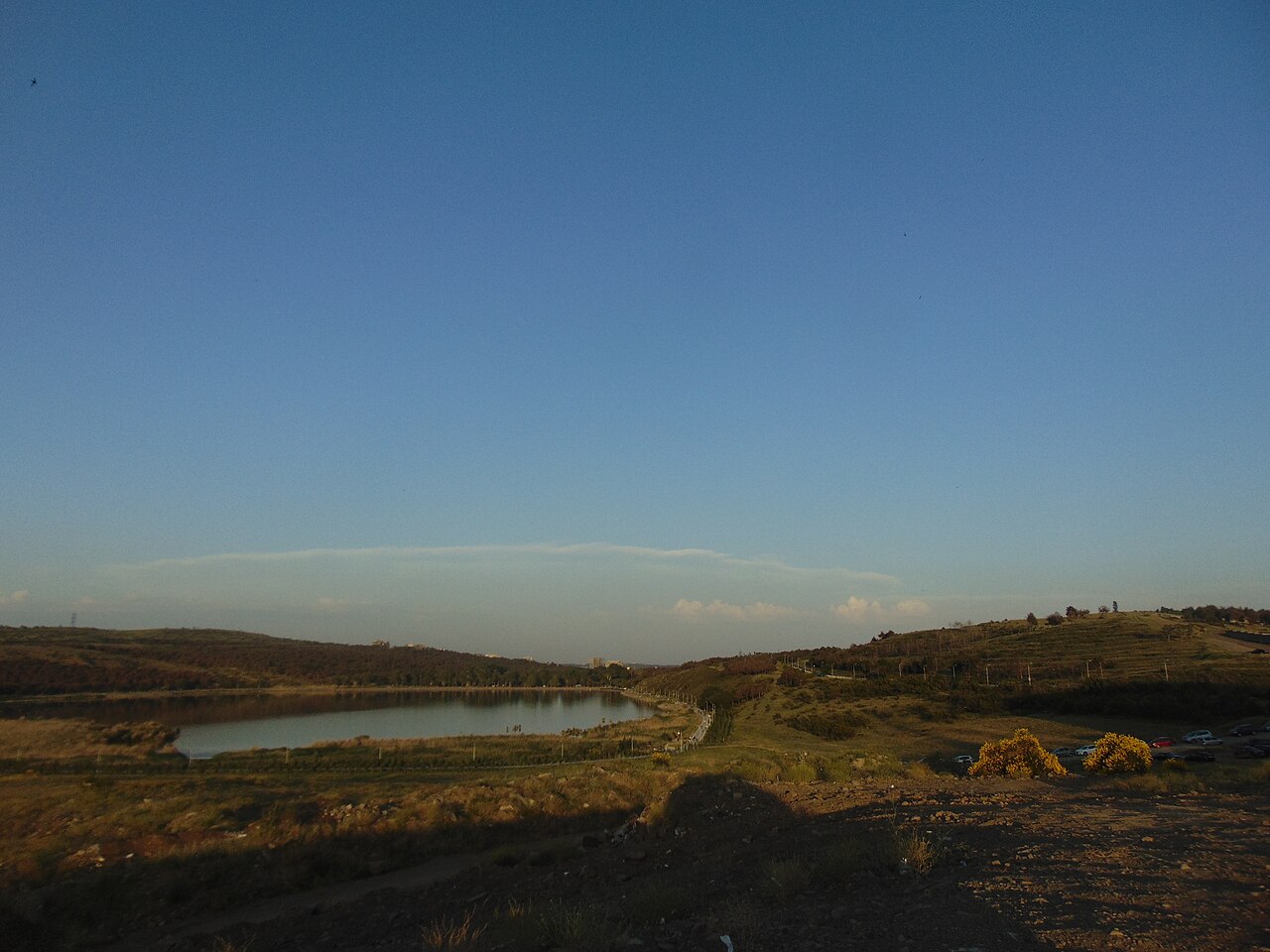
If you want the lake that Tbilisi families, runners and dog-walkers actually use on a Sunday, go to Lisi Lake, not Turtle Lake. Turtle Lake is smaller, sits right above Vake with a cable car and a museum, and fills with visitors by mid-morning. Lisi is bigger, flatter, further out, and built around a proper loop path rather than a photo spot.
It sits on the north-western edge of the city, past Saburtalo, at roughly 620 metres above the river. The whole draw is simple: a wide, level circuit around open water with hills and reedbeds behind it, and enough cafes that you can turn a walk into an afternoon.
How to get there, and what it costs
There is no direct metro to the water. The Saburtalo line drops you at Delisi or Vazha-Pshavela, and from either you still have a couple of kilometres of uphill road to cover, so plan the last stretch.
City buses do reach the residential edge of the lake. Routes 329 and 332 run out from Station Square (Vagzlis Moedani), and route 388 leaves from Baratashvili, all at the standard 1₾ fare with a Metromoney card or a contactless bank card. The catch is the same one every Tbilisi bus has: the app timing is optimistic, and a bus that says four minutes can be fifteen. From the nearest stop it is a short walk to the shore.
Honestly, most people just take a Bolt, and for a group it makes sense. It is only about 8 kilometres from the centre — a 15 to 20 minute drive — so a normal-hours fare tends to land somewhere around 8 to 14₾. That is an estimate for the distance rather than a quoted price; ride-hail fares move with demand, and a rainy evening or a football night will push it higher. If you have never used it here, the mechanics are in our Bolt taxi guide, and the wider public-transport picture is in getting around Tbilisi.
Our advice: bus in if you like watching the city thin out into hillside suburbs, Bolt back when your legs are done. The return road is all downhill and drivers are easy to find at the main entrance.
The loop: running and cycling
The circuit is close to 3 kilometres and almost completely flat, on a paved pedestrian-and-bike path that hugs the water most of the way. Walkers do it in 35 to 50 minutes; a steady run is one lap in 15 to 25, so two or three laps make a real session without a single hill to argue with.
That flatness is the reason to come and run here rather than anywhere central. Tbilisi is a city of stairs and gradients. Lisi gives you a measured, repeatable loop where you can actually hold a pace, which is rare inside the city limits.
Cyclists share the same path, and there are bikes to rent at the main entrance if you arrive without one. Two warnings from the pattern of the place. On a warm weekend afternoon the paved section near the cafes gets crowded with prams and kids on scooters, so it is not a good time for a fast lap. And if you want dirt, the rougher trails climb into the hills on the east and north sides above the lake — better views, no crowds, proper shoes needed.
Can you swim in it? Honestly.
Yes, people swim, and in July and August the water warms into the mid-20s Celsius, which is more inviting than the cold reservoir at Turtle Lake. There are designated shallow areas with a beach.
Now the honest part. There are no lifeguards, and the water is not pristine. Lisi collects urban runoff, and a peer-reviewed study of Tbilisi’s recreational lakes found elevated faecal-indicator bacteria in summer and early autumn across the sampled lakes (Journal of Water and Health, 2013). That work is over a decade old and the shore has been rebuilt since, but nobody has published an all-clear either. Locals swim anyway and are mostly fine.
So treat it the way a Tbilisian treats it: a hot-day dip near the beach, not a place to put your head under for laps, and skip it entirely after heavy rain when runoff peaks. If a proper swim is the whole point of your trip, this is not the lake for you.
Cafes and where to sit
The developed shore — roughly the south and east — is where the cafes cluster, and it is genuinely the point of a Lisi afternoon for a lot of people. Lisi Lounge is the long-standing favourite for a table right on the water, with a broad wine list and a summer terrace that fills fast. Lisi Charlie Café sits back off the path in the trees, strung with Tibetan prayer flags, and works better when you want shade and quiet than a lake view. For a fast coffee mid-lap, Lisi Intelligentsia does the job without ceremony.
Prices here run a notch above a neighbourhood café in town, which is the tax on the view. The west side, by contrast, has almost nothing built on it — no cafes, fewer people, just path and water. Walk there when you want the lake to feel like nature again.
Sunset, and the birds most people miss
Come late. The best light is the last hour before dark, and because the developed shore faces west across the water, the sun drops behind the far hills and lays a flat orange sheet over the whole lake. Grab a table on the south or east side an hour before sunset and you have the angle without moving.
Here is the part almost no visitor knows. The reedbeds at the quiet end of the lake are a serious birding spot, not just scenery. Lisi is one of the few places in Georgia where Paddyfield Warbler breeds regularly, and the reeds hold both Great Bittern and Little Bittern; recorded sightings run to Laughing Dove and Lesser Grey Shrike as well (Birdingplaces). The northern edge of the reedbed is the patch to work, and spring mornings before 10am — ahead of the weekend crowd — are the window. There are turtles, foxes and hares in the surrounding scrub too, and the drier hillsides have snakes, so watch where you step off-path in summer.
The building site next door
You cannot miss the new town going up around the lake. Green Lisi Town, a large mixed-use development on land bought by a company linked to TBC Bank’s Mamuka Khazaradze, opened its first phase back in 2011 and has kept expanding, with newer projects like Lisi Topograph filling in the hills. What used to be an out-of-town lake is turning into a residential district with the lake at its centre.
For a visitor it cuts both ways. The upside is the rebuilt path, the cafes and the easy access. The downside is that the wild, empty feel gets pushed further to the western and northern fringes each year, and the environmental strain on a shallow lake ringed by construction is a real, ongoing question. See it for the loop and the reedbeds while both are still there to see.
Frequently asked questions
Is Lisi Lake or Turtle Lake better?
Different jobs. Turtle Lake is closer, smaller and reachable by cable car from Vake Park, which makes it the quick, scenic half-day. Lisi is the one to pick if you want space to run or cycle a full flat loop, a warmer swim, and fewer tour groups. If you are travelling without a car and short on time, Turtle Lake wins on convenience; for a half-day that feels like the city relaxing, Lisi wins.
How long does it take to walk around Lisi Lake?
Budget 35 to 50 minutes for one relaxed lap of the roughly 3-kilometre path, more if you stop for photos or a coffee. It is flat the whole way, so it suits families and older walkers, not only runners.
Is there an entrance fee for Lisi Lake?
No. The lake and its path are free to enter. You only pay for what you choose on top — a rental bike or boat, or food and drinks at the cafes on the developed shore.
When is the best time of day to visit Lisi Lake?
Early morning if you are there to run, birdwatch or beat the heat and the crowds. Late afternoon into the last hour before sunset if you want the light and a table. Midday on a summer weekend is the one slot to avoid, when the paved shore is at its busiest.
One last practical thing: there is little natural shade on the loop itself, so a summer visit means a hat, water and sunscreen, especially if you are pushing a run in the heat. If you are planning the season around it, our guide to Tbilisi in summer covers how brutal the midday sun can get.
Featured image: Kober (CC BY-SA 4.0) via Wikimedia Commons.




Leave a Reply