
Three or four days in Tbilisi and nowhere else? Buy a travel eSIM before you fly and land already connected. A week or more, or any day trip that leaves the main highway? Get a physical SIM and make it Magti. Counting every lari and staying inside the city? Cellfie’s ₾7 starter or a Silknet tourist bundle does the job.
That’s the whole answer. The rest matters for one reason: the cheapest option and the option that still works in the mountains are not the same option, and most people learn that at a trailhead above Stepantsminda with one bar of signal.
Coverage decides this, not price
Price is close to a non-issue here. Magti sells a month of unlimited data for about ₾32, Cellfie’s 30-day Maxi is ₾25 for 20 GB, and Silknet’s 30-day tourist bundle sits at ₾50–55. The spread between cheapest and dearest, across a whole month, is about what a plate of ten khinkali costs in central Tbilisi.
Where the three networks genuinely part company is altitude.
Magti reaches furthest into the Greater Caucasus, including Tusheti, where the other two effectively stop. Silknet holds up nearly everywhere else but thins out in Upper Svaneti and around Vardzia. Cellfie is the one to avoid off the asphalt: its signal drops as soon as you leave a main road, which is fine in Tbilisi and a real problem on a ridge.
On the standard Kazbegi day trip, all three hold a signal through Ananuri, Gudauri and Stepantsminda town, because the Georgian Military Highway is well covered. The Jvari Pass is patchier. The 1.5–2 hour walk up to Gergeti Trinity drops out in stretches on every network, and Juta is worse still. Marshrutkas from Didube (₾15–20 to Stepantsminda) run through all of it with no Wi-Fi and no charging port.
Our advice: if there’s even one mountain day in your itinerary, pay the extra ₾5–10 for Magti and stop optimising. The saving on Cellfie is not worth twenty minutes of waving your phone around trying to send a photo. Same goes for the routes in our guide to the best hikes near Tbilisi.
Does 5G change the answer? No. Cellfie was the sole bidder in Georgia’s 2023 5G auction and Silknet spent ₾49 million on 700 MHz and 3500 MHz licences in mid-2025, so the map is filling in. Maps, WhatsApp and a Bolt booking all run fine on 4G, which is everywhere that matters.
Buying one, in practice
Bring your passport. Georgian law ties every SIM to an ID document, so the assistant scans it before the card goes live. No proof of address, no local bank account, no deposit. Five to ten minutes and you have a Georgian number.
What the airport desks actually sell
All three operators have desks in Tbilisi arrivals, staffed for every flight including the 4am ones. Magti’s own airport tourist SIM page, checked August 2026, lists exactly two options at Tbilisi and Kutaisi:
- ₾15 — 5,000 MB of data and free local SMS, valid 15 days.
- ₾30 — free 4.5G SIM, 3,000 MB of data, 30 minutes of international calls, free calls to any Georgian network, valid 15 days.
Read those two lines again. The ₾30 package contains less data than the ₾15 one. The extra ₾15 buys calling minutes, and if your plan is maps plus messaging apps you’ll never touch them.
Why a city shop is cheaper
In town, a Magti SIM is ₾10 (with ₾1 of credit on it) and data packages are sold separately: ₾5 for 1 GB, ₾9 for 3 GB, ₾12 for 5 GB, ₾30 for 20 GB, all valid 30 days. Unlimited is ₾32 a month, ₾10 a week, ₾2 for a single day.
So ₾40 in a city shop buys twenty gigabytes over thirty days. The ₾30 airport bundle buys three over fifteen. That’s the real airport premium, and it’s nothing like the lari-or-two other guides repeat.
Silknet’s tourist packages are unlimited-data blocks: around ₾15 for 7 days, ₾30–33 for 15 days, ₾50–55 for 30 days, most with local minutes and SMS included. Cellfie undercuts everyone at ₾7 for a 7-day, 7 GB starter and ₾25 for the 20 GB monthly Maxi. Figures checked August 2026 against Wander-Lush’s operator comparison; promotions move them a few lari either way.
Operator shops line Rustaveli Avenue and Agmashenebeli, with counters inside Tbilisi Mall, East Point and City Mall. One wrinkle this year: Rustaveli is shut to vehicle traffic from 23 July 2026 until the end of November, two kilometres from Tamar Chovelidze Street to Freedom Square. You’ll be walking to that shop.
Check your handset is unlocked before you fly. A carrier-locked phone rejects a Georgian SIM, and arrivals is a bleak place to learn that.
eSIMs, and what the convenience really costs
An eSIM skips the counter, the passport scan and the queue. Buy online, scan a QR code, connect the moment the wheels touch down. Most iPhones from the XS onward and recent Android flagships support it.
Airalo’s Georgia plans start near $4.50 for 1 GB over 7 days, with 3 GB/30 days around $11 and 10 GB/30 days between $26 and $32. Holafly leans on unlimited day passes at a higher headline price.
Convert that and the premium is stark. A lari was worth about $0.38 in late August 2026, so the in-city Magti route (₾10 SIM plus ₾30 for 20 GB) comes to roughly $15. Twice the data of a $26 Airalo pack for well under half the money.
And there’s a detail the comparison articles skip. Airalo’s Georgia eSIM rides on Cellfie’s network: the weakest of the three in exactly the terrain where you’d notice, sold to you as the convenient choice. Holafly runs on Magti, which flips the trade. Before buying any travel eSIM for Georgia, find out whose towers it uses.
Worth knowing: Magti and Silknet sell their own eSIMs at the same price as the plastic card, Magti’s at ₾10 and Silknet’s under ₾10 plus a small new-number fee. Local pricing, a Georgian number, the operator’s real coverage, no shop visit.
Our advice: treat a travel eSIM as a landing pad, not a trip plan. Buy the cheapest 1 GB tier, land connected, then pick up a local SIM in town next morning if you’re staying more than a few days.
The two things people get wrong
You don’t strictly need data to order a Bolt
The panic-buy at the arrivals desk comes from one fear: no data, no taxi. Not quite true. Tbilisi International runs free Wi-Fi across both terminals, and per the airport’s own instructions there’s no signup — turn cellular data off, join Tbilisi Loves You or Airport Free Wi-Fi, accept the terms, done.
The catch: travellers regularly report Bolt refusing to complete a booking over that network. Weak signal at the far end of the hall, or something in the app. It works often enough to rely on and fails often enough to ruin a 3am arrival.
A ₾15 SIM removes the failure mode for less than the fare itself. Reckon on ₾15–25 for a Bolt to Old Town in normal hours, ₾30–40 when surge bites at dawn or in rain. Our airport to city centre guide covers the ₾1 bus 337 alternative.
Credit is not data
This one costs people real money. They feed ₾20 into a TBC Pay or Bank of Georgia terminal, see the balance land, assume they’re topped up, then watch it vanish inside a day. Raw credit is billed at pay-as-you-go rates, which are brutal next to package rates.
You have to convert credit into a package. The MyMagti, My Silknet and Cellfie apps do it in two taps and take foreign cards for one-off purchases. Magti also answers USSD: dial *111# and follow the menu. Street terminals accept cash or card, but some add a service fee near 4%, so the app is the better habit. Our getting around Tbilisi guide covers the rest of the paying-for-things problem.
Frequently asked questions
Is Magti or Silknet better for travellers?
Magti, if any part of your trip goes above the treeline. Both are strong in Tbilisi and along the highways, but Magti keeps working in Tusheti where Silknet fades, and Silknet has known weak spots in Upper Svaneti and near Vardzia. For a city-only stay, take whichever desk has no queue.
How much does a SIM card cost in Georgia?
Between ₾7 and ₾55 all in. Cellfie’s 7-day starter is ₾7 with 7 GB. A Magti SIM is ₾10, plus ₾30 for a 20 GB month. Silknet’s unlimited blocks run ₾15 a week to ₾50–55 a month. At August 2026 rates a lari is worth about 38 US cents.
Can I buy a Georgian SIM card without a passport?
No. Every SIM sold in Georgia must be registered against an identity document, so no passport means no card, at the airport or anywhere else. Photocopies and phone photos are not accepted. Bring the physical booklet; the registration itself adds only a few minutes.
Do eSIMs work in Georgia?
Yes, in two flavours. Travel eSIMs like Airalo and Holafly install before departure and cost three to four times local rates per gigabyte, each piggybacking on one Georgian network: Airalo on Cellfie, Holafly on Magti. Magti and Silknet also sell their own eSIMs at local prices with a Georgian number.
One thing to do before you leave the counter: open Google Maps and download the offline area for wherever you’re going next, while the assistant is still there to fix anything odd. The saddle above Gergeti is considerably less accommodating.
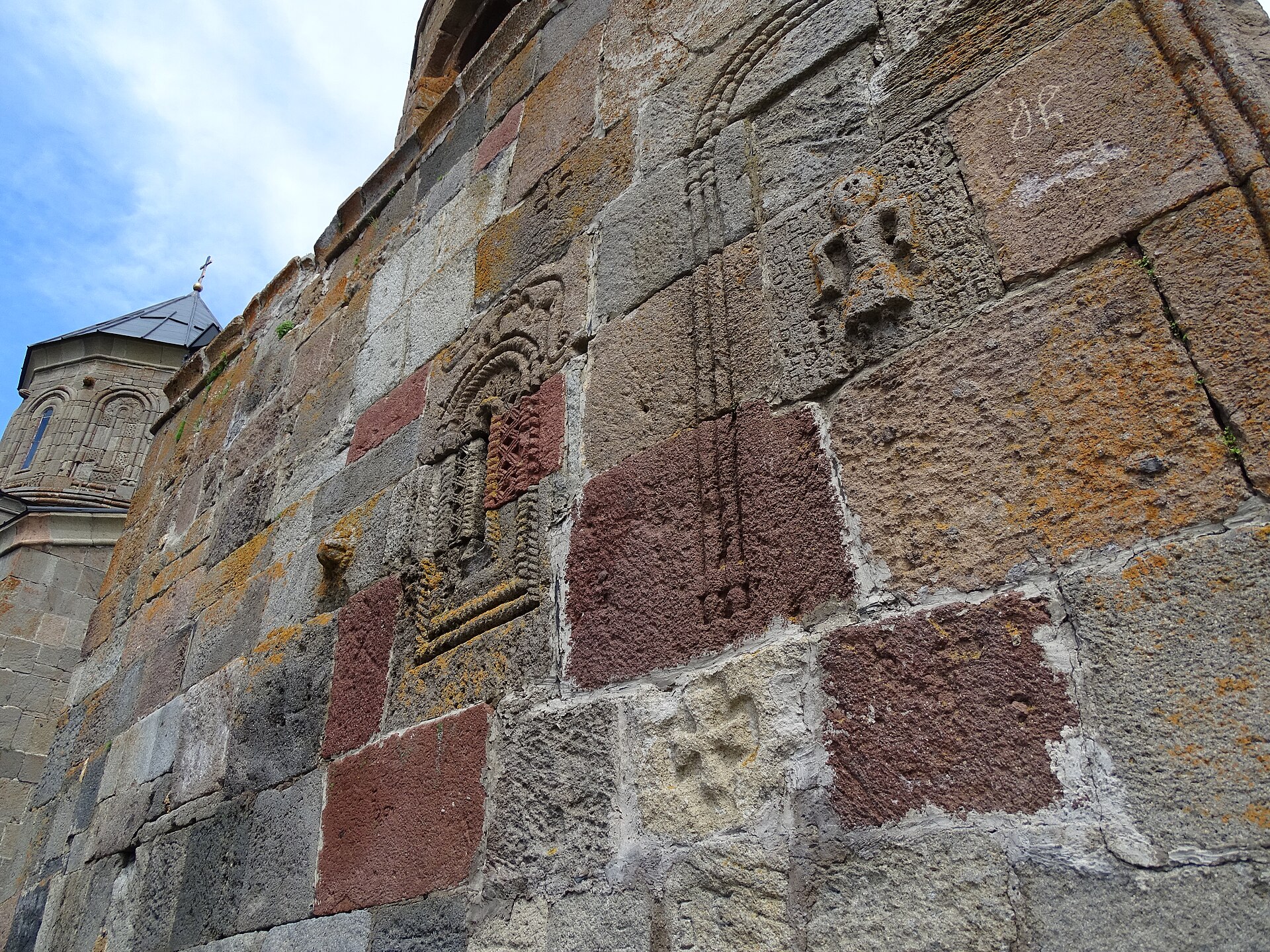
Featured image: Robot8A (CC BY-SA 4.0) via Wikimedia Commons.


Leave a Reply