Ask a Georgian restaurant for სამარხვო (samarkhvo) and much of the menu goes plant-based on the spot. It means Orthodox fasting food, no meat, fish, dairy or eggs, and it will feed you better in Tbilisi than every vegan cafe in the city put together.
The reason is arithmetic, not hospitality. Between four church fasts and every Wednesday and Friday, an observant Georgian eats fully plant-based for close to half the year, so this cooking sits in the ordinary repertoire of a village grandmother and a tourist tavern alike. You are not asking a cook to improvise, only for the version they make anyway.
Say the word, then check one thing
It is pronounced sa-MARKH-vo. When your pronunciation collapses, and it will, showing სამარხვო on your phone does the job. Many menus already flag fasting dishes with a small green leaf.
One catch nobody mentions: samarkhvo is a religious category, not a vegan one, so honey and shop-bought mayonnaise slip through it, as Wander-Lush notes in its Georgian vegetarian guide. Savoury dishes are safe. Ask about the dessert.
Does that make the word unreliable? No. It lands a plant-based dinner far more often than the English word vegan, which your waiter may be hearing for the first time.
When the calendar does the work for you
You can order this way on a random Tuesday, but menus lengthen during the fasts. One wrinkle: the Georgian church keeps the Julian calendar for fixed feasts, shifting some dates two weeks later than a Greek parish, so use Georgian dates. Checked August 2026 against an Orthodox calendar for 2026.
- Great Lent, seven weeks before Easter, is the long one: 23 February to 11 April in 2026, and 15 March to 1 May in 2027, Pascha on 2 May.
- The Dormition Fast, two weeks ending on Mariamoba, 28 August: in 2026, 14 to 27 August.
- The Nativity Fast, 28 November to 6 January, because Georgian Christmas falls on 7 January.
- The Apostles Fast moves with Easter and always ends 11 July.
- Every Wednesday and Friday, all year. Visitors miss this one. A bakery on Tuesday evening and on Wednesday morning are two different shops.
Our advice: if your dates are loose and you eat strictly plant-based, come in Lent. Late March in Tbilisi is grey and wet and it hardly matters, because the bakeries fill with fasting pastries and tavern menus double in length. It is the one stretch of the year when the city is easier for vegans than for anyone else.
The safe-order card: screenshot this bit
These are plant-based by tradition, not by substitution, so ordering them is no negotiation. Point at the script and you are understood.
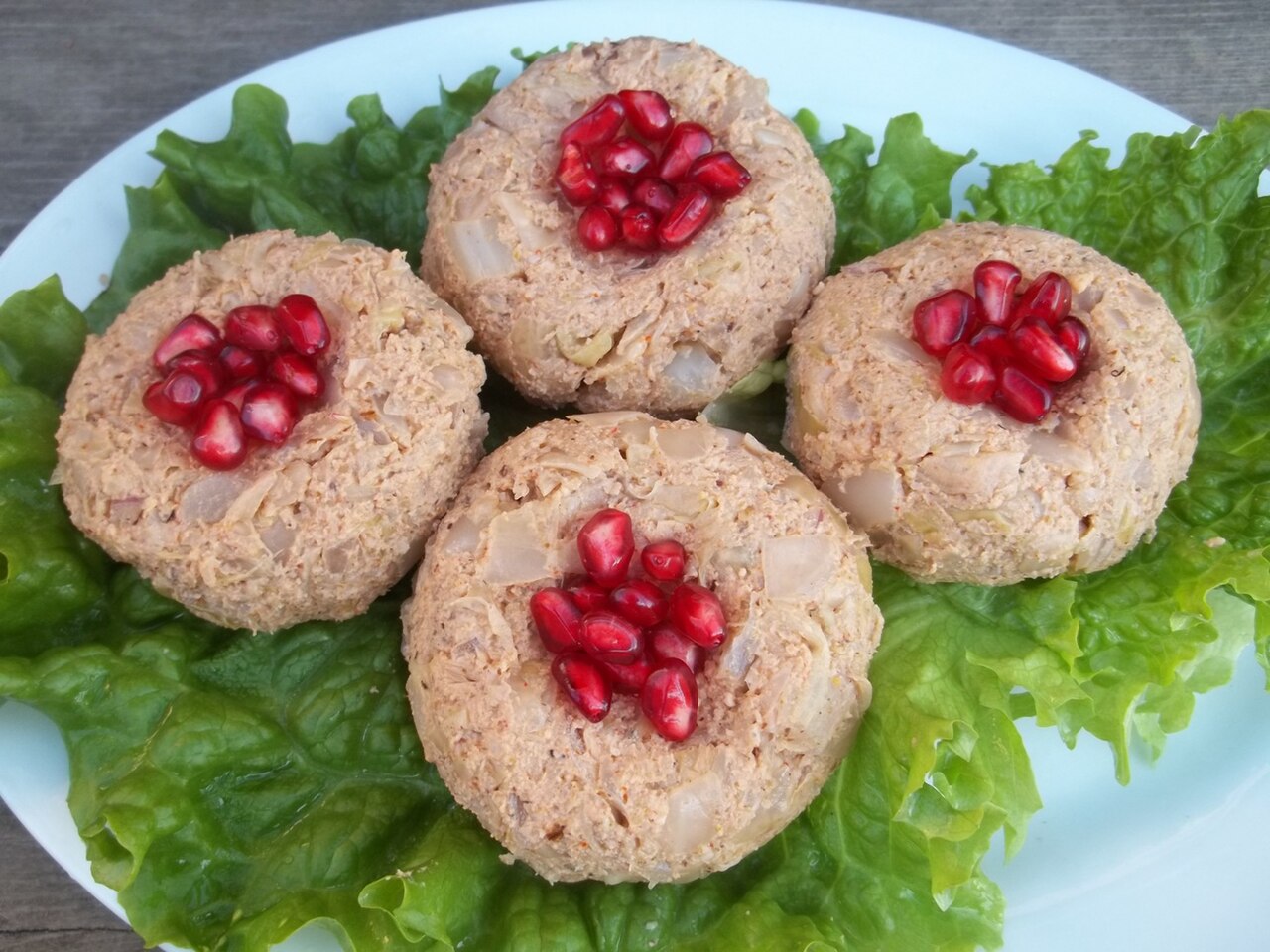
- ფხალი (pkhali) — minced spinach, beetroot or beans bound with ground walnut, garlic and vinegar, served cold under pomegranate seeds.
- ბადრიჯანი ნიგვზით (badrijani nigvzit) — fried aubergine rolled around the same walnut paste. On nearly every menu in the country.
- ლობიო (lobio) — red bean stew in a clay pot, heavy with coriander and blue fenugreek.
- მჭადი (mchadi) — dense fried cornbread, no dairy, the partner to lobio.
- აჯაფსანდალი (ajapsandali) — aubergine, tomato, pepper and potato stewed soft with herbs.
- ქართული სალათი (kartuli salati) — tomato and cucumber salad, ordered ნიგვზით (nigvzit), with walnut dressing rather than sour cream.
- ჩურჩხელა (churchkhela) — walnuts on a string dipped in thickened grape juice. Your fallback dessert.
Five phrases worth keeping on your screen
- სამარხვო გაქვთ? — samarkhvo gaqvt? — Do you have fasting food?
- ხორცის გარეშე — khortsis gareshe — without meat
- რძის პროდუქტების გარეშე — rdzis produktebis gareshe — without dairy
- კარაქის გარეშე — karaqis gareshe — without butter, the phrase that saves your mushrooms
- მე ხორცს არ ვჭამ — me khorts ar vch’am — I do not eat meat
Where it goes wrong
Nearly every trap here is dairy, not meat.
- ხაჭაპური (khachapuri) is cheese bread and nobody makes a vegan one; the Adjarian boat adds butter and a raw egg yolk. Vegetarians, go ahead: ₾15–30 in central Tbilisi.
- ჭვიშტარი (chvishtari) is mchadi with cheese through it, and ღომი (ghomi), corn porridge, hides sulguni unless you say otherwise.
- ხინკალი (khinkali) has mushroom and potato fillings, but many cooks put egg in the dough, so ask. ₾2–3 a piece centrally, whatever is inside.
- ლობიანი (lobiani) has a vegan bean filling in dough that sometimes is not. Samarkhvo-labelled ones are.
- Mushrooms baked in a ketsi clay dish are usually sitting in melted butter. This is where კარაქის გარეშე earns its keep.
- Pkhali and ajapsandali have butter-enriched versions in some kitchens. Worth a question if you are strict.
There is a translation problem too. Vegetarian, said in English here, gets heard as cheese instead of meat, and three kinds of it land on the table. Our guide to how to order Georgian food covers the rest, including why the dishes never arrive together.
Eating out, in practice
Three routes, in the order you should try them. Start with ordinary taverns, not vegan ones. A dukani in the Old Town covers a table in pkhali, lobio, ajapsandali, badrijani and mchadi for ₾15–25 a head, against ₾45–80 for a mid-range meal with wine. Salobie Bia built its name on bean cooking; Cafe Leila leans vegetarian. More in our best restaurants in Tbilisi roundup.
The dedicated vegan places matter more for breakfast, cake and a break from walnuts. Kiwi Vegan Cafe on Machabeli Street has run since 2015, Stricha is an all-vegan bakery, Daner Pizza does seitan. Georgia Today keeps a current roundup, checked August 2026.
Third route, least glamorous and most useful: neighbourhood bakeries. Any Wednesday or Friday the samarkhvo shelf restocks with bean and potato pastries baked without dairy, none of it over a few lari. Lunch solved, in a Vake supermarket or a village on the Kazbegi road.
Frequently asked questions
Is Tbilisi vegan friendly?
Yes, far more than its meat-and-cheese reputation suggests. Orthodox fasting means a plain Georgian restaurant already cooks plant-based every week, and the city adds a vegan cafe, bakery and pizzeria. The work is screening for cheese, butter and egg, not finding food.
What does samarkhvo mean in Georgian?
სამარხვო labels food allowed during an Orthodox fast: no meat, fish, dairy or eggs. Asking for it is the fastest route to a plant-based menu in a kitchen that has never heard the word vegan. The gap is honey, which fasting rules permit.
Can vegans eat khachapuri?
No. Cheese is the whole dish, and the Adjarian boat adds butter and a raw egg yolk. Vegetarians are fine. Vegans should put that ₾15–30 into pkhali and badrijani nigvzit, which is more food.
When is Orthodox Lent in Georgia?
Great Lent falls seven weeks before Orthodox Easter: 15 March to 1 May in 2027, Pascha on 2 May. Shorter fasts land in late June or July, the second half of August, and 28 November to 6 January.
One last thing: order in two rounds. Dishes arrive whenever the kitchen finishes them, so send the cold walnut plates first and decide on lobio after you see the portions. Our Georgian food guide says what everything tastes like before you commit.
Featured image: Georgian Recipes at Georgia About (CC BY 3.0) via Wikimedia Commons.

Leave a Reply