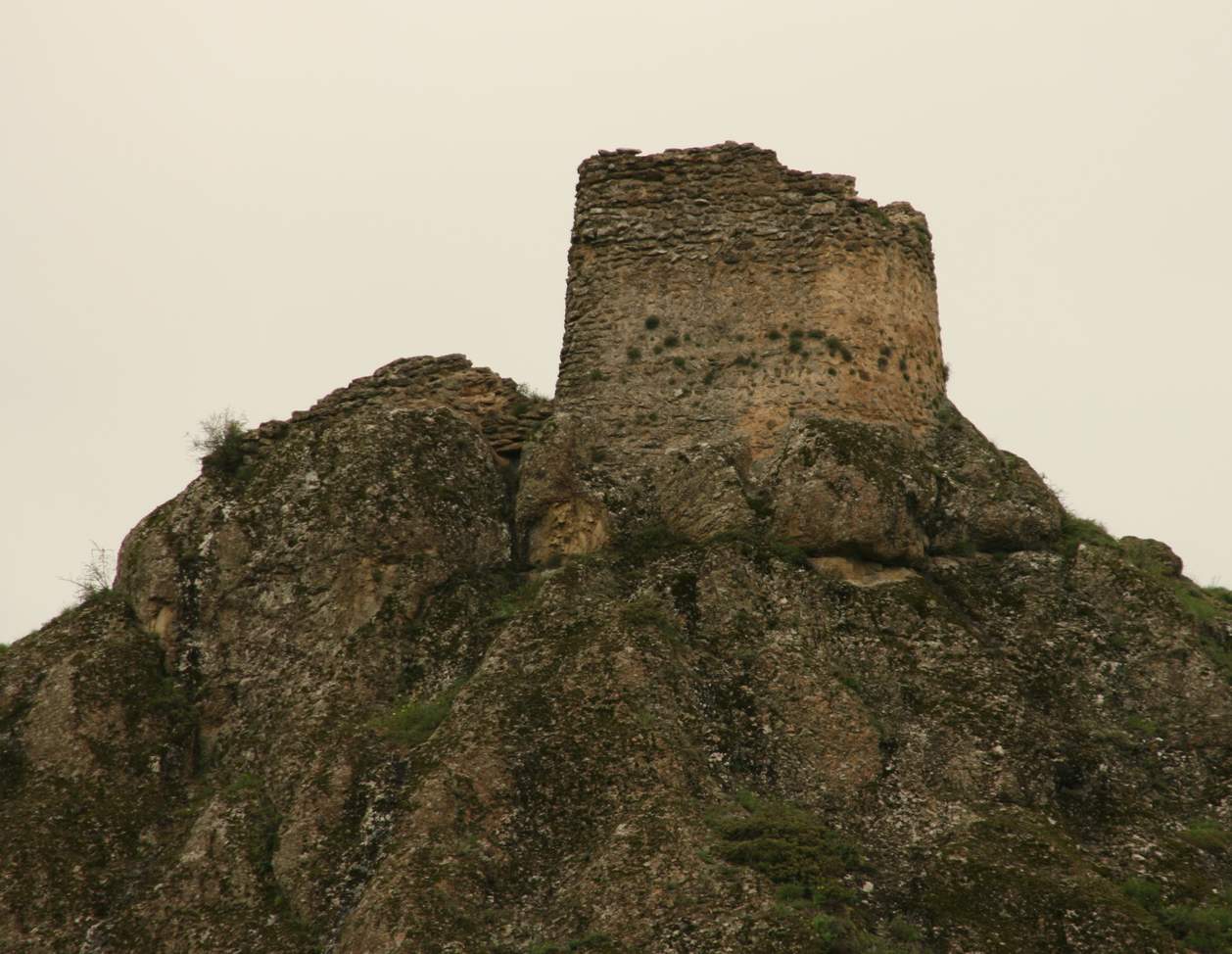
Yes, you can do Birtvisi Canyon as a day hike from Tbilisi, and it is one of the strangest, most rewarding walks within an hour of the city. What you are hiking into is a natural fortress: a cluster of pale limestone towers and clefts that a medieval Georgian garrison turned into a stronghold, wrapped in oak forest about 50 kilometres southwest of town. The catch, and it is a real one, is that almost nothing here is signposted. There is no gate, no map board, no obvious path to the ruins.
So the honest version is this. Birtvisi rewards people who plan the logistics and load an offline map before they leave the car park. Turn up expecting a tidy loop with arrows, and you will spend the afternoon lost in a beautiful forest wondering where the castle went.
Getting there without a car is the hard part
Let’s deal with the friction first, because this is where most day trips fall apart. Birtvisi sits above the village of Tbisi, past Tetritskaro, and no public transport goes to the trailhead itself.
The budget route is a marshrutka heading toward Tetritskaro or Tsalka. You ride until the driver stops at the Tbisi turn-off (tell them Tbisi when you board, and ask them to shout when you are close), then walk in from the road. The fare is small, around 3 GEL, and hikers who have done it recently describe getting off at the Tbisi sign and continuing on foot from there, per Red Fedora Diary’s write-up. One thing worth checking the day before: sources disagree on which Tbilisi terminal these vans leave from, with hiking blogs pointing to Navtlughi and some transport guides pointing elsewhere, so confirm the departure point rather than trusting a single page. If you have never used one of these vans, our marshrutka guide covers how the system works, how to flag your stop, and what the ride is actually like.
Here is the problem with going by van, though. Return marshrutkas are sparse and unpredictable, and there is no timetable posted at a village turn-off. Plan to be back on the main road by mid-afternoon, and be genuinely ready to hitchhike, which locals do here without much fuss.
The easier route is a driver. A one-way Bolt from central Tbilisi runs somewhere near 30 GEL, but the app won’t find you a car in Tbisi for the trip home, so a one-way ride strands you. The workable version is agreeing a round-trip price with a taxi driver who waits while you hike, or booking an organised hiking tour. Negotiated driver-and-wait deals for canyon day trips in this region tend to land in the 150–250 GEL bracket for the vehicle, split between however many of you go.
Our advice: for a first visit, split a driver between three or four people rather than gambling on the marshrutka. The saving on public transport is real, but the anxiety of watching the light fade with no ride out of a village you don’t know is not worth 40 GEL.
What the hike is actually like
From Tbisi the track drops into forest fast. You follow a rough path for a while, then the walls start closing in. The centrepiece is a narrow slot the locals call Devis Naprali, the Giant’s Cleft, a squeeze between rock faces that funnels you toward the base of the fortress complex.
Above it stand the towers. The tallest is Sheupovari, which translates roughly to the Obstinate, perched on the highest pinnacle. Around it are scattered ruins, cisterns and old walls threaded between natural stone columns, because Birtvisi was never a single building. It was a whole square kilometre of cliffs that people fortified, first recorded in 1038 and captured by Timur’s army in 1403, according to Georgia.to’s history of the site. Standing under those towers, the choice to build here makes complete sense; you can see why a besieging army would have hated the place.
Reaching the top structures means scrambling. There is a stretch where you climb between boulders for maybe half an hour, and near the last tower you will be using your hands for balance on rock. Nothing here needs ropes or technical skill, but it is not a stroll, and it is no place for flip-flops or a nervous six-year-old.
Total distance depends on how far you push toward the highest ruins. Reckon on 5 to 7 kilometres there and back, and a full outing of four to six hours once you factor in the scrambling, the wrong turns, and the time you will lose just staring up at the rock. The AllTrails route from the Tetritskaro side is a useful reference for the profile, though the mileage others log varies with how much of the labyrinth they explore.
No marked trails: how not to get lost
This deserves its own heading because it is the thing that ruins visits. The route is unmarked. There are faint paths, forks that look equally plausible, and cairns that may or may not lead anywhere useful.
Download a GPS track before you go. Recorded routes on Wikiloc, plus an offline map in Maps.me or AllTrails, are what stand between you and an afternoon of backtracking. Don’t count on your phone finding them at the trailhead: mobile coverage inside the gorge drops to nothing, so everything you need has to be saved offline while you still have signal in the village.
If reading terrain off a phone in a maze of identical rock towers doesn’t appeal, take a local guide or a guided hike. Plenty of people find the fortress solo, but plenty also turn back having found only the lower cleft, and both are common outcomes here.
When to go, and why rain changes everything
Season matters more at Birtvisi than at most Georgian hikes, and the reason is mud. The forest floor and the rock both turn slick after rain, and the scramble to the towers goes from awkward to genuinely risky when the stone is wet. Skip it in the day or two after a downpour.
That pushes you toward the drier shoulders of the year. Late spring and early autumn are the sweet spots: the oak forest is green in May and June, and September into October gives you cooler air and firmer ground. Bear in mind May is the wettest month around Tbilisi, so watch the forecast even then. High summer works if you start early, but the exposed rock bakes by midday and there is little shade up at the towers. Winter is doable for the confident, though frozen and muddy sections make the scramble a poor idea.
What to bring
- Proper shoes with grip. Trail runners or light boots, not sneakers with worn soles. This is the single item that changes your day.
- A phone with offline maps and a downloaded GPS track, plus a power bank. No signal means no live navigation.
- At least 1.5 to 2 litres of water each. There is no shop, no café, nothing at the trailhead.
- Food for the day, and pack your rubbish out.
- A light rain shell and a warm layer, because weather in the gorge turns faster than in the city.
- Some cash in small notes for the marshrutka or driver, and in case a fee is introduced at the site.
Birtvisi pairs naturally with other hikes if you are building a hiking week; see our roundup of the best hikes near Tbilisi for options that need less navigation. And if you would rather have someone else drive, our day trips from Tbilisi guide sorts the ones that work as fuss-free outings from the ones, like this, that reward a bit of homework.
Frequently asked questions
Is Birtvisi Canyon hard to hike?
It is a moderate hike with a difficult finish. Most of the walk is manageable forest track, but the last push to the towers involves scrambling over boulders and using your hands. Fit hikers who don’t mind steep, rocky ground will be fine; anyone shaky on uneven terrain, or hiking with small kids, should stop at the lower cleft and enjoy that.
Can you visit Birtvisi without a guide?
You can, but only if you bring a downloaded GPS track and are comfortable following it offline. The paths are not signed and the rock formations look alike, so people do get turned around. First-timers who want to be sure of reaching the fortress often hire a local guide or join a hiking tour.
How long does the Birtvisi hike take?
Budget four to six hours on the trail if you want to reach the upper ruins and poke around the rock maze. Add the travel time each way, and it fills a full day out of Tbilisi. If you only walk in to the Giant’s Cleft and back, you can trim that to two or three hours.
Is there an entrance fee for Birtvisi Canyon?
Historically the trail has been free to walk, with no staffed gate at Tbisi. Reports of a possible ticketing arrangement have started circulating, so carry a small amount of cash just in case, but don’t be surprised if you simply walk in.
One last thing that will save your afternoon: pin the Tbisi turn-off on your offline map before you leave the city, not just the fortress. The single hardest navigation problem here isn’t finding the castle, it’s finding your way back to the road in time to catch a ride home.
Featured image: Aleksey Muhranoff (CC BY-SA 3.0) via Wikimedia Commons.




Leave a Reply