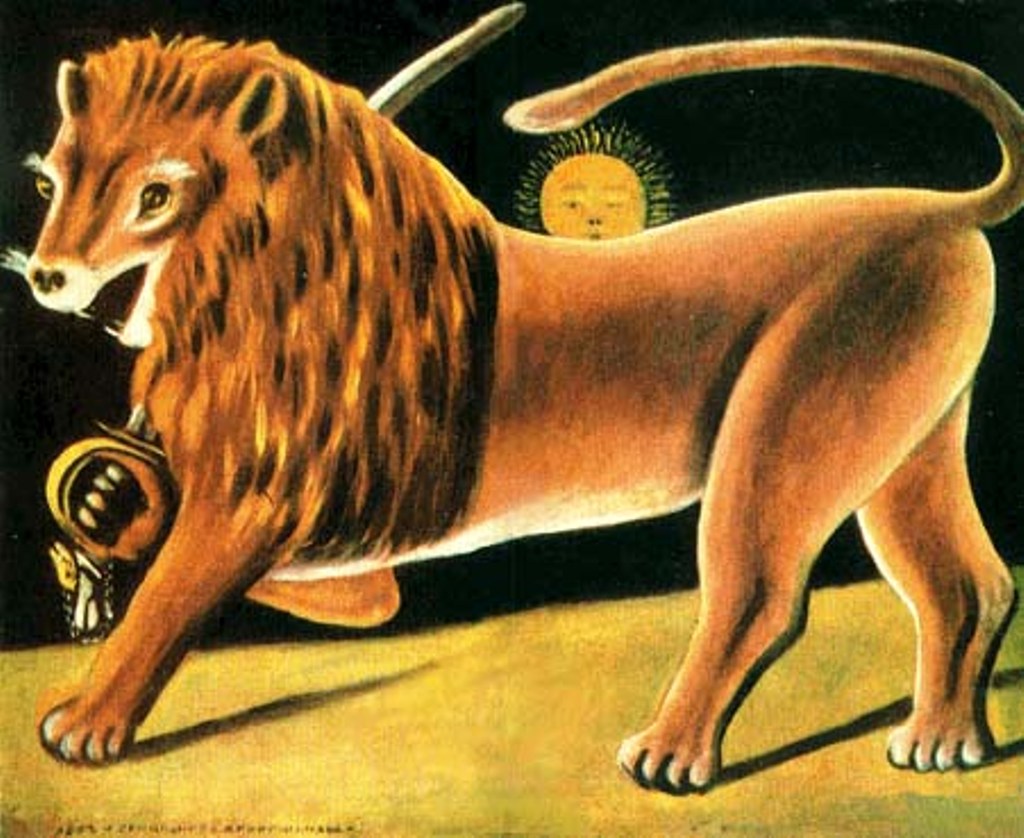
Georgia’s most famous painter never sold a picture to a gallery in his lifetime. Pirosmani painted signboards and black oilcloth for tavern keepers in Tbilisi, took bread, soup and wine as payment, and died in 1918 with no address of his own. The place to see the work now is the National Gallery on Rustaveli Avenue, which keeps a permanent Pirosmani display; the second collection worth crossing the country for is in Sighnaghi.
Worthless while he lived, on the one lari note ever since. That gap is the thing worth understanding before you stand in front of the paintings, because it explains why they look the way they do.
The man, in the version that holds up
Niko Pirosmanashvili was born in 1862 in Mirzaani, a village in the wine country of Kakheti, and lost both parents as a boy. He came to Tbilisi around 1870 as a servant in a wealthy household, later worked the railway, later still ran a small dairy shop. In 1882 he and a partner opened a sign-painting workshop. None of it lasted. By his forties he was moving between the dukhans of the old city, the cheap eating houses that fed the porters and carters of a town that ran on trade, and he was painting for them.
He was self-taught. No academy, no master, no formal training at any point, and he seems to have wanted none.
The transaction was plain: a shop sign, a feast scene, an animal portrait, in exchange for a meal and somewhere to sleep. Tavern keepers commissioned him the way you would commission a decorator. His surface was black oilcloth, the waxed table covering any dukhan had lying around, and it cost him almost nothing. About 200 works survive. The rest were painted over, thrown out, or wore away on a wall, which tells you exactly what value anyone placed on them at the time. If you want the wider setting for that world, the history of Tbilisi explains the trading city those taverns belonged to.
Then in early 1912 three young men from the Russian and Georgian avant-garde noticed a signboard. The brothers Kirill and Ilia Zdanevich, with the painter Mikhail Le-Dentu, started buying his work, and in February 1913 Ilia published a piece about him in the Tiflis newspaper Zakavkazskaya Rech, the first press notice he ever got. Pirosmani’s paintings went to Moscow that year and hung alongside the Russian modernists. Kirill Zdanevich eventually owned dozens of them.
Recognition did not translate into money, or into much kindness. The Society of Georgian Artists invited him in during 1916, and then a member of it published a caricature of him in the press. He took it badly and pulled away. He died on 9 April 1918, weakened by malnutrition and liver failure, in a city in the middle of war, epidemic and the collapse of empire. He was buried without record. Nobody knows which grave is his.
Eighty years later his face went on the money. The one lari note carries his portrait, and the reverse pairs a view of Tbilisi with the stag lifted straight out of his painting of a roe deer.
The million roses story, without the roses
You will hear this one from every guide in the country, so here is what actually stands up. A French performer billed as Margarita de Sevres appeared in Tbilisi in the mid-1900s; newspaper notices from 1905 advertise her as a singer and dancer. Pirosmani painted her in 1909, standing pale and flat and frontal with a flower in each hand. That painting is real and it hangs in the National Gallery.
The legend goes further: that he sold everything he owned and buried the street outside her hotel in scarlet roses. The detail that survives in the retellings is stranger and better than the song version, because the cartloads were not roses at all. Accounts describe wagons of lilac, acacia, poppies, peonies, anemones and lilies, whatever was in bloom, dumped in the road.
And the ending is not romantic. She sent word, he came late, she had already left the city.
The reason everyone knows it is a Soviet pop song. Andrei Voznesensky wrote the poem, Alla Pugacheva recorded A Million Scarlet Roses in the early 1980s, and it became one of the best-known songs in the USSR. That is more than sixty years after the fact, built on secondhand recollection rather than any document. Treat the flowers as folklore attached to a real painting of a real woman, and you are on solid ground. Treat the song as biography and you are quoting a hit single.
The National Gallery on Rustaveli: the main collection
The Dimitri Shevardnadze National Gallery, the blue-and-white neoclassical block at 11 Rustaveli Avenue, holds the largest body of Pirosmani anywhere. It reopened in spring 2026 after maintenance work, and the permanent Pirosmani display now runs across four rooms with roughly fifty works hung, including Actress Margarita and the Giraffe. Adult entry is 25 GEL and the doors are open Tuesday to Sunday, 10:00 to 18:00, closed Mondays, checked September 2026 against Wander-Lush’s Tbilisi museums guide.
Give it an hour and a half. It is a small building and the Pirosmani rooms are the reason to be there, though the Gudiashvili and Kakabadze holdings on the same floor are a fair companion to them. The gallery sits inside the park strip halfway along the avenue, so it slots neatly into a walk down Rustaveli Avenue and belongs on any short list of things to do in Tbilisi.
One warning that catches people out. Pirosmani travels. Major works go out on loan to exhibitions abroad for months at a time, and a few well-known canvases live elsewhere in the national collection rather than here. If you have come for one specific painting, that is worth a phone call first.
Sighnaghi: the second room, and the better setting
Sighnaghi Museum, part of the Georgian National Museum network, keeps the largest group of his paintings outside the capital, on the upper floor above the archaeology. Sources put the holding at sixteen to eighteen works and disagree on the exact figure; about a dozen are hung at any one time, among them Vintage and Feast in a Grape Gazebo. Adult entry is 15 GEL, students pay 1 GEL, and a guided tour adds 10 GEL, with opening hours of 10:00 to 18:00 Tuesday to Sunday and last admission half an hour before closing, verified September 2026 via the museum’s current visitor listing.
There is a real argument for seeing them here rather than in Tbilisi. The room is quiet, the light is good, and the vineyards outside the window are the ones in the paintings. Sighnaghi is a straightforward day trip from Tbilisi, and the museum takes under an hour.
His birthplace at Mirzaani, about 40 minutes further east, has a house museum with a handful of originals and a lot of biography. Our advice: skip it unless you are a completist. The detour buys you context you can read for free, not more painting.
What to look for once you are standing there
The black is not a background. On the oilcloth pieces he left the cloth bare wherever he wanted shadow, night, or the space behind a figure, so the darkest parts of the picture are the parts he never touched. It is the opposite of how a trained painter builds an image, and it is why the figures seem lit from nowhere.
- Eyes. Animals and people stare straight out at you, level and unblinking. He almost never paints a profile.
- Feasts. Long tables seen slightly from above, so every dish and every guest stays visible. That is a sign painter’s logic, not a perspective error.
- Text. Georgian lettering worked into the picture, because the picture often was a sign.
- Scale by importance. The host is bigger than the guests, the deer bigger than the hill.
- Repeats. He painted the same subjects again and again for different customers, so a familiar composition is not a copy by someone else.
Frequently asked questions
Where can I see Pirosmani paintings in Tbilisi?
At the National Gallery, address 11 Rustaveli Avenue, in the blue building set back inside the park. It is the only venue in the city with a standing display of his work. Other pieces sit in the wider national collection and surface in temporary shows, so a second Pirosmani stop in Tbilisi is a matter of luck rather than planning.
How much is a ticket to the National Gallery in Tbilisi?
25 GEL for an adult, which is around 9 US dollars, and there are reduced rates for students. Combined tickets covering several Georgian National Museum sites exist and are worth asking about if you also plan on the Simon Janashia Museum further along the same avenue.
Is the million roses story about Pirosmani true?
Partly. The actress existed, she performed in the city, and his portrait of her survives. The mass flower delivery comes down to us through anecdote rather than paperwork, and the version most people know was shaped by a 1980s Russian pop hit. Historians are not agreed that the two ever met face to face.
Why is Pirosmani on the Georgian lari?
Because he became the country’s shorthand for authentic Georgian art after independence. His portrait is on the one lari note, and the deer printed alongside the Tbilisi skyline on the back is taken from one of his own canvases. It is the smallest note in circulation, so it is also the one most likely to be crumpled in your pocket.
If a particular painting is the reason you are going, call the National Gallery before you build the day around it. Loans abroad can empty a wall for half a year, the website is not always updated when they do, and the staff on the desk will tell you in thirty seconds what is actually hanging this week.
Featured image: Niko Pirosmani (Public domain) via Wikimedia Commons.




Leave a Reply