The best 2 weeks in Georgia is one anticlockwise loop: Tbilisi (3 nights), Kazbegi (2), west through Gori and Uplistsikhe to Kutaisi (3), down to Batumi (2), then the fast train back east and finish in Kakheti (2) before you fly. You pass through Tbilisi twice, sleep there at both ends, and never ride the same intercity road twice except the Kazbegi highway, which has no alternative.
That order isn’t arbitrary. Most two-week plans die the same death: Tbilisi as a base, four separate out-and-back trips, and by day ten you’ve spent 30-odd hours re-riding roads you already know. This post argues the loop hinge by hinge, with the fares, so you can see where it’s safe to bend it.
Why hub-and-spoke plans fail here
Georgia’s geography funnels everything through Tbilisi. Kazbegi is three hours north, Kakheti two hours east, Kutaisi four hours west. Day-trip each one from the capital and every destination costs you double transit, plus you repack nothing but see the same Mtskheta bypass five times. Our 7-day itinerary has to accept some of that compromise because a week leaves no room to sleep elsewhere. Fourteen days is exactly the length where you stop commuting and start travelling in one direction.
One rule holds the whole plan together: never sleep in the same city before and after a leg unless it’s Tbilisi at the start and the end.
Days 1–3: Tbilisi, then leave before it absorbs you
Three nights, not five. Tbilisi rewards a return visit at the end of a trip more than a long stay at the beginning, because by then you’ll know what you actually want from it: a last supra, a specific bathhouse, one more walk through Sololaki. Use these first days for the old town, the sulfur baths (plain private cabins run 15–40₾ an hour), and the ridge above the river. One caveat for 2026: Narikala Fortress is fenced off for restoration, so ride the cable car (2.5₾ each way, Metromoney card only) for the view and the ridge path to Kartlis Deda rather than planning around the walls themselves.
Load a Metromoney card on arrival. The 2₾ deposit is refundable, every metro or bus ride is 1₾, and transfers within 90 minutes are free. It also pays for that cable car.
Days 4–5: Kazbegi — north first, on purpose
Kazbegi goes early in the trip for a weather reason. Mount Kazbek hides in cloud on bad days, and if you save the mountains for the end you have zero slack; put them at day 4 and a washed-out morning just becomes day 5’s morning instead. Marshrutkas leave Didube station for Stepantsminda at 15–20₾ and take about three hours up the Georgian Military Highway.
Sleep there. The town empties of day-trippers by late afternoon and Gergeti Trinity Church at 8am is a different building from Gergeti Trinity Church at noon. The road up is sealed asphalt now, so the old 4×4 lore no longer applies: walk it in 1.5–2 hours with about 400 m of ascent, or share a vehicle at around 25₾ a person. If you can only spare one night, our Kazbegi day trip guide shows how to compress it, but two nights is the version you’ll remember.
Yes, you ride the same highway back down to Tbilisi. This is the loop’s one accepted backtrack, because no road crosses from Kazbegi to the west. Treat the return as a viewing day: sit on the other side of the van.
Day 6: the Gori hinge
Here’s where the route logic earns its keep. You’re heading west to Kutaisi anyway, and Gori sits directly on that road. Breaking the journey there costs you almost nothing and buys you Uplistsikhe, a cave city cut into a rock ridge above the Mtkvari that people have inhabited on and off for some three thousand years. Marshrutkas from Didube to Gori run at about 7₾, a local van onward toward the caves is 2–3₾ (it drops you at a bridge with a 2 km walk to the gate), and entry is 15₾ — checked September 2026 against the museum’s listed fees. Our Uplistsikhe guide covers the site itself.
Doing Uplistsikhe as a separate Tbilisi day trip instead would burn a full extra day on transit you were going to ride regardless. That’s the whole argument for the loop in one sentence.
Sleep in Gori if the Stalin Museum interests you enough for a slow morning; otherwise push on to Kutaisi the same evening and bank the night.
Days 6–8: Kutaisi and the canyon country
Kutaisi is the loop’s working base, not its star. The city gives you Bagrati Cathedral on its hill, the Green Bazaar (the best food market in the country, and it isn’t close), and cheap guesthouses. The point of the stop is the karst country north of it: Prometheus Cave at 25₾ entry plus 20₾ for the optional underground boat, Okatse Canyon’s cliff-hung walkway at 20₾, and Martvili Canyon, where 2026 prices are quoted anywhere from 20₾ to 40₾ across booking sites, so budget the top figure. A shared day tour or a negotiated taxi covers all three in one long day; public vans exist but the connections eat the day.
Pick two of the three sites, honestly. Prometheus and Okatse together already make a full day, and Martvili’s short boat ride draws the biggest crowds for the smallest payoff.
Days 9–11: Batumi, the turn of the loop
Vans leave Kutaisi’s bus station for Batumi through the day; it’s around two hours downhill to the coast, and the fare is small next to what you’ve paid so far. Batumi is Georgia at its strangest: casino towers over an Ottoman-era grid, a botanical garden that drapes an entire cape, subtropical rain that arrives with no warning. Give it the seafront at night, the botanical garden, and one lazy day.
Our advice, and plenty of readers will disagree: two nights in Batumi is enough, and the third night belongs to Kakheti. Batumi is fun; it is not three-days deep unless beaches are the point of your trip, and if beaches are the point of your trip, Georgia was an odd choice.
Days 12–13: the fast train back, then Kakheti
The leg that used to make this loop painful is now its best trick. Since the 8.3 km tunnel opened in August 2026, the Batumi–Tbilisi train runs in about four hours instead of five and a half. Timetables are still being reissued as schedules settle around the new tunnel, so check dates and book a few days ahead on tkt.ge or the Georgian Railway app rather than trusting any printed departure time, including one in a blog post. Pre-tunnel fares on the Stadler double-deckers were 35₾ second class and about 75₾ first (checked September 2026 against tkt.ge listings); treat those as the floor, not a promise. Full seat-by-seat detail is in our Tbilisi to Batumi guide.
Arrive Tbilisi early afternoon, and here’s the second hinge people miss: don’t stop. Kakheti vans leave from Navtlughi station beside Samgori metro — not Didube, where half of the internet will send you — and Sighnaghi is under two hours away. Shared taxis from Isani run 25–30₾ a person if the vans have thinned out. Sleeping in Sighnaghi or Telavi puts you inside wine country for a full day of cellars and qvevri tastings (a seated tasting runs 45–50₾; a three-glass flight about 30₾). The Kakheti wine tour guide has the cellar-by-cellar detail.
Why Kakheti last? Because it’s the softest landing in the country. After eleven days of vans and ascents, a walled hill town with wine and a two-hour ride back to your flight is sequencing, not sentiment.
Day 14 — and the honest cuts
Return to Tbilisi for the final night. This is where the early-days restraint pays out: baths you skipped, the restaurant you earmarked, souvenirs without panic.
When something has to give, cut in this order:
- Weather kills Kazbegi: if the forecast shows solid cloud for both mountain days, swap the nights to Borjomi (vans from Didube around 15₾) and try Kazbegi as a long day trip later in the week. A cloud-wrapped Gergeti is a car park with fog.
- Energy fails mid-loop: drop the Gori stop first, then a canyon. Never drop the Batumi–Tbilisi train leg; it’s the ride doing the least damage to your body.
- Time fails at the end: Kakheti compresses to a single Sighnaghi overnight better than any other stop compresses to anything.
What two weeks still doesn’t buy you
Svaneti, done properly, is a four-to-five-day commitment: night train or morning run to Zugdidi, then a 35–40₾ marshrutka up the Enguri gorge taking 3.5–4 hours (checked September 2026 against Wander-Lush’s transport guide), then Mestia, the Ushguli road, and the towers. Bolt it onto this loop and something else collapses. If Svaneti is your reason for coming, break the loop deliberately: cut Batumi and Kakheti entirely, and run Tbilisi → Kazbegi → Kutaisi → Zugdidi → Mestia → fly or ride back. Different trip, equally good.
Tusheti is further out of reach again. The Abano Pass is a genuine 4×4 road, open only summer to early autumn, and the region deserves a trip of its own rather than a nervous 48-hour raid.
Two weeks covers the classic loop well. It does not cover Georgia. Good news, in a way.
Frequently asked questions
Is 2 weeks enough for Georgia?
Enough for the capital, one high-Caucasus valley, the western lowlands, the coast and a wine region without rushing any of them — provided you move in one direction instead of day-tripping from a single base. The big omissions at this length are Svaneti and Tusheti, each of which wants its own dedicated visit.
How much does 2 weeks in Georgia cost?
A mid-range traveller sleeping in guesthouses, eating out twice a day and using vans and trains lands somewhere near $700–1,100 per person on the ground, excluding flights. Meals with wine run ₾45–80 a head at mid-range places, intercity transport for this whole route totals under ₾150, and site entries add perhaps another ₾100. At about 2.6₾ to the dollar, Georgia remains one of Europe’s cheapest serious destinations.
Do I need to rent a car for this itinerary?
No. Every leg of the loop runs on marshrutkas, one train and the odd shared taxi, and the Gergeti road is now paved, which removed the last strong argument for hiring a 4×4 on this route. A car earns its cost only if you add Svaneti’s upper villages or Tusheti, or if travelling with kids makes van schedules miserable.
What documents do I need to enter Georgia in 2026?
Around 95 nationalities enter visa-free for a full year, though third-country residence-permit holders only get 90 days in any 180. Since 1 January 2026 every visitor, infants included, must carry health and accident insurance covering at least 30,000 GEL (about $11,000), documented in Georgian or English. If you do need a visa, apply only at evisa.gov.ge; look-alike reseller sites outrank the real portal.
One last thing before you book anything: fix your two Tbilisi bookends first, then reserve the Batumi–Tbilisi train as soon as your dates firm up, because that four-hour leg is the pin holding the whole loop straight — everything else on this route can be arranged the day before from a bus station.
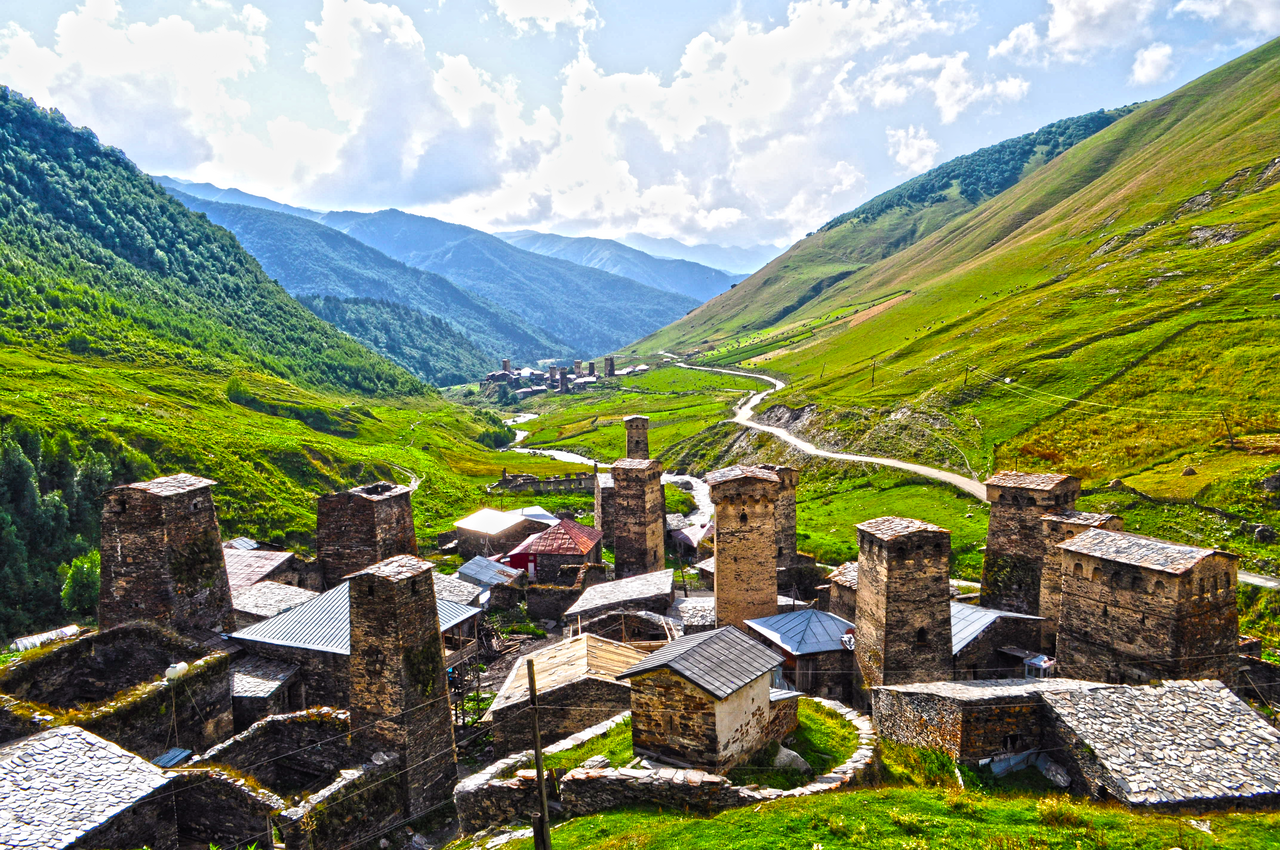
Featured image: Dito1993 (CC BY-SA 4.0) via Wikimedia Commons.




Leave a Reply