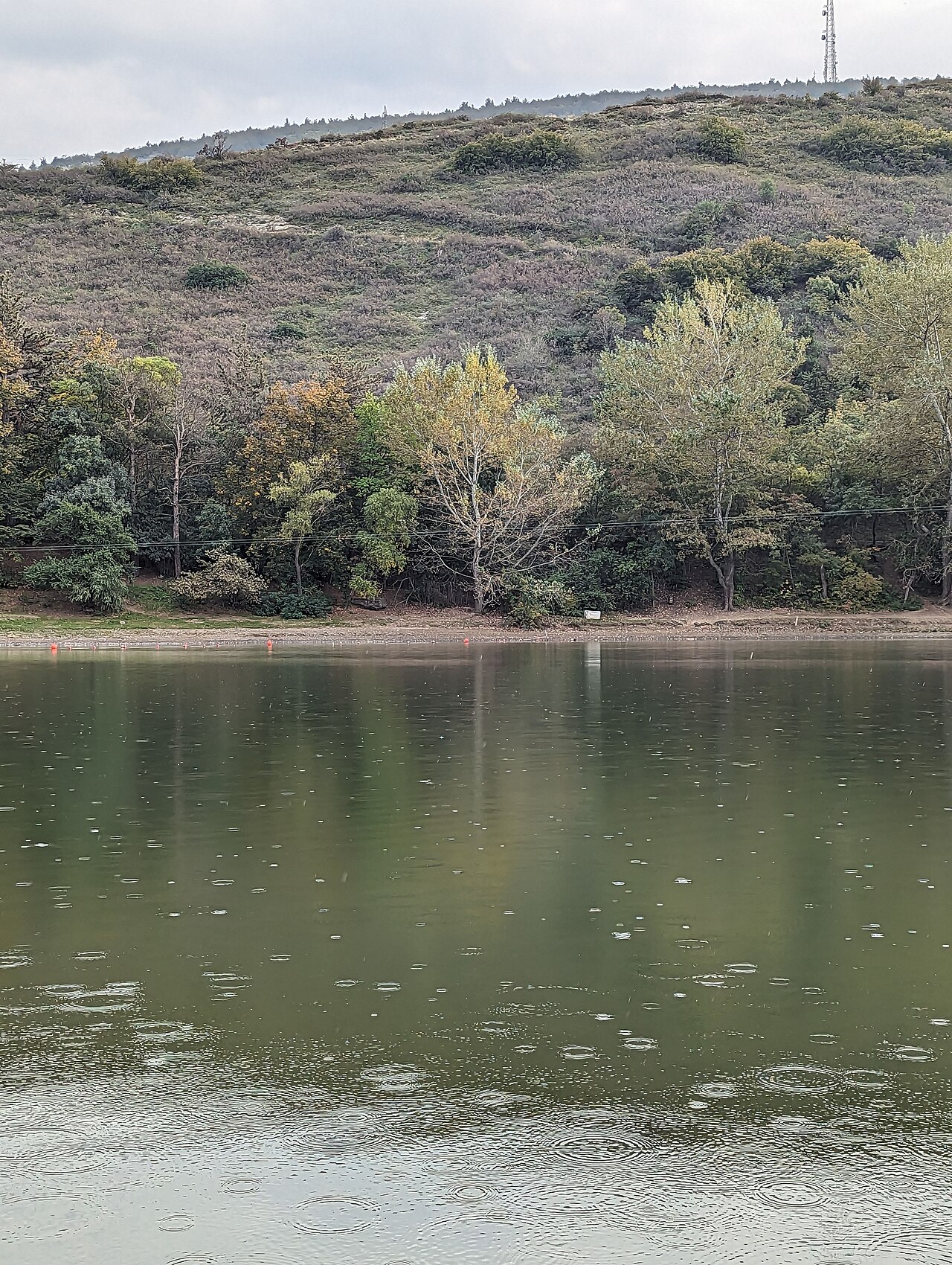
The quickest way up to Turtle Lake is the ropeway from Vake Park, and the fare is one lari each way, paid with a Metromoney card. That single fact settles most of the planning: you do not need a car, a tour, or a booking to get to the lake Georgians call Kus Tba. You need the same green transit card you would use on the metro, and about ten minutes.
The lake sits on a wooded shoulder of Mtatsminda ridge, above the Vake district. It is small, it is walkable in a quarter of an hour, and it is where the city goes to slow down. Here is how to do it without the two mistakes most first-timers make.
The ropeway from Vake Park is the point, not a detour
The lower station sits inside Vake Park, a short walk off Chavchavadze Avenue. Gondolas seat ten to twelve people, run through the day, and the trip to the top takes only a few minutes over the treetops. The fare is 1₾ one way, and it is Metromoney only, the same card and the same operator (TTC) as the city buses and metro. Checked September 2026 against the operator’s published tariff and the ropeway station listing, both give the same one-lari price.
The turnstile takes no cash. If you have only just landed and haven’t bought a Metromoney card yet, that is the thing that trips people up, not the price. Buy the card at any metro station first, load a couple of lari, then come.
One card gets a whole group up in turns, so you don’t need one each if you tap, hand it back, and tap again.
Vake side or drive up? What actually changes
There are three ways to arrive, and they suit different people.
- The ropeway from Vake Park — cheapest, quickest, and the only one with the view. Best if you’re already in Vake or near Chavchavadze Avenue.
- By car or taxi to the top — a paved road climbs to the lakeside. A Bolt from the centre runs single digits to low teens in lari off-peak. Sensible with small kids, heavy bags, or in the heat of the afternoon.
- On foot up through the park — a real climb of stairs and switchbacks, maybe 30 to 40 minutes, rewarding if you want the walk and free if you don’t.
Our advice: ride the ropeway up and walk down, or drive up and ride the ropeway down. Either way you get the aerial view once without paying for it twice, and you skip the uphill slog. Doing the cable car both directions is the tourist default and it wastes the better half of the trip.
The loop around the lake
A paved path with wooden boardwalk sections runs the whole way round, close to a kilometre, flat, and pushchair- and wheelchair-friendly. A steady walk closes the loop in about fifteen minutes. Nobody does it in fifteen minutes.
You stop. There are benches, pebbled edges, a playground, and outdoor gym frames along the way, and the forested hills of the ridge sit right behind the water. Early morning is when locals run it before work; by late afternoon in summer it fills with families and the cafe tables turn over fast. If you want the lake quiet, come before ten.
For a longer leg-stretch, the trails behind the lake climb into the ridge forest and eventually toward Mtatsminda. If that’s your plan, our roundup of the best hikes near Tbilisi maps out where those paths actually go.
Can you swim in Turtle Lake?
Short version: officially no. Posted signs at the water prohibit swimming, and the pebbled beach is for sitting and paddling rather than laps. You will still see people in the water on a hot day, and enforcement is loose, but the lake is not a managed swimming venue with lifeguards or water-quality boards, so treat a dip as a your-own-risk thing rather than a planned swim.
If a proper swim is what you’re after, this isn’t the trip for it. The lake earns its keep as a walk, a coffee, and a view, not a beach day.
Cafes and food at the lake
Open-air cafes and restaurants line part of the shore, most with terrace tables angled at the water. Prices run above what you’d pay for the same coffee or khachapuri down in the city, which is the standard view-and-location markup rather than anything unusual. It is worth one drink for the seat.
Menus and which places are open shift with the season and with ownership, so I’d rather not name a specific cafe that might have changed hands by the time you read this. Walk the near side, look at what’s busy with locals, and sit there. Busy is the honest signal.
The Ethnographic Museum next door
This is the pairing most people miss. Just west of the lake, and downhill from the upper ropeway station, sits the Giorgi Chitaia Open Air Museum of Ethnography: 70-odd traditional houses moved here from every corner of Georgia and rebuilt across a wooded hillside. It is a genuine half-day on its own.
Two things to get right before you go. It is closed on Mondays, open Tuesday to Sunday, roughly 10:00 to 18:00. And the entry price depends on who’s selling it: local adult admission is single-digit lari, while tickets marketed to foreign visitors through tour desks are often quoted around 25₾. Checked September 2026 against the Georgian National Museum listing; if the two figures matter to you, buy at the gate rather than a tour booth.
Combine them in one outing: ropeway up, coffee at the lake, then the short downhill walk into the museum. It’s the most Georgian afternoon Vake has to offer, and it’s also an easy win if you’re travelling with children — see our notes on Tbilisi with kids for pacing the day.
When to go: seasons at the lake
Summer is the obvious answer and the crowded one. July highs sit around 31°C, so the shade of the ridge forest and the breeze off the water are the reason the lake gets packed by mid-afternoon. Go early or go near sunset.
Spring is green and quiet, though May is the wettest month of the Tbilisi year, so pack for a shower. Autumn is arguably the best of the lot: warm days, thinner crowds, colour in the trees. Winter strips it right back — the ropeway keeps running, the cafes thin out, and you get the loop nearly to yourself on a cold clear morning.
If you like this kind of ride-up, look-out, wander-down outing, the Mtatsminda funicular on the next ridge over is the bigger, brasher version of the same idea.
Frequently asked questions
How much is the Turtle Lake cable car?
One lari each way, tapped with a Metromoney card. There is no cash option at the turnstile and no separate tourist rate, so the cost of getting up is the same for everyone. Buy and load the card at any metro station before you head over.
Is Turtle Lake worth visiting?
For an hour or two, yes, especially bundled with the Ethnography Museum right beside it. As a standalone destination it is modest — a small lake with a nice walk and a view. Treat it as half a day in Vake, not a headline sight, and it delivers.
How do you get to Turtle Lake without the cable car?
A paved road runs to the lakeside, so any taxi or Bolt will drive you to the top; from the centre that’s a short, cheap ride outside surge hours. On foot, you can climb up through Vake Park, a stair-heavy half-hour that doubles as the walk itself.
Is the Ethnographic Museum near Turtle Lake open on Mondays?
No. It runs Tuesday through Sunday and shuts on Mondays and public holidays. If Monday is your only free day, do the lake and the ropeway anyway and save the museum for another visit.
Last practical note: bring the Metromoney card charged before you leave the flat. Everything at the lake works around that one green card, and the only thing that reliably derails a Turtle Lake trip is standing at the ropeway gate without one.
Featured image: FingerWiki (CC BY-SA 4.0) via Wikimedia Commons.




Leave a Reply