Georgia is a country of warm hospitality, ancient monasteries and world-class wine, and plenty of LGBTQ people visit and enjoy their trip every year. But planning Georgia LGBT travel honestly means separating what the law technically allows from how open society actually is, and understanding how the situation has shifted since 2024. This guide sets out the legal status, the social reality, safety advice and where to find current information, without either alarmism or false reassurance.
The short version: being LGBTQ is not a crime in Georgia, and you will not be arrested for your identity. At the same time, Georgia is socially conservative, the Orthodox Church is influential, and new “family values” legislation passed in 2024 has restricted LGBTQ expression and events. Most travellers experience no problems, but discretion in public is sensible, especially outside the capital.
Key facts at a glance
- Same-sex sexual activity has been legal in Georgia since 2000.
- An anti-discrimination law covering sexual orientation and gender identity has been on the books since 2014.
- Same-sex marriage and civil unions are not recognised; the constitution defines marriage as between a woman and a man.
- In September 2024, parliament passed a “family values and protection of minors” law that restricts LGBTQ events, symbols and information.
- Public acceptance is limited; Tbilisi is markedly more relaxed than rural areas.
- You cannot be arrested simply for being LGBTQ, but public displays of affection are best avoided outside dedicated venues.
The legal picture: progressive on paper
On paper, Georgia looks more liberal than several of its neighbours. Homosexuality was decriminalised in 2000 as part of the country’s alignment with Council of Europe standards. In 2014 Georgia adopted a broad anti-discrimination law that explicitly bans discrimination on the grounds of sexual orientation and gender identity, at least in employment and access to services. According to a summary of LGBT rights in Georgia, transgender people have been able to change legal documents following medical procedures since 2008.
The limits are also clear. A 2017 constitutional amendment, effective from 2018, defines marriage strictly as a union between a woman and a man, so same-sex marriage and civil unions are not recognised. Adoption by same-sex couples is not permitted. In practice, legal protections that exist on paper are not always enforced, and there is a wide gap between the letter of the law and everyday social attitudes.
The 2024 “family values” law
The most significant recent change is the Law on Family Values and Protection of Minors, passed by the Georgian parliament on 17 September 2024. As reported by Al Jazeera, the measure passed its final reading with 84 votes in favour and none against. It outlaws Pride events and public displays of the rainbow flag, allows censorship of LGBTQ-related films and books, bans gender-transition procedures and adoption by LGBTQ people, and annuls same-sex marriages performed abroad.
United Nations experts have been sharply critical. In a statement from the UN human rights office, they described it as the country’s most expansive restriction on the human rights of LGBT people since Georgia joined the UN’s human rights treaties two decades ago, and called for it to be rescinded. The law was signed into effect in October 2024. Critics, including CNN, have drawn parallels with Russian “gay propaganda” legislation.
For most visitors the practical effect is not day-to-day policing of individuals, but a chilling of public LGBTQ life: fewer visible events, more caution among local organisations, and a political climate in which LGBTQ topics are contentious. It is a factor worth weighing, not a reason to assume danger.
Social reality on the ground
Georgia remains a socially conservative society where the Georgian Orthodox Church holds considerable influence over public opinion. Surveys consistently show low levels of acceptance of homosexuality, particularly among older and rural populations. That does not translate into hostility toward every visitor, and Georgians are famous for treating guests generously, but it does mean that openly LGBTQ behaviour in public can attract disapproval or, occasionally, confrontation.
Tbilisi is the clear exception in degree. The neighbourhoods of Vake and Vera, popular with young professionals and international residents, tend to be more open-minded, and the city has a discreet but genuine queer scene. Once you leave the capital for smaller towns and the countryside, expect attitudes to be considerably more traditional.
Safety advice for LGBTQ travellers
The consensus among LGBTQ travel writers is that Georgia is neither the most welcoming nor the most dangerous destination. You will not be arrested for being LGBTQ. The main risk is social friction rather than legal jeopardy. A few practical habits go a long way.
- Avoid public displays of affection outside dedicated LGBTQ venues; holding hands or kissing in the street can draw unwanted attention.
- Treat Tbilisi as more relaxed than the rest of the country, and rural areas as noticeably conservative.
- Same-sex couples booking a double room rarely face problems at international or Tbilisi hotels, though guesthouses in remote regions may be less familiar with the request.
- If you sense hostility, disengage rather than confront; far-right groups have organised around anti-LGBTQ issues in the past.
- Keep an eye on local news around politically sensitive dates, when tensions can rise.
For general context on getting around, petty crime and common-sense precautions, see our companion piece on whether Tbilisi is safe.
The LGBTQ scene in Tbilisi
Despite the pressures, Tbilisi has a small and resilient queer scene, mostly built around the city’s well-known underground electronic music culture. A handful of clubs and bars are known for being queer-friendly or hosting LGBTQ nights, and the door policies of the larger techno clubs are generally inclusive. These spaces tend to operate on word of mouth and change over time, so it is worth checking current listings rather than relying on a fixed list.
Inside these venues, the atmosphere is far more open than on the street. For a broader look at what an evening out in the capital involves, our guide to Tbilisi nightlife covers the club culture that underpins much of the city’s queer social life.
Pride events: a difficult history
Public Pride events in Georgia have repeatedly ended in cancellation. An attempted march in 2013 was overwhelmed by thousands of counter-protesters. In July 2021, far-right groups stormed the offices of Tbilisi Pride and attacked dozens of journalists, forcing the “March for Dignity” to be called off. In July 2023, as CNN reported, a large anti-LGBTQ mob overran a Pride festival, setting fires and destroying flags, and organisers cancelled the event.
Tbilisi Pride chose not to hold public events in 2024, citing safety and a hostile pre-election atmosphere, and the 2024 law now bans such gatherings outright. Travellers should not expect open Pride celebrations in Georgia for the foreseeable future.
Transgender and legal notes
Transgender travellers should be aware that while legal gender-marker changes have historically been possible after medical procedures, the 2024 law bans gender-transition procedures and restricts related information and services. Documentation that does not match one’s gender presentation can complicate hotel check-ins or interactions with officials. Carrying clear, consistent identification and keeping a low profile in formal settings is advisable.
Where to find current information
Because the legal and political situation is evolving, check recent sources before you travel. Your own government’s foreign-travel advisory will usually include a section on local laws and LGBTQ travellers. Georgian advocacy and human-rights organisations, along with international bodies such as the UN human rights office, publish updates on the law’s implementation. LGBTQ travel blogs are useful for on-the-ground venue tips but can date quickly. For orientation on the basics before arrival, our Tbilisi travel guide is a helpful starting point.
Frequently asked questions
Is being LGBTQ illegal in Georgia?
No — homosexuality was decriminalised back in 2000, and nobody gets arrested purely for who they are. Recognition stops short of equality, though: the constitution reserves marriage for opposite-sex couples, and 2024 legislation curtails Pride gatherings, rainbow symbols and related public expression.
Is Tbilisi safe for gay travellers?
For visitors who exercise a little discretion, yes. Any friction tends to be social rather than legal, and the capital — particularly districts like Vake and Vera — is far more open than the countryside. Save affection for queer-friendly venues and read the room in smaller towns.
Can same-sex couples share a hotel room?
Rarely a problem in the capital or at international chains, where staff see it all the time. Remote guesthouses may be less used to the request, so some couples simply book a twin if they would rather sidestep any awkwardness.
Are there Pride events in Georgia?
No. After mobs violently disrupted attempts in 2021 and 2023, organisers stood down in 2024, and the family-values legislation now prohibits these gatherings outright — so build no travel plans around one.
Last checked: July 2026. Laws and social conditions can change; always confirm the latest guidance with your government’s travel advisory and reputable advocacy organisations before you travel.
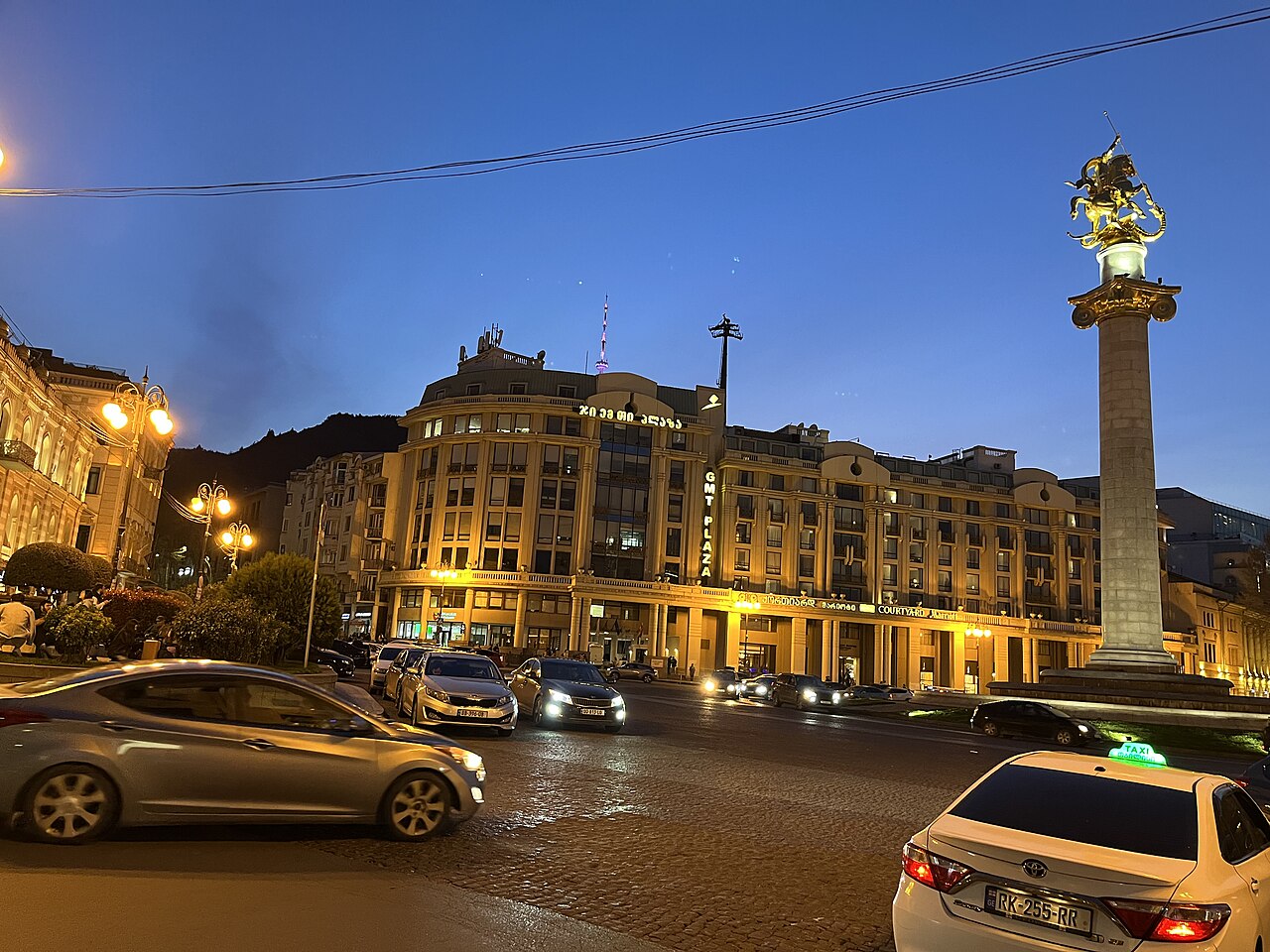
Featured image: CivArmy (CC BY 4.0) via Wikimedia Commons.




Leave a Reply