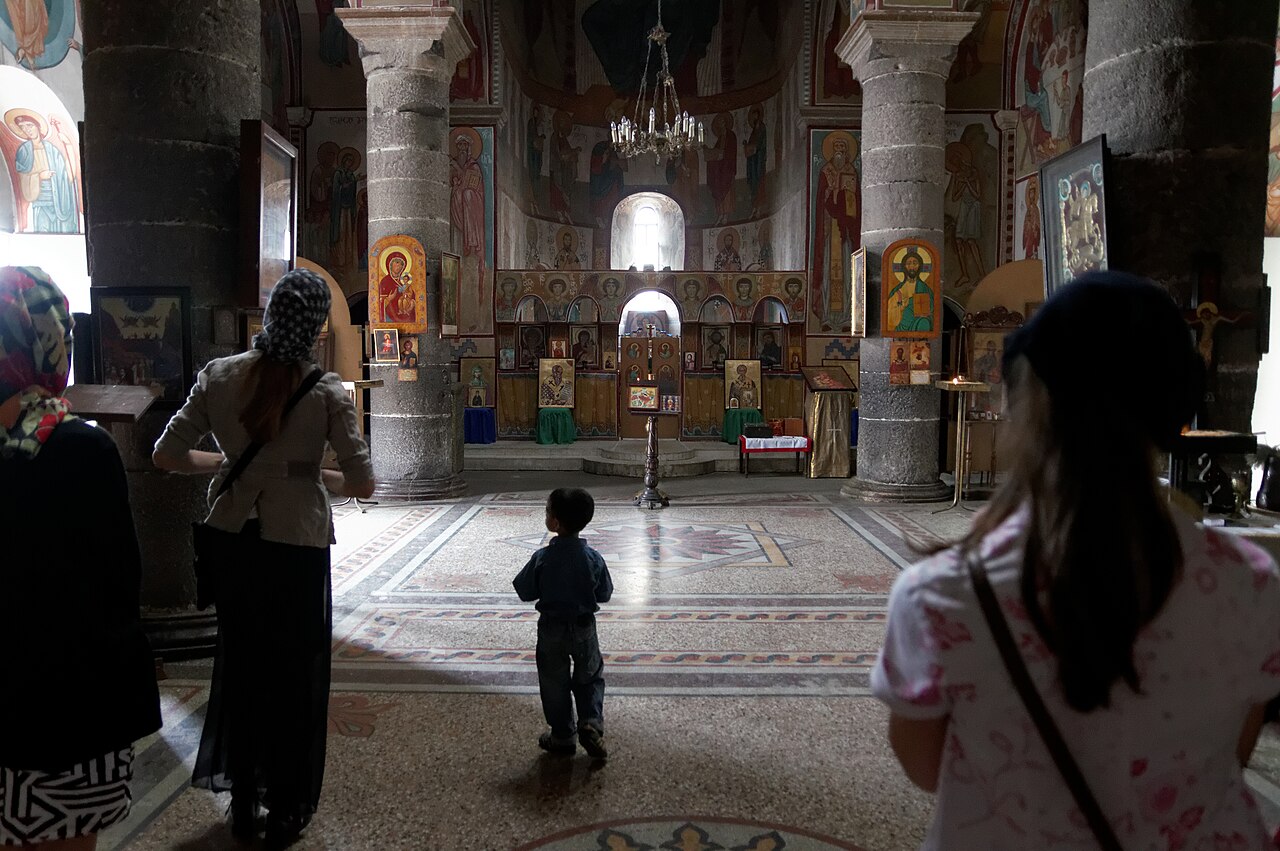
Step into a candlelit sanctuary in Tbilisi and you quickly realise a Georgian orthodox church is far more than a tourist attraction. It is a living space of worship where locals light candles, kiss icons and pray, often beside visitors who arrived only minutes earlier. Georgia is one of the world’s oldest Christian nations, and knowing how to enter, dress and behave respectfully will make your visit richer and warmer. This guide walks you through the etiquette, the architecture and the churches worth seeking out in and around the capital.
Key facts for visitors
- Georgia adopted Christianity as its state religion around 337 AD, making it one of the earliest Christian nations.
- Women should cover their head, shoulders and knees; men wear long trousers and remove hats.
- Most churches keep a basket of skirts and scarves by the door for visitors to borrow for free.
- Never turn your back fully on the altar, and avoid photography during services.
- Entry is free at almost every church, though a small donation for candles is appreciated.
- Churches are busiest on Sundays, at Easter, and on major feasts such as Christmas (7 January) and Mariamoba (28 August).
Why the Georgian Orthodox Church matters
Christianity arrived in Georgia through Saint Nino, a young woman from Cappadocia who preached across the Caucasus in the 330s. Her most significant convert was King Mirian III of Iberia, who, according to tradition, declared he would embrace Christianity after being saved from darkness during a hunting trip. His conversion around 337 AD made Georgia one of the first countries in the world to adopt Christianity as a national faith, alongside neighbouring Armenia.
Over the following centuries the Church became inseparable from Georgian identity. Facing waves of Arab, Persian, Mongol and Ottoman domination, Georgians came to see defending their faith and defending their nation as the same struggle. According to Georgia.to, Christianity was never merely a religious identity but a national one, a unifying force that helped preserve the Georgian language, script and culture through long periods of foreign occupation. That history is exactly why respect matters so much inside these walls today.
Church etiquette for visitors
Dress code
Modest dress is expected of everyone. Women are asked to cover their hair, shoulders and knees. A headscarf is ideal, though a hood, beanie or cap that partly covers the hair is usually accepted, and skirts must reach at least to the knee. Skinny or tight trousers are often discouraged for women. Men should wear long trousers down to the ankle rather than shorts, avoid tank tops, and remove their hats before entering. As Kartveli Tours notes, most churches keep wrap skirts and scarves by the entrance so you can borrow one if you arrive unprepared.
How to enter and behave
There are no pews in a Georgian Orthodox church; worshippers stand, and you are free to move quietly around the interior. Keep your voice to a whisper, silence your phone, and do not eat, drink or chew gum inside. Many visitors buy a thin beeswax candle near the door, light it from an already-burning flame, and place it in the sand-filled candle stand while offering a silent prayer or wish. If you see locals crossing themselves or kissing an icon, you are welcome to observe respectfully but never obliged to join in.
A few boundaries are firm. The altar area behind the iconostasis is sacred ground reserved for clergy, so never step past it. Avoid sitting in the ornate central chair, which belongs to the Patriarch. When you leave, try not to turn your back squarely on the altar; locals usually step back a pace or two before turning. During a service, keep to the sides, avoid crossing in front of people who are praying, and do not photograph the liturgy or the congregation.
Understanding the architecture
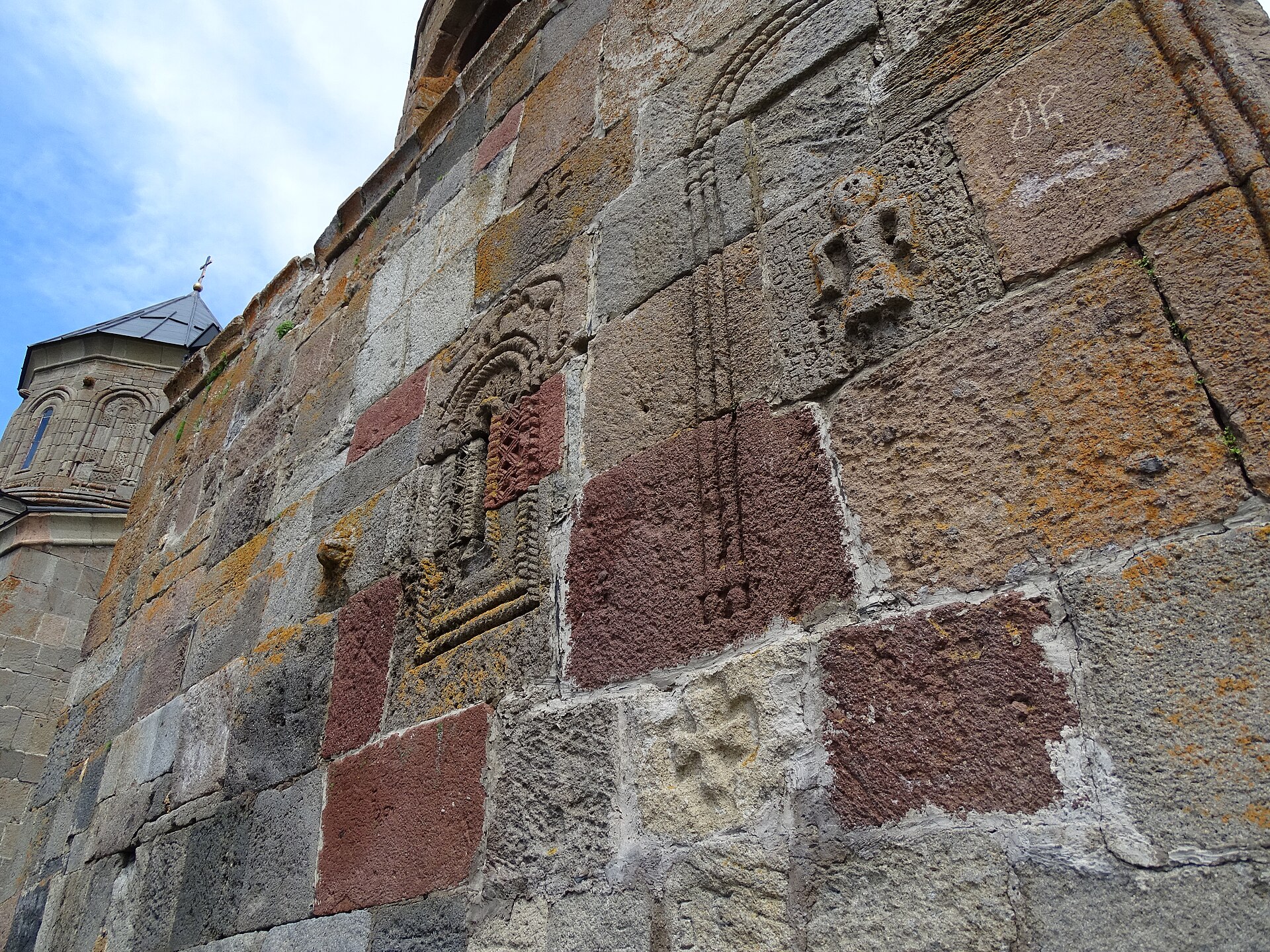
Once you know what to look for, Georgian churches become instantly recognisable. The classic form is the “cross-dome” style that matured in the 9th to 11th centuries: a rectangular or cross-shaped body topped by a tall drum, and above that a distinctive conical dome. That high drum, pierced with narrow windows, floods the interior with shafts of light and creates the dramatic vertical space you feel the moment you step inside.
The 6th-century Jvari Monastery near Mtskheta gave its name to an entire architectural type, with four semicircular apses radiating from a central dome. Its later, grander cousin, Svetitskhoveli Cathedral, was completed in the early 11th century by the architect Arsukisdze and shows how far the cross-dome idea evolved. As Wikipedia’s overview of Georgian architecture explains, the elevated drum is the signature that ties these buildings together across a thousand years.
Key churches to visit in and near Tbilisi
You could spend days exploring Tbilisi’s churches, but a handful capture the full sweep of Georgian faith and craftsmanship. Here are the ones most worth your time.
- Holy Trinity Cathedral (Sameba) — Built between 1995 and 2004, this vast cathedral crowns the Avlabari hill and is now the main seat of the Church. Read our dedicated Sameba Cathedral guide before you go.
- Sioni Cathedral — For over a thousand years this was the principal cathedral of the Georgian Orthodox Church, and it still holds the cross of Saint Nino, said to be bound with her own hair.
- Anchiskhati Basilica — The oldest surviving church in Tbilisi, dating from the 6th century and built by King Dachi of Iberia.
- Metekhi Church — Perched on a cliff above the Mtkvari river, the Assumption church here was raised by King Demetrius II around 1278 to 1284.
- Jvari and Svetitskhoveli — Both in nearby Mtskheta, Georgia’s spiritual heart and a UNESCO World Heritage site; our Mtskheta day trip guide covers how to combine them.
Most of these sit within easy reach of the Old Town, so they fold neatly into a wider itinerary. If you are still shaping your plans, our roundup of the best things to do in Tbilisi shows how to weave church visits between markets, sulphur baths and viewpoints.
Religious holidays and when churches are busy
Because the Georgian Orthodox Church follows the Julian calendar for fixed feasts, Christmas falls on 7 January rather than 25 December, often marked by a midnight liturgy followed by a family supra by candlelight. Orthodox Easter, in April or May, is the most important event of the year, and churches overflow on the night of the Resurrection. Mariamoba, Saint Mary’s Day on 28 August, draws thousands to all-night vigils and morning Divine Liturgy, the largest led by the Catholicos-Patriarch in Tbilisi, as Folkways details.
These are extraordinary times to witness living faith, but they are also the most crowded and the least suited to casual sightseeing. If your main aim is quiet photography or unhurried wandering, visit on an ordinary weekday morning instead, and always give priority to worshippers over your camera.
Respectful photography
Photography is generally tolerated inside churches when a service is not underway, but a few habits keep you on the right side of etiquette. Switch off your flash, which can damage centuries-old frescoes and icons. Never photograph people at prayer, and lower your camera entirely during the liturgy. If a sign or a member of staff indicates that photos are not allowed, respect it without argument. When in doubt, ask quietly or simply put the camera away and let the space speak for itself.
Frequently asked questions
Do I have to cover my head in a Georgian Orthodox church?
Yes, if you are a woman: hair, shoulders and knees should all be covered before you step inside. A scarf is the classic choice, and nearly every church leaves a basket of borrowable coverings at its door for anyone caught unprepared.
Can men wear shorts into a church in Georgia?
Shorts will not pass at the door. The standard for men is ankle-length trousers, no sleeveless tops and hat off, though a few churches do lend wraps to male visitors as well.
Is it free to visit churches in Tbilisi?
There is no admission charge at any Georgian Orthodox church, Sameba and Sioni included. Many visitors simply buy a beeswax candle or drop a few lari in the donation box to help with upkeep.
When are Tbilisi’s churches least crowded?
Pick an ordinary weekday morning. Sundays fill with local worshippers, and the big feasts, from Orthodox Easter to Christmas on 7 January and Mariamoba on 28 August, bring the year’s heaviest crowds.
Last checked: July 2026.
Featured image: Vyacheslav Argenberg (CC BY 4.0) via Wikimedia Commons.


Leave a Reply