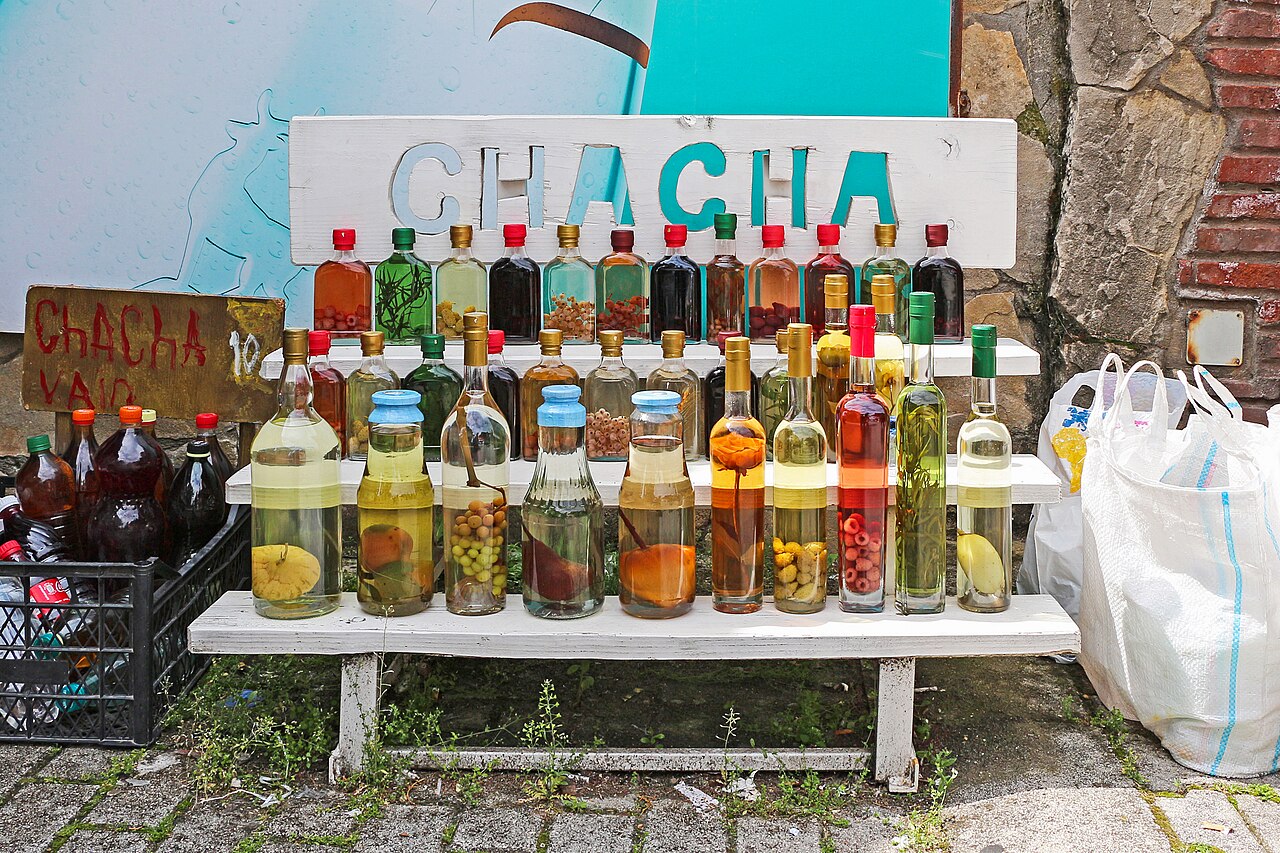
If a Georgian host smiles, pours a clear liquid into a shot glass, and looks you dead in the eye, you have just met chacha. This is Georgia’s national spirit, a pomace brandy distilled from the grape skins, stems, and seeds left behind after winemaking. Locals affectionately call it “grape vodka,” but that undersells it: chacha is fierce, fragrant, and woven into every celebration from a village wedding to a late-night city supra. Whether you sip a smooth boutique bottle or a village batch that could strip paint, understanding chacha is one of the fastest ways to understand Georgia itself.
Chacha at a glance
- What it is: a Georgian pomace brandy distilled from grape residue left over from winemaking.
- Strength: roughly 40% ABV for commercial bottles, up to 65-85% for homemade village batches.
- Nicknames: “Georgian vodka,” “Georgian grappa,” “wine vodka.”
- Protected status: registered as Georgia’s first geographical indication in 2011.
- How it’s served: neat, at room temperature or lightly chilled, always with a toast.
What exactly is chacha?
Chacha is a clear grape spirit made from pomace, the word for what remains after grapes are pressed for wine, which is the skins, stems, seeds, and pulp. In fact, “chacha” in Georgian originally referred to the pomace itself before it became the name of the drink. That makes it a close cousin of Italian grappa and other Mediterranean marc brandies, but with a distinctly Georgian character shaped by native grape varieties like Rkatsiteli and Saperavi.
Because it uses the by-products of winemaking, chacha is the thrifty, no-waste counterpart to Georgia’s wine tradition. According to Wikipedia, producers sometimes stretch the definition, distilling versions from unripe grapes, figs, tangerines, mulberries, or tarragon. If you want the bigger picture on Georgia’s grape culture, our Georgian wine guide explains how the two drinks grew up side by side.
How chacha is made and the Rtveli connection
The chacha calendar begins with Rtveli, the autumn grape harvest that turns rural Georgia into one long working festival. Families pick grapes, press them, and set the wine to ferment, and the leftover pomace is exactly what chacha needs. Nothing from the harvest goes to waste.
From there the process is straightforward but demanding. The pomace is placed in large vessels and left to ferment naturally for anywhere from about a week to a few weeks, converting the remaining grape sugars into alcohol. The fermented mash is then transferred to copper pot stills, heated, and the rising alcohol vapors are condensed back into a high-proof liquid. Many producers distill twice for a cleaner, smoother result, which is why a good commercial chacha can taste surprisingly refined despite its power. The eastern region of Kakheti, home to roughly three-quarters of Georgia’s vineyards, is the heartland of production, as detailed in this complete guide to Georgian chacha.
How Georgians drink chacha
Chacha is rarely a solo drink. It belongs to the supra, the Georgian feast, and specifically to the tamada, the appointed toastmaster who steers the table through a sequence of eloquent toasts. Each toast, whether to peace, ancestors, family, or the future, is followed by a shot of chacha, and there are always many toasts. Tradition even holds that you should sit up straight while drinking, and some drinkers down three shots in a row to honor the Father, the Son, and the Holy Spirit.
Practically speaking, chacha is served neat in small glasses, either at room temperature or lightly chilled, and never nursed slowly like a whisky. It usually appears at the end of a meal or alongside rich food, so pair it with a proper spread from our Georgian food guide. To go deeper on toasting etiquette and the tamada’s role, see our Georgian wine guide, which covers supra culture in detail.
Homemade village chacha vs bottled brands
There are really two chachas. Homemade village chacha is the raw, legendary stuff: distilled in backyards and garages, often unlabeled, sold in reused plastic bottles, and wildly variable in both quality and strength. A good village batch is a revelation; a bad one is a hangover waiting to happen. If a local offers you their family recipe, it is a genuine honor, but treat the strength with respect.
Commercial chacha, by contrast, is bottled, taxed, quality-controlled, and usually sits around 40-45% ABV. Established producers now sell aged and flavored varieties, including oak-aged “gold” expressions, honey-infused bottles, and tarragon versions that have won international awards. For a first-timer, a reputable brand is the safer and more consistent introduction; save the village moonshine for when you have a trusted host.
Where to try and buy chacha in Tbilisi
- Wine shops and cellars: Tbilisi’s specialist wine boutiques almost always stock quality bottled chacha and will let you taste before you buy.
- Dezerter Bazaar and local markets: the place to find homemade chacha in unmarked bottles, sold by the vendors who made it.
- Restaurants and wine bars: order a shot with your meal to sample before committing to a bottle.
- Souvenir and gift shops: decorative bottles make popular gifts, covered in our best souvenirs from Tbilisi roundup.
One famous chacha landmark sits outside the capital: Batumi, on the Black Sea coast, built a 25-meter Chacha Tower in 2012 with a fountain designed to spout free chacha instead of water for a short window each week, as reported by Eurasianet. It became a quirky tourist magnet, though the structure was later removed. It remains a perfect symbol of how seriously Georgia takes its national spirit.
Strength warnings and practical tips
- Never guess the strength of homemade chacha; a village batch can be nearly twice as strong as vodka.
- Eat well before and during drinking, since chacha almost always accompanies food for a reason.
- Pace yourself with toasts; you can sip or take a small amount rather than emptying the glass every time.
- Politely declining is acceptable, but drinking to a toast you disagree with is considered bad form, so let the tamada lead.
- Keep water nearby and know your limit before the third “Holy Spirit” round.
Can you take chacha home?
Yes, and a bottle of chacha is one of the best souvenirs you can carry out of Georgia. Georgia itself does not meaningfully cap how much you carry out for personal use — the limit that matters is your destination country’s duty-free import allowance, commonly around 1 litre of spirits over 22% ABV. On the receiving end, the United States allows travelers 21 and older to bring in roughly 1 litre of alcohol duty-free, per U.S. Customs and Border Protection, with larger amounts subject to duty. Rules vary by destination, so check your own country’s allowance before you fly. Buy sealed, labeled commercial bottles for hand-off at customs, pack them in checked luggage, and remember that unlabeled village chacha may raise questions at the border.
Frequently asked questions
Is chacha the same as vodka?
No — the two start from completely different raw materials. Chacha is distilled from leftover grape pomace, so it keeps a fruity aroma that neutral grain or potato vodka lacks; Georgians only borrowed the vodka label because both drinks are clear and strong.
How strong is chacha?
Anything with a label sits at vodka strength, roughly 40-45% ABV. An unlabeled backyard batch can climb to 65% or beyond, which is why locals advise asking about strength before your first full shot.
How should I drink chacha as a beginner?
Pick a labeled bottle from an established producer over village moonshine for your first taste. Have it neat with a meal, lightly chilled if you like, and treat each toast as a sip rather than a race — with water within reach.
Where can I buy chacha in Tbilisi?
Specialist wine boutiques are the safest bet for a quality bottle, and most will pour you a taster first. For the unlabeled homemade kind, browse Dezerter Bazaar; for a decorative gift bottle, any souvenir shop will oblige.
Last checked: July 2026.
Featured image: Bernard Gagnon (CC BY 4.0) via Wikimedia Commons.


Leave a Reply