Few capitals let you land, drop a bag in a courtyard full of strangers and be drinking wine with them by evening for the price of a bus ticket at home. That is roughly the deal with hostels in Tbilisi: prices that still start in the single digits, a backpacker scene that never fully clears out, and a floating population of remote workers who arrived for a fortnight and stayed a season. Georgia is one of the cheapest bed-nights in the wider region, and Tbilisi is where almost all of that supply sits.
This guide covers what a bed actually costs, what the districts feel like, which properties have a solid reputation among long-term travellers, and what changes when you want to stay a month instead of three nights.
Key facts before you book
- Dorm beds start around US$8 and commonly sit at US$8–15, roughly 22–40 GEL, per Wander-Lush’s 2026 Georgia budget guide.
- Hostel private rooms usually land between 90 and 180 GEL, overlapping with cheap guesthouses at 30–50 USD.
- June through August is peak and priciest; late autumn and February are the softest months.
- Most hostels include a kitchen, and many include a simple breakfast — The Broke Backpacker notes free breakfast at several of the best-known ones.
- Envoy Hostel, long the default recommendation, has been closed for renovation across 2026 — do not plan around it.
- The lari sits near 2.7 to the US dollar, so mental maths is easy: divide by three for a rough dollar figure.
Why Tbilisi suits hostel travel so well
Three things stack in the traveller’s favour here. The first is simple arithmetic: a dorm bed costs less than a mid-range restaurant dish, so the accommodation line of your budget almost stops mattering. The second is the shape of the city. Old Tbilisi is dense, walkable and built around courtyards, which means hostel common areas tend to be genuinely communal rather than a sofa wedged beside reception.
The third is who else is in the room. Georgia’s unusually generous visa policy — many nationalities get a full year on arrival — has pulled in a steady remote-work crowd since 2020. That produces a hybrid scene where the person on the bunk above you might be two days into a Caucasus trip or eight months into a contract. Practically, it means better local knowledge in the common room and more hostels that quietly cater to people working from a laptop. If that is your situation, our Tbilisi digital nomad guide goes deeper on visas, banking and coworking.
What you actually get for the money
Expect a self-catering kitchen almost everywhere — this matters, because Georgian markets are cheap and cooking a pot of lobio costs a fraction of eating out. Expect free filter coffee and tea, luggage storage before check-in and after check-out, and washing machines charged by the load or thrown in free.
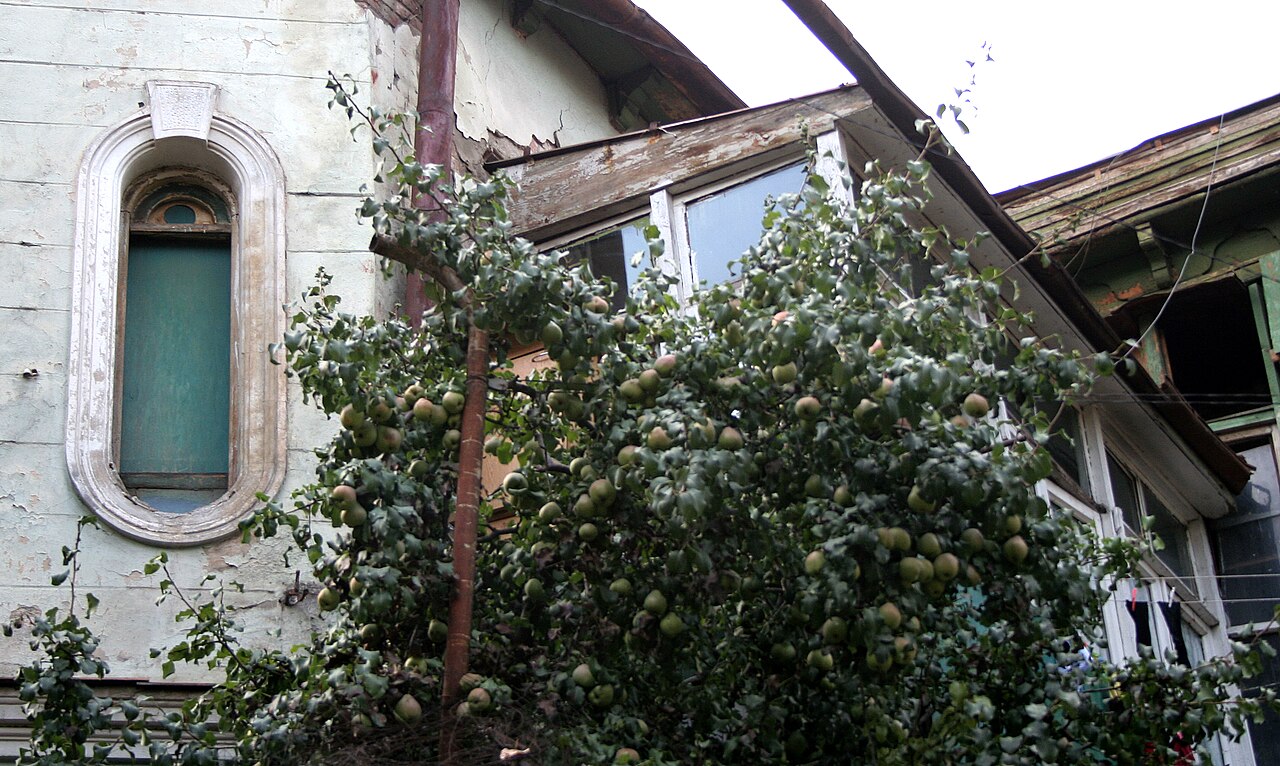
What varies more is the physical building. Many Tbilisi hostels occupy pre-revolutionary apartment blocks with wooden balconies, carved stairwells and shared courtyards. They are beautiful and often poorly insulated. In winter, ask directly how the heating works. In summer, ask whether the dorm has air conditioning or one tired fan, because July in the valley is genuinely hot.
The best districts for hostels
Old Town and Abanotubani
Maximum atmosphere, maximum footfall. You are walking distance from the sulphur baths, Narikala and the main sightseeing spine. The trade-off is noise from bars and tour groups, and the steep lanes that are charming until you drag a wheeled bag up them. Good for short first visits.
Sololaki and Mtatsminda
Just uphill and west of the Old Town, this is where the grand crumbling apartment blocks are. Quieter streets, excellent bakeries, and small hostels in converted flats. It is the sweet spot for travellers who want to be central without sleeping above a bar.
Marjanishvili and Chugureti
Across the river on the left bank, this is the modern social centre of gravity, anchored by the Fabrika complex. Cheaper food, a strong bar and café scene, a metro station and a much younger crowd than the Old Town. If your priority is meeting people rather than photographing balconies, start here.
Vera and Vake
Leafier, more residential, more expensive per square metre and thinner on hostels — but excellent for anyone settling in for weeks. Vera in particular has cafés that tolerate laptops for hours. For a fuller neighbourhood-by-neighbourhood breakdown including hotels and apartments, see our overview of where to stay in Tbilisi.
Hostels with a strong reputation
These are properties that appear consistently across booking platforms and guide roundups and were bookable at the time of writing. Reputations shift, so check recent reviews rather than trusting any list, including this one.
- Fabrika Hostel & Suites (Chugureti) — a Soviet sewing factory converted into a hostel plus a courtyard of bars, studios and cafés. Dorms from about US$12, private rooms from roughly US$65. It is the name almost everyone offers first, and the one most often recommended for groups.
- Pushkin 10 (Mtatsminda) — small, homely and repeatedly praised for its kitchen, fireplace and included breakfast. Dorms from around US$17, so not the cheapest, but the reviews reflect the difference.
- Why Not? Tbilisi — Legend Hostel — the one that gets called the city’s best party hostel, with a bring-your-own-bottle culture and breakfast included. Ratings sit high on hostel review sites, though it has drifted off some major booking platforms, so confirm availability directly.
- Green House Hostel Tbilisi — a long-running budget option still listed with current 2026 pricing on Hostelworld, favoured by travellers who want cheap and central over stylish.
Two names that circulate in older articles deserve a warning. Envoy Hostel has been under renovation with a listed closure running to the end of 2026, and Nine Muses and Tiflis Hostel could not be confirmed as currently operating. Treat any recommendation older than a year as a lead to verify, not a booking.
Social versus quiet: pick deliberately
Tbilisi’s hostels split fairly cleanly. On one side sit the big social houses with bars, organised dinners and day trips to Kazbegi — Fabrika and Why Not? are the obvious examples. On the other are small converted apartments with eight to twelve beds total, where the common room holds four people and conversation ends by eleven.
Reading the listing tells you which is which. Phrases like bar on site or pub crawl are a promise, not decoration, and so is a description built around home-cooked breakfast and quiet hours. The mismatch — booking a party hostel while jet-lagged and on deadline — is the single most common complaint in Tbilisi reviews.
Notes for solo female travellers
Georgia is widely regarded as a comfortable country for women travelling alone, and Tbilisi’s Old Town stays busy late. The practical friction is more social than dangerous: persistent conversation from taxi drivers or bar patrons rather than anything worse.
Useful filters when booking are female-only dorms, which most mid-size hostels offer, and lockers large enough for a full pack rather than a daypack. Prefer places with 24-hour reception if you are landing on a late flight, since many Tbilisi arrivals come in well after midnight. Use Bolt rather than street taxis for the airport run. More detail sits in our guide to solo travel in Tbilisi.
Staying a month or longer
Weekly rates are already built into the market — Budget Your Trip’s Tbilisi hostel data puts a week in a dorm near US$66 and a fortnight near US$133, a clear discount on nightly rates. Beyond two weeks, message the property directly. Most independent hostels will negotiate a monthly figure that beats anything on a booking site, particularly from November to March.
Do the comparison honestly, though. A month in a dorm at negotiated rates often lands close to what a modest studio apartment costs, and the apartment comes with a door that locks and no one packing at 5am. The hostel wins on company and flexibility; the flat wins on sleep and focus. Many people split the difference by taking a hostel private room monthly, which keeps the social side without the dorm.
Booking tips that save money and grief
- Book the first two nights only, then extend in person once you have seen the place.
- Read the newest reviews first — ownership and management change hands frequently here.
- Ask about the exact address before arrival; several hostels sit inside unmarked courtyards.
- Carry some cash in lari for small properties that take payment on arrival.
- Avoid ground-floor dorms facing the street in the Old Town if you sleep lightly.
- Check whether the listed price includes the city tourist charge and card fees.
Frequently asked questions
Is it worth booking ahead in high season?
For July and August, yes — the well-reviewed properties fill and the remaining stock is priced accordingly. Outside those months you can usually walk in, and doing so gives you leverage to negotiate.
Can I pay by card?
Larger properties take cards without fuss. Smaller apartment-style places sometimes prefer cash on arrival, and a few add a surcharge for card payment. ATMs are plentiful across the city, so withdrawing lari is never a problem.
Are there age limits on dorms?
A handful of party-oriented houses set an upper age cap, typically around 40, and some decline under-18s travelling alone. It is rarely advertised prominently, so ask if it might apply to you.
How do I get from the airport to a hostel cheaply?
The number 337 bus runs into the centre for about a lari, roughly 07:00 to 23:00 every 15–20 minutes. A thinner night service exists at much wider gaps, so for a genuinely late landing budget for a Bolt instead. A ride-hailing car costs a few times more but is still modest by European standards, and is the sensible option with a heavy pack after a long flight.
Last checked: August 2026
Featured image: Alix Kroeger from Brussels, Belgium (CC BY-SA 2.0) via Wikimedia Commons.


Leave a Reply