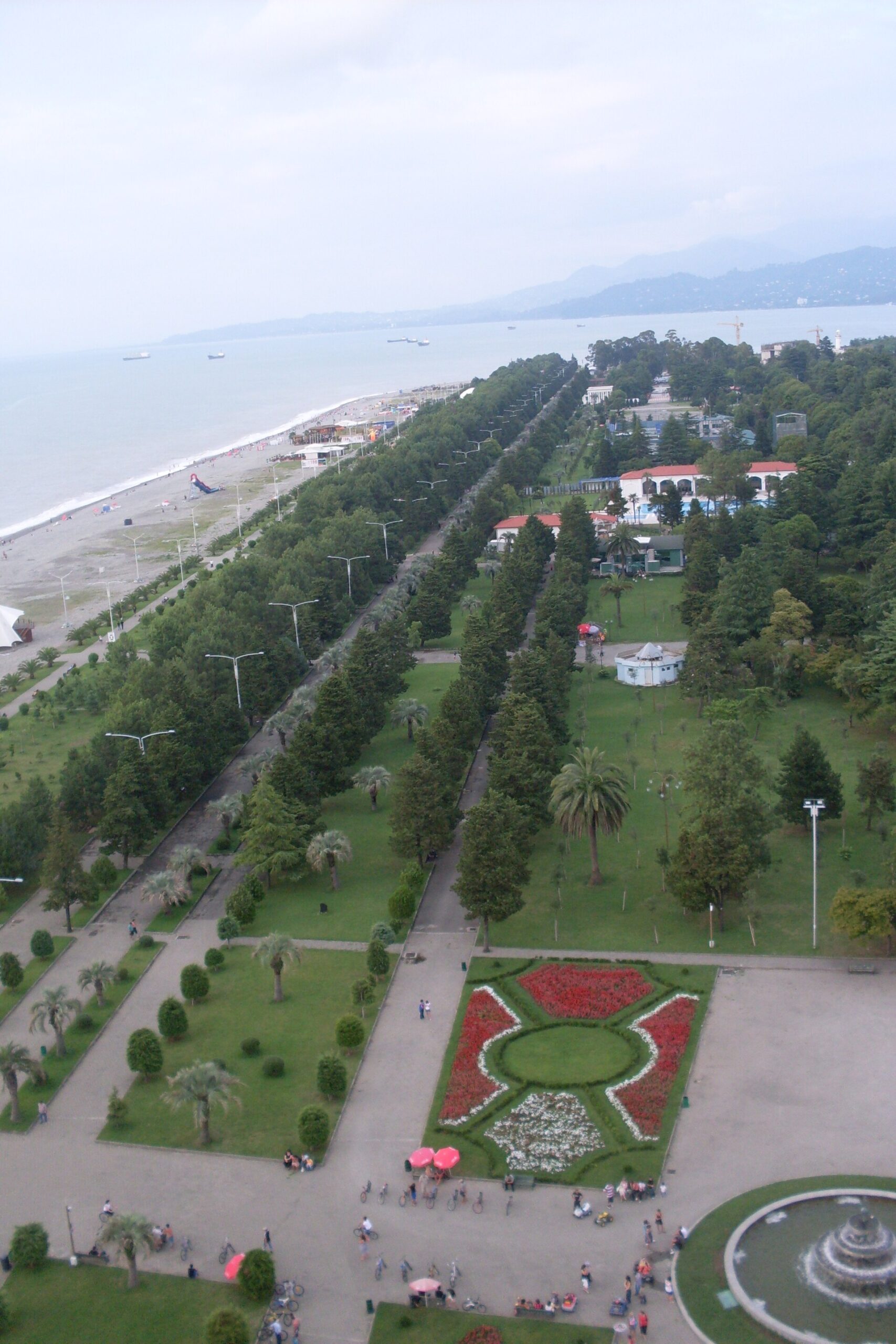
Batumi Boulevard is the long, tree-lined promenade that runs the length of Batumi’s Black Sea front — somewhere between 7 and 8 kilometres of paved path, statues, fountains and cafes, all of it free to walk. You can stroll the whole thing in an afternoon, cover it in half an hour on a rented bike, or just pick the stretch that suits you: the old-town end near the port for cafes and set-piece fountains, the newer northern end for the towers, the big lake and open sky. The one thing to fix in your head before you arrive is the beach.
There is no sand. It’s pebbles, all of it
Batumi’s beach is stones, from small grey shingle to fist-sized cobbles, along the entire 6-odd kilometres of shoreline (georgia-spirit.com, checked September 2026). No amount of hoping turns it into a Mediterranean sand beach, so bring or buy proper water shoes — walking in barefoot over hot stones into the water is the classic first-day mistake. The upside is that the water stays clear, because there’s no sand to churn up.
Loungers and umbrellas run about 5–10₾ a day from the beach clubs strung along the boulevard, and the public stretches between them cost nothing. That’s the whole beach economy in one sentence: the sea is free, the shade is rented.
The moving statue, and why 7pm matters
The single thing most people come to the boulevard to see is Ali & Nino, the two eight-metre steel figures by Georgian sculptor Tamara Kvesitadze, installed in 2010 near the northern end (georgia.travel). They aren’t a static monument. Every evening the two figures slowly slide toward each other, merge, pass clean through one another and drift apart again — a full cycle takes about ten minutes, and it repeats through the night.
The motion starts around 7pm. Turn up at three in the afternoon and you’ll photograph two frozen figures and wonder what the fuss is about. Come at dusk and the whole point becomes obvious. It’s named for a 1937 novel about a Muslim man and a Christian woman kept apart, and the statue does the heartbreak better than any plaque could.
The towers: two you’ll use, one that’s a ruin
The Alphabet Tower is the 130-metre spike wound with the 33 letters of the Georgian alphabet, up near the new boulevard. There’s a viewing level and a restaurant near the top, so it’s the place to go if you want the promenade laid out below you rather than photographed from ground level.
The Chacha Tower is the one to manage your expectations on. The story you’ll read everywhere is that its fountains once ran with free chacha, Georgia’s grape spirit, at set hours. That stopped years ago. By 2026 the tower sits neglected in Miracle Park with a stopped clock and dry taps, and some sources report it slated for removal (recent visitor reviews, Tripadvisor). Walk past it, don’t plan an evening around it.
Two sets of fountains, and the later one is the better one
People lump all of Batumi’s water shows together, but there are really two. The older central dancing fountain, dating to 1977, sits by the boulevard itself and does coloured jets in the evening. The bigger event is the musical fountain out on Lake Ardagani toward the northern end, which combines water, light and projected imagery over the water and, in summer, runs from around 9pm well into the night (visitbatumi.com, the city’s official tourism site).
So the evening arranges itself: catch Ali & Nino moving at 7, eat somewhere on the promenade, then walk up to the lake for the fountains after 9. All of it outdoors, all of it free.
Walk it or ride it?
Seven kilometres is a lot to cover on foot twice in a day. There’s a dedicated cycle lane running almost the full length, and the city bike-share, Batumvelo, uses the red bikes docked at stations along the way. You buy a card for 20₾ (with 10₾ of that sitting on the card as ride credit) from the tourist information centre at 2 Ninoshvili Street near the fountains, bring your passport, and rides are 2₾ an hour (gobatumi.com, checked September 2026). Private operators also rent e-scooters and e-bikes by the hour right off the boulevard, usually a little pricier but with no card to set up.
Which way should you point? North, toward the newer end. The old-town stretch is prettier for a slow wander, but the towers, the lake fountains and the widest open beach are all up at the northern end, and it’s easier to ride out and drift back than the reverse.
Sunset is the whole reason to be here in the evening
Here’s the geography that catches people out: Batumi faces due west over open water, so the sun sets straight into the Black Sea in front of you. That’s not true of most Georgian viewpoints, which look at mountains. On the boulevard the sun drops behind the horizon line, the promenade lights come up, the towers switch on, and Ali & Nino start their slow dance — all inside the same hour. If you only have one evening in Batumi, this is the hour to be walking the seafront.
Our advice: skip the daytime beach crowds, do the boulevard as an evening. Arrive around 6.30pm, walk north into the sunset, and let the fountains cap the night.
Getting to Batumi, and getting up and down the boulevard
From the capital, the train is the sane option now that the new tunnel has cut the journey to roughly four hours; we lay out fares, timetables and the marshrutka alternative in our Tbilisi to Batumi travel guide. One thing worth knowing before you step off: Batumi’s main train station isn’t in Batumi. It’s at Makhinjauri, about 4km north of the centre, so budget a short bus or taxi hop into town on arrival. If you’re weighing Batumi against other escapes from the capital, our roundup of day trips from Tbilisi puts the distances in context — Batumi is an overnight, not a day trip.
Around town, the boulevard itself is the easiest thing to navigate: it’s flat, continuous and either walkable or bikeable end to end. For anything off the seafront, Bolt taxis are cheap and everywhere. And if you’re timing a coastal trip against the capital’s own peak season, our guide to Tbilisi in summer is worth a look — July heat is exactly when Batumi’s sea breeze earns its reputation.
Frequently asked questions
What time do the Ali and Nino statues move?
The figures begin their motion in the evening, from around 7pm, and each approach-and-separate cycle lasts about ten minutes before repeating. During the day they stand still, so an evening visit is the only way to see the famous sequence.
Is Batumi beach sand or pebbles?
Pebbles the whole way — grey shingle grading up to larger cobbles, with no sand anywhere on the city shoreline. Pack water shoes, and remember the loungers you pay 5–10₾ for are there partly to spare your feet.
How much does it cost to rent a bike on Batumi Boulevard?
The city Batumvelo scheme charges 2₾ per hour once you’ve bought the 20₾ card, which carries 10₾ of credit and needs your passport to set up. Independent e-scooter and e-bike rentals on the promenade skip the card but cost a bit more per hour.
Does the Chacha Tower still give out free chacha?
No. The taps that once poured spirit have been dry for years, and the structure now stands run-down in Miracle Park. Treat it as a photo stop on the way past, not a working attraction.
Last practical thing: dock your rented bike, or park your feet, at the northern end well before 9pm on a summer night. The Ardagani lake fountains draw a crowd, and the good viewing spots along the rail fill fast once the first jets go up.
Featured image: Photo: Gorod – SKY / Wikimedia Commons (CC BY 2.0)




Leave a Reply