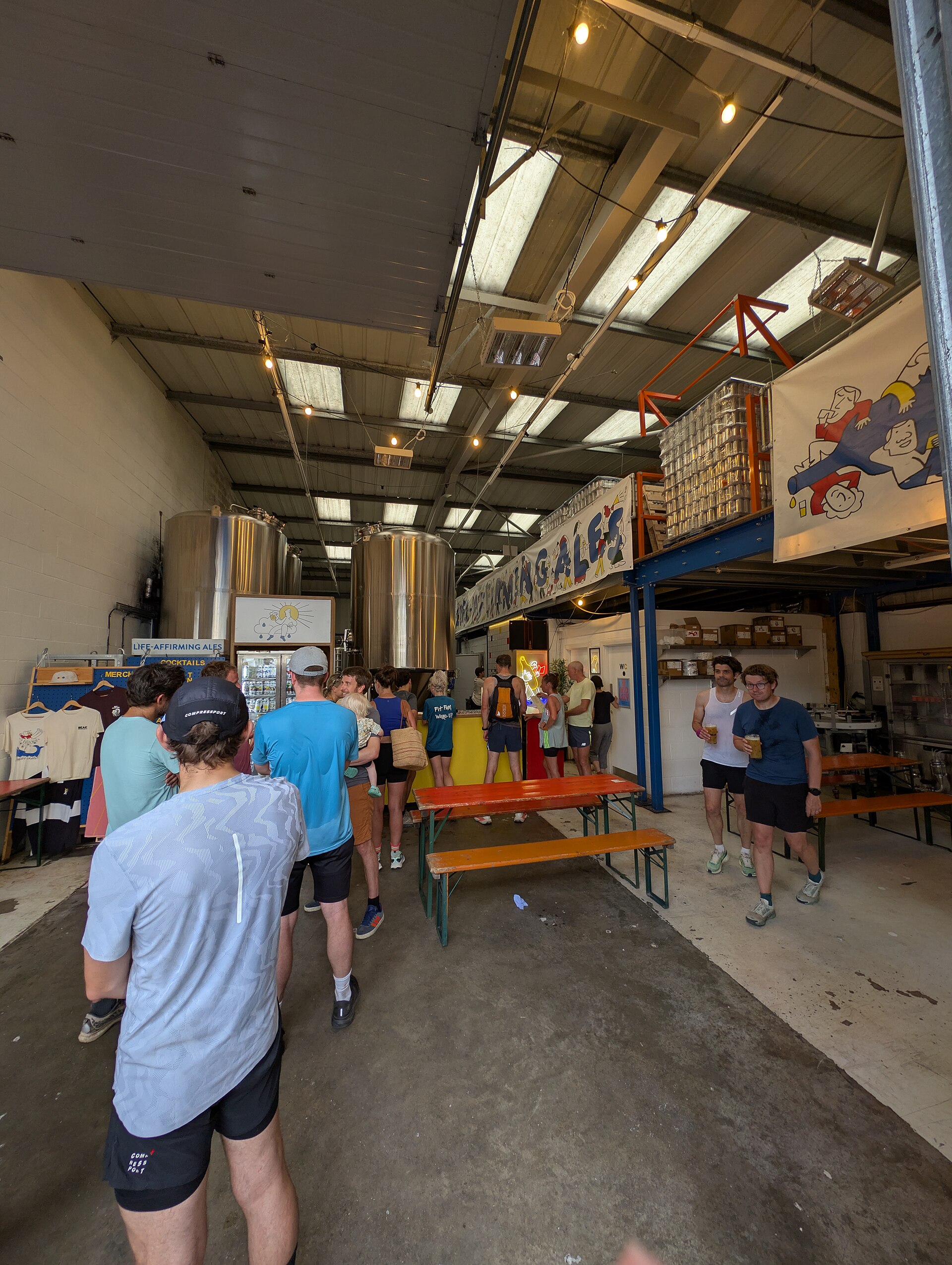
Yes, Tbilisi has a real craft beer scene, and the fastest way in is two taprooms a short walk apart: Hopa on Atoneli Street and Tsota Tsota in Sololaki, both pouring Georgian craft from around ₾8 a glass, checked September 2026 against Wander-Lush’s edited Tbilisi bar list. That settles the practical question. The interesting question is why Tbilisi craft beer took until the mid-2010s to exist at all.
The answer is wine. Georgia has made it for roughly 8,000 years, every supra is built around it, and a glass of decent everyday wine costs ₾6–8 in the same neighbourhoods where a craft IPA costs ₾10. Beer here didn’t grow up in a vacuum. It grew up in an argument, and the scene still carries the shape of that argument.
Where to actually drink it
Start with the places we can confirm are pouring right now. Tbilisi bars close without ceremony, so this list is deliberately shorter than the ones you’ll find elsewhere.
- Hopa Taproom (Atoneli St) — twelve taps of Georgian craft plus a fridge of local cans and Belgian bottles. Pours from ₾8, flights available, and every sixth pour is free, which quietly rewards the person doing the full tour.
- Tsota Tsota Pub (Geronti Kikodze St, Sololaki) — the taproom of Megobrebi brewery, with 14 taps. This is where the scene gets weird in the best way: Georgian-style IPAs, sours, and hybrid beer-wine ferments that only make sense in this country.
- Black Dog (Sololaki and Vera) — two small pet-friendly bars pouring Number 8 Craft Brewery beers under walls of movie posters. The Sololaki original is the one with the neighbourhood-local feel.
- Sma (Lado Asatiani St) — eight taps, burgers, board games, a room the size of a generous living room. Regularly carries Seahorse, a Batumi brewery you won’t see much elsewhere.
- Abragi (Shalva Dadiani St) — six taps and a firm house rule: Georgian craft only. No Belgian safety net.
- 2 Tona — brews everything it serves. Dependable rather than adventurous, with a full food menu, so it works as dinner-plus-beer rather than a tasting stop.
- 9 Mta (Dedaena Park and Vake) — nine taps by the river near the Dry Bridge, with a wood fireplace for winter. The prettiest setting on this list by some distance.
All of these sit inside the same compact stretch of the city as the bars in our Tbilisi nightlife guide, so a three-stop crawl on foot is entirely realistic. Sololaki alone gives you Tsota Tsota, Black Dog and Sma within ten minutes of each other.
A ten-year-old scene in an 8,000-year-old wine country
Craft arrived late and moved fast. Genuine Brewing Company, the maker of Black Lion (Shavi Lomi), is credited as Georgia’s first craft brewery and only started selling at the beginning of 2016. By 2017 it had sold about 300,000 litres, mostly to Tbilisi bars and restaurants, and in 2018 the investment group Georgia Capital bought the company outright. Ten years from zero to acquisition target. Wine took eight millennia to get its first UNESCO nod.
Black Lion is now the establishment: you’ll see its IPA and saison in supermarkets and on restaurant menus across the country, less often on taproom tap lists. The second wave is where the character lives. Megobrebi (the name means “friends”) brews with Georgian ingredients and runs Tsota Tsota as its shopfront. Number 8 supplies Black Dog. Seahorse brews on the coast. None of them pretend Belgium doesn’t exist, but the interesting bottles are the ones only Georgia could produce.
Which brings us back to the argument with wine.
The most Georgian thing on any tap list is the beer-wine hybrid: ales fermented with rkatsiteli or saperavi grape must, sours aged on qvevri lees. In most countries that would be a gimmick. Here it reads as a peace treaty, the young scene borrowing the oldest trick in the national playbook instead of competing with it. If you drink one experimental beer in Tbilisi, make it one of these, and if you want the other side of the conversation first, our wine bar guide covers where the grapes still rule.
What a pint costs, and the ₾5 elephant in the courtyard
Expect ₾8–15 for a craft pour in a dedicated bar, with imperial stouts and imports pushing toward ₾18. At roughly 2.6₾ to the dollar, the top end is still about $7, so nobody from London or New York is going to feel robbed.
Locals calibrate differently, though. The benchmark isn’t Brooklyn prices, it’s the ₾5 draft lager in the Fabrika courtyard, where half of young Tbilisi drinks on any warm evening. Fabrika does have craft options at its bars, but the courtyard default is a cheap cold lager, and that ₾5 figure is the number every craft brewer in the city is silently negotiating against. Doubling it buys you a beer with an actual idea in it. Tripling it needs justifying.
And the wine comparison never goes away: ₾6–8 buys a glass of solid everyday Georgian wine almost anywhere. Craft beer in Tbilisi is the rare case where the beer is the premium drink and the wine is the budget one. Adjust your instincts accordingly.
Natakhtari and Argo: the lagers the country actually drinks
For scale, the craft scene is a rounding error next to the industrial lagers. Natakhtari, brewed since 2005 in the town of the same name, is the green-labelled default in every corner shop, khinkali house and mountain guesthouse. Argo is its longer-standing rival. Both are clean, cold, unremarkable European-style lagers around ₾3–5 a bottle, and both do their job perfectly well.
Don’t skip them out of snobbery. A sweating bottle of Natakhtari at a roadside khinkali stop is its own institution, and no ₾14 hazy IPA replaces it. The craft bars are for evenings; the lagers are for meals. Which is the right segue.
The one table where beer beats wine outright
Khinkali. Georgians themselves drink beer with khinkali, not wine, and once you’ve eaten a dozen you understand why: hot peppery broth, thick boiled dough and black pepper flatten most wines, while a cold lager resets your palate between dumplings. At ₾2–3 per khinkali and ₾4-ish for the beer, it’s also one of the great cheap dinners of Europe. Our guide to ordering Georgian food covers the mechanics; the drink order is the easy part. Beer. Always beer.
Our advice, and wine people will bristle: on a short trip, spend your one free evening in a craft taproom rather than a second wine bar. The wine story is told brilliantly all over Tbilisi and it will still be there tomorrow. The beer story is being written this decade, by a handful of people, in rooms small enough that the brewer is sometimes pouring. That’s a rarer thing to watch.
Frequently asked questions
Does Tbilisi have good craft beer?
Genuinely, yes, within a small radius. A dozen or so serious venues pour Georgian-brewed IPAs, sours and grape-hybrid ales, nearly all within walking distance of Freedom Square. It’s a young scene with occasional misses, but the hit rate at the dedicated taprooms is high.
How much is a beer in Tbilisi in 2026?
A shop bottle of Natakhtari or Argo runs ₾3–5, a courtyard draft lager about ₾5, and craft pours ₾8–15 with rare specials nearer ₾18. In dollars that’s roughly $1.50 to $7, so even the expensive end undercuts most Western capitals.
What was the first craft brewery in Georgia?
Genuine Brewing Company, which brews Black Lion (Shavi Lomi), holds that title. Sales began in early 2016, growth was quick enough that Georgia Capital acquired the business in 2018, and its bottles are now nationwide rather than a taproom curiosity.
Do Georgians drink beer or wine with khinkali?
Beer, near-universally. The pepper and hot broth in the dumplings clash with wine, so even in the birthplace of winemaking the khinkali table gets lager. Order a Natakhtari and you’ll be eating the way the room around you eats.
One practical note to leave with: several of these rooms hold thirty people or fewer, and Sma and Tsota Tsota fill up fast after 20:00 on Friday and Saturday. Go at 18:00, take the seat at the taps, and ask whoever is pouring what’s newest. In a scene this young, “newest” is usually the right answer.
Featured image: Kgbo (CC BY-SA 4.0) via Wikimedia Commons.




Leave a Reply