Cross the river from the Old Town and you are in Chugureti, and Marjanishvili in Tbilisi is its front door: a metro station, a square, and the pedestrianised end of Agmashenebeli Avenue running off it. This is where you come for the bars, the coffee, the design shops and the cheapest decent beds in the centre. It is not where you come for churches on hills or postcard balconies.
It is also the one part of central Tbilisi where you can date the change to a single year. Two things landed in 2016, and the district has been arguing with itself ever since.
Before: German settlers, then factories
Swabian Germans from Württemberg were settled on this bank in 1818 and founded a village they called Neu-Tiflis, next to the older settlements of Kukia and Chugureti. It stayed a separate place until 1862, when the city absorbed it. The grid you walk today, straight streets and low two-storey frontages, is theirs; the Old Town’s crooked lanes never crossed the water.
The centre of that settlement was Kirche Square, named for the Evangelical-Lutheran church of St Peter and Paul that the architect Otto Simonson finished there in 1897. Kirche Square is Kote Marjanishvili Square now. The church is nothing, because in 1946 the Soviet authorities had German prisoners of war pull it down and put apartment blocks up on the site. A replacement, the Church of Reconciliation, was built in the mid-1990s on Terenti Graneli Street, on ground that had been the German cemetery, and it is worth the detour because it is so plain (the Tbilisi Architecture Network has the fuller settlement history).
Then the Soviet century made Chugureti a working district. Sewing plants, print works, wine and brandy warehouses, rail yards up towards the station. That industrial layer is the whole reason the district’s second act was possible: nowhere else in central Tbilisi had this much big cheap floor space sitting empty by 2010.
2016: the year Chugureti flipped
In July 2016 the Adjara Group and the architects at MUA opened Fabrika in the shell of the Nino sewing factory on Egnate Ninoshvili Street: a 354-bed hostel wrapped around a concrete yard, with bars, studios, a coworking floor and a handful of small shops in the outbuildings. The yard was free to enter and had nowhere you had to spend money, which in 2016 Tbilisi was close to a new idea. Within a year it was the default answer to where are we going tonight; the practical side is in our Fabrika guide.
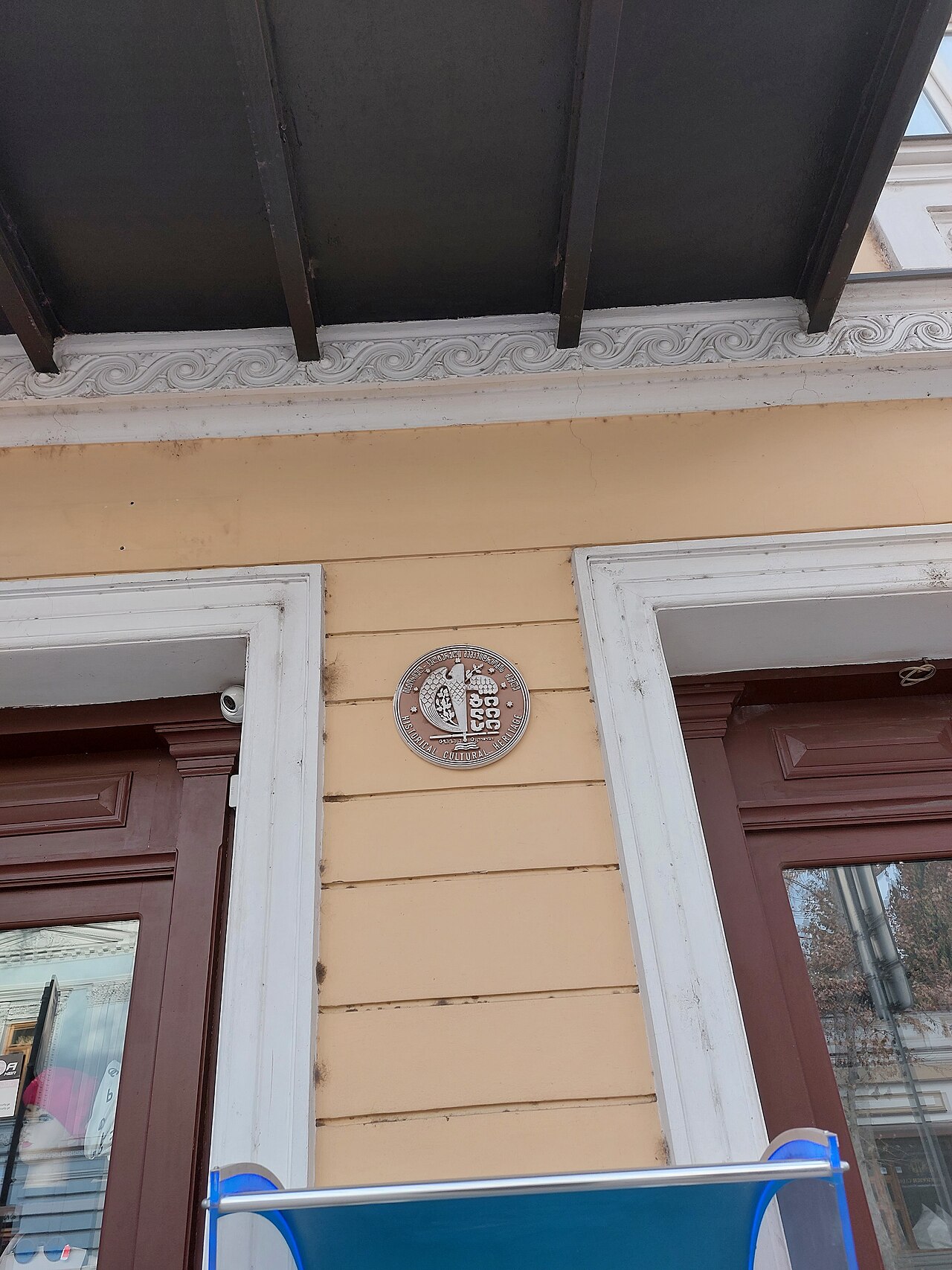
The same year, the city finished the New Tiflis scheme on Agmashenebeli Avenue: a stretch of the avenue closed to traffic and the facades of 27 listed buildings restored. Two blocks apart, an old factory and an old boulevard both reopened as places to walk around in.
Everything else followed those two. The specialty coffee, the natural wine bars, the tattoo studios, the ceramics shops, the guesthouses in courtyard buildings. Chugureti went from a place people passed through on the way to the station to a place people fly in for.
Agmashenebeli Avenue, honestly
The restored stretch is genuinely lovely to walk at eight in the evening, when the lamps come on and the whole avenue smells of grilling meat and cigarettes. Nobody sensible would tell you to skip it.
But be clear about what was restored. The money went on the street-facing skin. Walk one street back, or look up past the second floor, and you find the same buildings unpainted, propped, sometimes with sheeting over a balcony. The rehabilitation gave the avenue a face and left the rest of the building to the residents, and you can read the seam if you look for it.
Our advice: give the avenue thirty minutes and then leave it. The pedestrian stretch has drifted towards the visitor end of things, with laminated menus in four languages and a fair amount of it priced for people who will only eat there once. The interesting parts of Chugureti are north and east of it: Ninoshvili, the unrestored continuation of the avenue, and the streets around Vagzlis Moedani.
Go through the doorways
Chugureti’s real texture is behind the avenue, in the courtyards. Push an unlocked street door and you get a rectangular yard, a wooden gallery running round the first floor, laundry, a grapevine, a cat, an air-conditioning unit bolted through a carved capital. These are shared homes, not attractions. Nobody will stop you crossing a yard in daylight; nobody will thank you for a flash photograph through a kitchen window at eleven at night.
The best hour for this is late afternoon, when the yards are in shade and people are actually in them.
Two anchors worth knowing while you wander: the Kote Marjanishvili State Drama Theatre on Marjanishvili Street, which gave the square and the metro station their name, and Dezerter Bazaar up by the central station, still the loudest and least curated market in the city centre. If you want a broader sense of how this district sits against Sololaki, Vera and Avlabari, our Tbilisi neighbourhoods guide lays them side by side.
What the change cost
Rent. That is the short answer, and it is not really about Fabrika.
The creeping part came first: short-term rentals eating the courtyard buildings nearest the avenue through 2017 to 2019, the ordinary arithmetic of a flat earning more from four nights of tourists than a month of tenants. Then 2022 did in one year what would have taken ten. After Russia’s invasion of Ukraine and the mobilisation announcement that autumn, around 110,000 Russian citizens moved to Georgia, most of them into central Tbilisi. Residential rents in the city rose about 66% across 2022, and the October figure was roughly double the same month a year earlier, per the market reviews collected by Investor.ge (figures checked September 2026 and unrevised since publication).
What that looks like on the ground in Chugureti: households moving in with relatives and letting the flat, older tenants going out to Gldani or Varketili, the small hardware shop and the shoe repair replaced by a third coffee bar. The district got cleaner streets, jobs, a night economy and a reason for the buildings to be worth repairing. It lost a lot of the people who made it worth coming to. Both of those are true at once, and anyone telling you the regeneration was purely good or purely bad is selling something.
Rents came off the 2022 peak as people left again, but not back to where they started.
Getting there and getting out
Marjanishvili station has been open since 11 January 1966 and sits on Line 1, the Akhmeteli–Varketili line, with exits at 89 Agmashenebeli Avenue and 24 Kote Marjanishvili Street. One stop north is Station Square, where you change for the Saburtalo line and where the marshrutkas to Kazbegi, Gori and Batumi leave. One stop south is Rustaveli, on the other bank.
You need a Metromoney card to ride; it is 2 GEL for the card itself, then 1 GEL a journey, and one tap covers transfers between metro and city buses for 90 minutes (fares checked September 2026 against Tbilisi Transport Company). Buy it at the station kiosk. Contactless bank cards work on the gates at the same fare.
On foot, Dry Bridge market is about ten minutes over Baratashvili Bridge and the Old Town another ten past that. That walkability is the single strongest argument for basing yourself here.
Who should stay here
- First-time visitors on a budget. The concentration of cheap beds is unmatched in the centre, and our Tbilisi hostels roundup is weighted heavily towards this district for a reason.
- Anyone whose evening starts after ten. The walk home from most of the city’s late bars ends here, which our nightlife guide gets into properly.
- Remote workers. Coworking, fast wifi in most cafes, and a metro stop that reaches the airport bus and both lines.
- Repeat visitors who have already done the Old Town and want a week of streets rather than sights.
Who should not: light sleepers, and anyone with a car. Yard noise carries in these buildings and the bars run late on Fridays and Saturdays. Parking is close to hopeless.
Frequently asked questions
Is Marjanishvili a safe area to stay in Tbilisi?
Yes, including for solo women walking back after midnight. Tbilisi’s violent crime rate is low and this district is busy at night rather than empty. The two real annoyances are drunk groups spilling out of bars near the station end, and pavements that are broken, unlit in places and worth a phone torch.
Is Chugureti the same as Marjanishvili?
No. Chugureti is the administrative district, and it is large, stretching north past the central railway station. Marjanishvili is a square and a metro station inside it, and in everyday speech it stands for the few hundred metres around them. Booking sites often list both for the same flat.
How many days do you need for this part of Tbilisi?
Half a day covers the avenue, the square and Fabrika. But the district rewards being lived in rather than toured, so if you are choosing where to sleep for four or five nights in the city, this is a strong pick and you will see it in the gaps.
Can you still see anything German in the area?
The street plan, mostly, plus the modest 1990s Church of Reconciliation on Terenti Graneli Street and a scatter of low pitched-roof houses with wooden eaves along the side streets. The one building everybody wants to see, Simonson’s 1897 Lutheran church, has been gone since 1946.
One last thing, and it matters more than any of the above if you are booking: ask the host which floor and which side of the building the flat faces. In Chugureti’s courtyard blocks, a room over the yard is quiet and dark, a room over Agmashenebeli is bright and loud until two in the morning, and the listing photographs will not tell you which one you are getting.
Featured image: Kober (CC0) via Wikimedia Commons.




Leave a Reply