Most people who lose money in Georgia lose it in their first hour in the country, at an airport exchange window or on a cash machine screen that offered to be helpful. Nobody gets robbed. They just agree to a bad rate, twice, and pay 20₾ for the paperwork.
What follows is ordered by how often each of these actually happens, not by topic. The first two do most of the damage, and both are fixed by reading one line on a screen.
Mistake 1: letting the ATM pick your exchange rate
The machine asks whether you’d rather be charged in your own currency. It shows a tidy figure in dollars or euros, it reads like a courtesy, and it is the most expensive button on the keypad. That offer is dynamic currency conversion, DCC, and saying yes hands the rate-setting to the Georgian bank instead of your own.
The markup runs three to eight percent above the real rate. Pull 1,000₾ at a six percent markup and you’ve paid about 60₾ for nothing, which is a private sulfur bath cabin in Abanotubani at 15–40₾ an hour, with change. The same prompt appears on card terminals in restaurants and shops, so the habit compounds either way across a whole trip.
The fix: choose GEL or lari on every screen, every time. Decline the friendly number in your home currency and let your own bank do the conversion.
Mistake 2: taking cash out of the wrong bank’s machine
Cash machines here, “bankomati”, sit on most blocks, and what they charge a foreign card swings wildly between one logo and the next. Liberty Bank is the trap. It was the fee-free favourite in forum threads for years, still has the widest rural network, and reports collected through 2025 and 2026 by ATM fee trackers have it charging as much as 20₾ a withdrawal on foreign cards. Bank of Georgia and TBC sit in the 2–5₾ band. Basis Bank and Cartu have kept coming back at zero.
Twenty lari on a 400₾ withdrawal is a five percent haircut, so you can lose the same money at a fee-free-looking machine that you saved by refusing DCC.
Our advice: don’t walk twenty minutes to save 3₾. Use the first machine bolted to an actual bank branch, read the fee it displays above the confirm button, and if that fee is under 5₾, take it and move on. Georgian banks change these charges without announcement, so the screen beats every published list, this one included.
Two things that genuinely help. Per-transaction limits run about 1,000–2,000₾, so one large withdrawal spreads that flat fee to nothing. And a Wise or Revolut card buys you no exemption at all here: the machine-side fee belongs to the Georgian bank and lands on whoever’s card goes in. What those cards do fix is the conversion rate, which is the bigger number anyway.
Mistake 3: changing money in the arrivals hall
Airport counters run five to ten percent behind the exchange offices in town. On $300 that is 40–80₾ gone before you’ve even found the taxi rank.
Do you need lari the moment you land? No. Bus 337 runs from the terminal into the centre roughly 07:00 to 23:00, every 15–20 minutes in daylight, with a much thinner service after that, and it reads a contactless bank card at about 1–1.5₾. Our Tbilisi airport to city center guide has the rest of the options, including what a fair taxi fare looks like. If you want notes in hand straight away, use an arrivals ATM and pick lari.
In town the exchange windows cluster around Freedom Square, Marjanishvili and Rustaveli. One timing note: Rustaveli Avenue is shut to vehicles along its full 2 km, from Tamar Chovelidze Street to Freedom Square, between 23 July 2026 and the end of November 2026, so the windows there are a walking errand rather than a taxi drop. Compare two or three posted rates, ask whether commission comes off the top before you hand anything across, and count the notes at the glass. Dollars and euros get the tightest spreads. Everything else does better in a cash machine.
The fix: change nothing at the airport beyond bus fare, and only if contactless has failed you.
For scale, the National Bank of Georgia put the lari at 2.6153 to the dollar and 3.05 to the euro on 26 August 2026. Divide a lari price by two and a half for a fast, slightly pessimistic dollar figure.
Mistake 4: assuming the card covers everything
Tbilisi is genuinely card-first. Contactless works in restaurants, supermarkets, pharmacies, Bolt taxis and most small shops in the centre, and three days in the old town can pass without a note changing hands. Then you plan a day trip and the system stops dead.
Cash-only, reliably:
- Marshrutka drivers at Didube station – about 2₾ to Mtskheta, 15–20₾ to Kazbegi, paid to the driver in small notes.
- The 4×4 drivers who run Stepantsminda up to Gergeti Trinity, around 25₾ a person or 70–100₾ for the whole vehicle.
- Dezerter Bazaar, the Dry Bridge flea market and every produce stall in between.
- Village guesthouses, rural cafés and public toilets.
Get caught short at Didube on a Saturday and the fallback is a taxi at four or five times the fare. Jvari Monastery is the classic version of this: it’s 7 km above Mtskheta and not walkable, so the return taxi is 40–50₾ whether you planned for it or not.
There’s a version of this inside the city too. The Narikala cable car is 2.5₾ each way and takes a Metromoney card only, not cash and not your Visa, so you need the card (1₾ rides, 2₾ refundable deposit) topped up first. The Mtatsminda funicular inverts it: 12₾ each way plus a separate 2₾ park card, and Metromoney is no use there. Keep 100–200₾ in small notes and this entire category of problem stops existing. More on fares in our getting around Tbilisi guide.
Mistake 5: tipping on top of a service charge you already paid
Read the bottom of the bill before you add anything. Restaurants across central Tbilisi now print a service line at 10 percent as standard, and tourist-facing places sometimes run it to 15 or 18 (In Your Pocket Tbilisi tracks the norms). It appears as “service” or as მომსახურება.
Add the customary ten percent on top of an 80₾ dinner for two and you’ve handed over 8₾ nobody asked for. Do it nightly for a week and it’s past 50₾, which is a seated wine tasting in Kakheti you could have had instead.
Where there is no service line, 10 percent is a good tip and no one expects more. Cafés: round up. Bolt drivers: not expected, they’ve been paid through the app. Guides: 10–20₾ a person for a full day is normal and lands well.
Our advice: tip in cash lari even when the meal itself goes on your card, because a card tip disappears into the till and the accounting while a note on the table doesn’t. One cultural line, free of charge: if a Georgian family feeds you in their home, cash is the wrong answer. Bring wine, or flowers, or something from where you come from.
What to actually do, in order
- Land, walk past the exchange counters, and either tap a contactless card onto bus 337 or use an ATM in arrivals.
- At the machine: read the fee on screen, refuse the home-currency offer, and take 600–1,000₾ in one withdrawal.
- Buy a Metromoney card at any metro station with some of that cash. Rides are 1₾ with 90 minutes of free transfers, and it’s the only way onto the Narikala cable car.
- Keep 100–200₾ in small notes on you. Everything else goes on the card.
- Check every restaurant bill to the last line before you decide what to tip.
Frequently asked questions
How much cash should I carry in Tbilisi?
A float of 100–200₾ covers an ordinary day, and most of that goes on markets, minibus fares and the odd kiosk. Raise it to 300–400₾ on any day you leave the city, because village machines are thin on the ground and occasionally empty by the afternoon.
Which ATM has the lowest fees in Georgia?
Basis and Cartu machines have been returning zero for foreign cards, Bank of Georgia and TBC take a few lari, and Liberty, long recommended as free, has been billing up to 20₾. The figure on the confirmation screen overrides every published list, so check it before you press yes.
Do I have to tip in Georgian restaurants?
Only when the bill doesn’t already carry a service line, which in the centre of Tbilisi it usually does. Without one, ten percent in cash is the going rate; anything above that reads as a compliment rather than an obligation.
Can I pay by card everywhere in Tbilisi?
Nearly. Contactless is standard across the city’s restaurants, shops, pharmacies and ride-hailing apps. It fails at the bazaars, on marshrutkas, at the Narikala cable car and in most places more than an hour’s drive from the capital.
One last thing, and it isn’t about fees. Keep a 20₾ note somewhere that isn’t your wallet. A card swallowed by a machine on a Saturday afternoon is a two-day problem in Georgia rather than a two-hour one, and 20₾ is a taxi home, a phone top-up and a khachapuri while you sort it out. Plan the rest of the trip with our full Tbilisi travel guide, work out fares in getting around Tbilisi, and dig through the Travel Tips section for the smaller stuff.
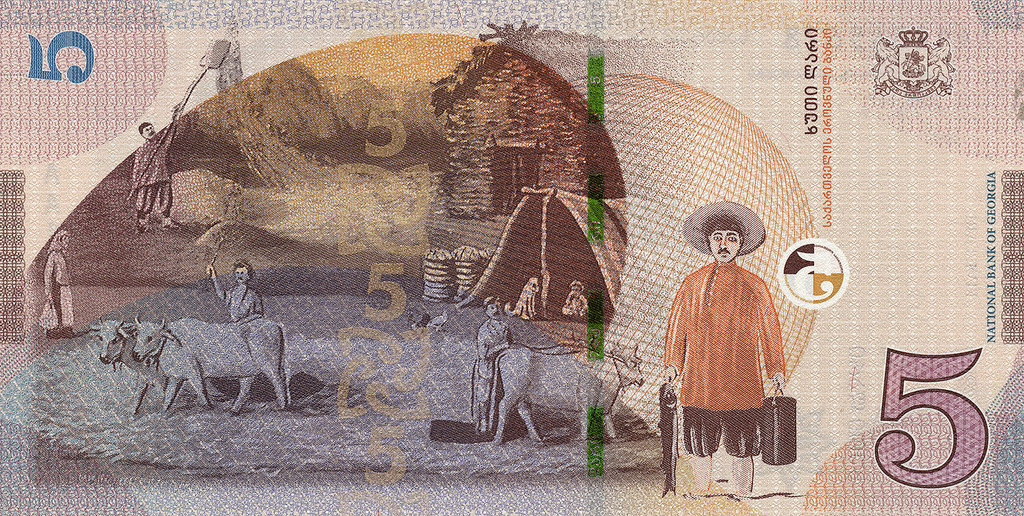
Featured image: საქართველოს ეროვნული ბანკი (National Bank of Georgia) (Public domain) via Wikimedia Commons.

Leave a Reply