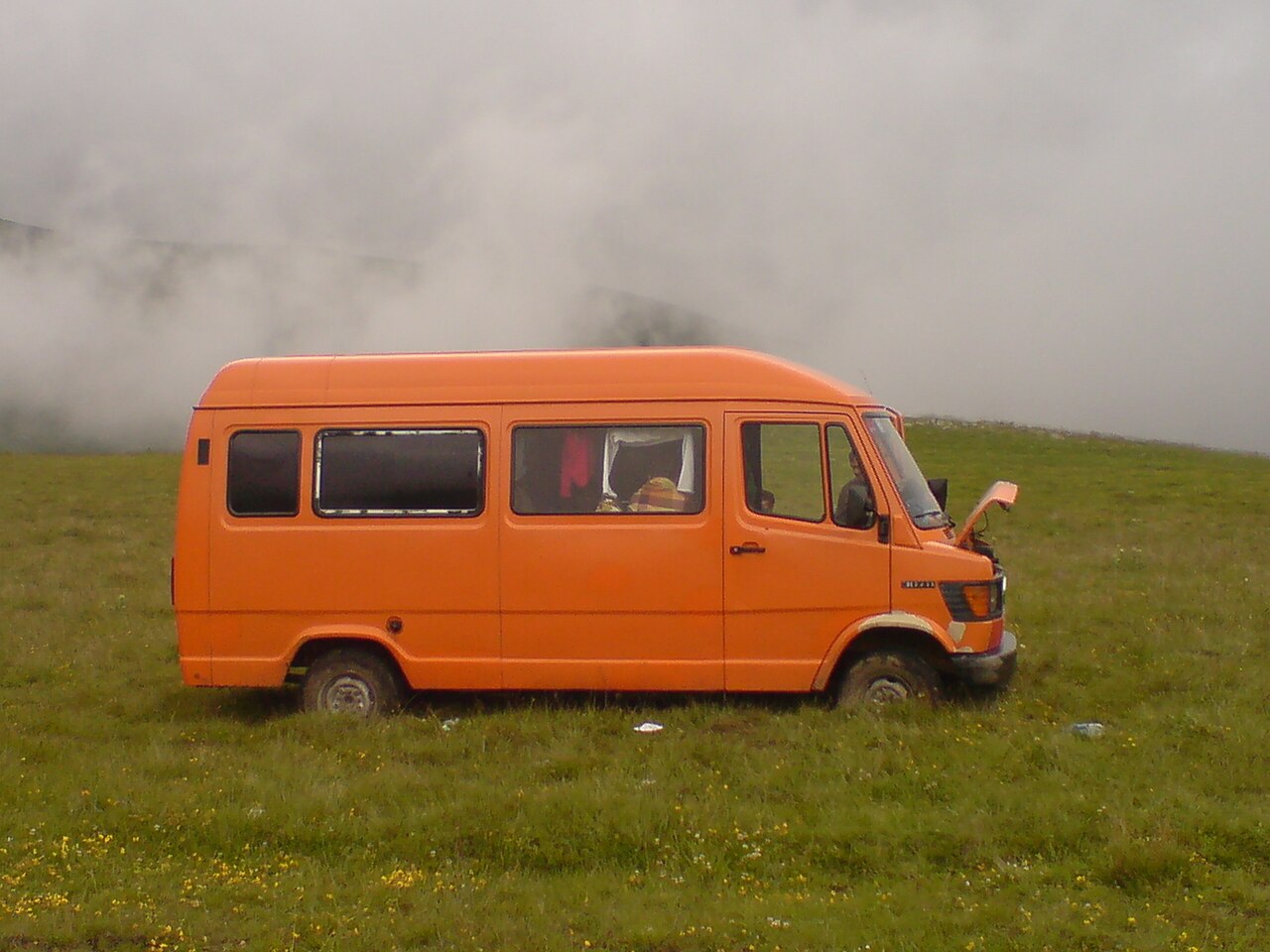
Didube is where you go to leave Tbilisi cheaply, and it is not a bus station in the sense you are picturing. It is a used-car market with a bazaar wedged into it and minibuses parked in whatever space is left: no departure board, no announcements, next to nothing in an alphabet you can read.
The system underneath is simple. Nobody there explains it, so here it is, in the order you meet it.
The first ninety seconds out of the metro
Take the red line (Line 1) to Didube: 1₾ with a Metromoney card (2₾ refundable deposit for the card), or 1 to 1.5₾ tapping a contactless bank card. Either way it buys 90 minutes of free transfers, useful if you pick the wrong station.
Come by metro even if you would normally hail a Bolt. Rustaveli Avenue is closed to vehicles from 23 July 2026 until the end of November, pushing old-town taxis onto side streets and the quays and turning a 20-minute drive into 40.
Up the escalator, through the underpass, past the bakery windows and fruit stalls, and the lots open out. Not one terminal but several: low buildings, kiosks and car parks stitched together by driving lanes. Vans for Kazbegi and the north cluster near an Aversi pharmacy. Western runs sell from desks branded Nige and Okriba, separate companies rather than platforms, which is why one window shrugs at your destination. The most detailed English map of the layout, checked August 2026, goes building by building.
Say the destination out loud, then show it written down
Every van props a small plastic sign on the dashboard with its final stop, and most are Georgian only. The script shares nothing with the Latin alphabet, so you cannot half-sound it out the way you might with Cyrillic. Popular routes sometimes carry a second line in English. Sometimes.
Do both at once: say the name to the nearest driver or kiosk, and have it on your phone in Georgian to hold up. Asking beats searching. Drivers stand around all day and will point you across two lots mid-conversation; if two answers disagree, ask a third.
- Mtskheta — მცხეთა
- Gori — გორი
- Borjomi — ბორჯომი
- Kazbegi / Stepantsminda — ყაზბეგი / სტეფანწმინდა (both names, same town)
- Kutaisi — ქუთაისი
- Batumi — ბათუმი
Our advice: pin those six lines in a phone note before you leave your accommodation, not as a screenshot in the camera roll. Scrolling 400 photos one-handed in a car park is a miserable way to find something you already have.
The van leaves when it fills, not when the clock says
This one rule governs everything else at Didube. Timetables exist, but a timetable here is a floor, not a promise: once the last seat sells the driver goes, even if that is 20 minutes early. If seats do not sell, he sits and waits.
So arrive 30 to 40 minutes early: the van you mentally booked can leave without you. And favour mid-morning, when enough people are moving that vans fill in a quarter of an hour, unlike the 4pm departure that sits half-empty while you wonder if it is going.
Buy the ticket, then drink your coffee within sight of the van. Wandering off into the bazaar is how people miss departures.
Cash, bags, and where the toilets are
Cash in lari, always: no cards, no payment apps. On bigger routes you pay a kiosk and get a paper ticket with a seat number; on short hops like Mtskheta you hand the note to the driver, sometimes only once you are moving. Breaking a 100₾ note for a 2₾ fare earns a look.
ATMs sit by the metro exit and inside the market buildings, the last easy cash point before a lot of these destinations. Draw the day’s money here rather than trusting a small town to have a machine that likes your card.
Toilets are scattered through the complex, cost 20 to 50 tetri and are paid to an attendant in coins, so keep shrapnel on you. Bags go in the back or on your knees, and an oversized one can add about 5₾ on the Kazbegi run. Take a front seat if it is free: the only place with a seat belt that reliably works.
What each ride costs
Fares were checked in August 2026 and stepped up in May after fuel prices rose, so read them as the shape of the thing.
- Mtskheta — about 2₾, and the ride is 45 to 60 minutes, not the half hour half the internet claims. Vans every 20 to 30 minutes from 8am. Jvari Monastery on the ridge above is not walkable: 7 km by road, 40 to 50₾ taxi return. See our Mtskheta day trip guide.
- Gori — 5 to 7₾, an hour to 90 minutes, every 15 to 20 minutes from 7:30am.
- Borjomi — around 15₾, 2 to 2.5 hours, hourly, sold at the Nige desks.
- Kazbegi (Stepantsminda) — 15 to 20₾, 3 to 3.5 hours, heaviest run of departures between 8am and 11am, one rest stop en route. Our Kazbegi day trip guide covers the 4×4 up to Gergeti at the far end.
- Kutaisi — about 25₾, 4 to 4.5 hours, hourly from 6am.
- Batumi — 25 to 35₾, a long 5.5 to 6 hours. Night departures exist; sleeping upright on that road is not rest.
In winter, take a Kazbegi van before 2:30pm. The Jvari Pass after dark, on worn tyres, is not a thing to be brave about.
The two hustles you will actually meet
Neither is dangerous. Both waste your morning.
The first is the driver whose van is leaving now. It leaves now in the sense that it goes the moment it fills, which could be six minutes or 70. He is not lying, exactly; he wants your seat sold before the van two rows over sells it. One question before you pay: how many seats are still empty? Then count them yourself, if the answer sounds optimistic.
The second is being steered off the marshrutka altogether. Shared-taxi drivers work the walk-in from the metro, and a confused foreigner with a suitcase is the best customer of their day. Shared taxis are a real option, worth it on the Kazbegi road, but an honest one is priced per seat and quoted next to the van fare. Quotes of 50 to 70₾ for a Batumi seat that costs 30₾ on the bus come out of this conversation. Buy inside the station, not from whoever found you in the car park.
Wrong station, wasted morning
Plenty of people ride out to Didube for a destination that has never once departed from it. Didube runs north and west; east and south go elsewhere.
- Kakheti wine country — Sighnaghi, Telavi, Kvareli, Sagarejo: Navtlughi station, beside Samgori metro on the far east side. Not Didube. Sighnaghi vans are timetabled at 9am, 11am, 1pm, 3pm, 5pm and 6pm, and some stop short in Tsnori, a taxi ride below Sighnaghi, per this route breakdown checked August 2026. More in our Sighnaghi day trip guide.
- Yerevan, Baku and other international runs: Ortachala, down by the river, the Yerevan bus leaving around 9am on a five-and-a-half-hour crossing. Current options and our Yerevan and Baku guide both start there.
- Rustavi and the eastern suburbs: Samgori.
Frequently asked questions
Which bus station in Tbilisi has marshrutkas to Kazbegi?
Didube, on metro Line 1. Vans park near an Aversi pharmacy inside the complex and you buy at the kiosk beside them, 15 to 20₾. Departures thin out after lunch.
How early should I get to Didube?
Half an hour before the one you want, 40 with a big bag or on an infrequent route. Vans go the second the last seat sells, which can be ahead of the printed time, and nobody comes looking for you.
Can you pay for a marshrutka with a card?
No. Lari in cash, at a kiosk or into the driver’s hand. Withdraw at the ATMs by the metro exit before you hunt for your van, and carry small notes so change is not an argument.
Do marshrutkas to Sighnaghi leave from Didube?
They do not. Sighnaghi, Telavi and the rest of Kakheti go from Navtlughi station beside Samgori metro, on the opposite side of the city. Coming to Didube for a wine-country day costs an hour and a metro fare.
One thing worth settling before you board: the return. Small Georgian towns run their last van back to Tbilisi far earlier than you expect, often mid-afternoon, and the driver who dropped you off is the cheapest person to ask. On arrival, not at 5pm.
Featured image: Morten Oddvik from Trondheim, Norway (CC BY 2.0) via Wikimedia Commons.

Leave a Reply