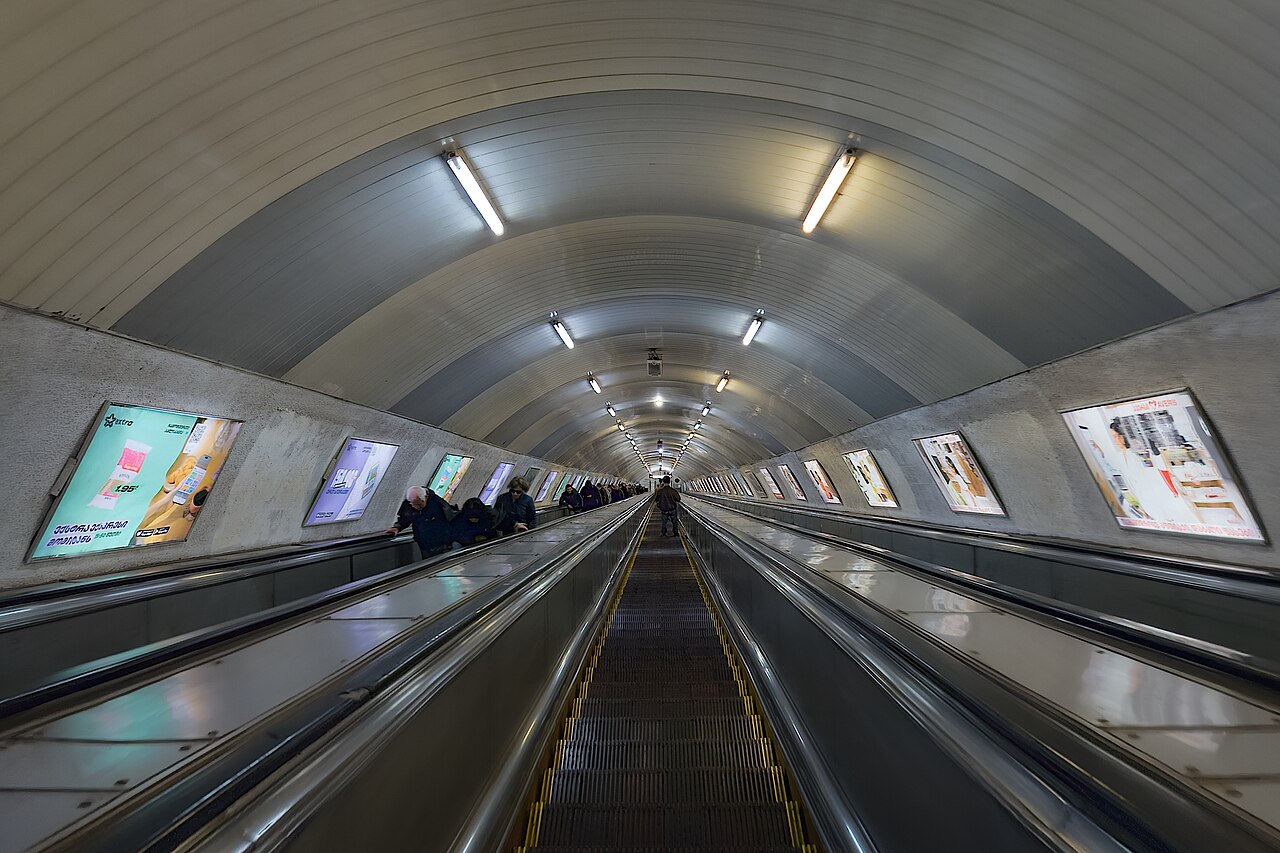
Short answer: for a three-day city break you almost certainly don’t need one. Tap a contactless Visa, Mastercard or phone wallet straight on the gate and the whole weekend costs you a few lari more than the plastic would have.
The 2₾ Metromoney card earns its place in four situations, and all four are worth checking before you queue at the cashier: you’re travelling as a group, you want the Narikala cable car, you’re staying longer than a week, or you make a lot of separate hops in a day rather than walking.
Run the numbers first
Metro, bus and marshrutka fares are 1₾ a journey with Metromoney, and one tap opens 90 minutes of free transfers: metro, then a bus, then a marshrutka, then the metro again, all on that single lari. A contactless bank card gets the same 90-minute window but the per-tap price is where the sources part company. the metro network’s own ticket page quotes ₾1 for a bank-card tap; Wander-Lush, written from Tbilisi, puts foreign contactless nearer ₾1.50 (both checked August 2026). Assume the higher figure and you won’t be annoyed at the turnstile.
So price a realistic long weekend. Eight journeys over three days on Metromoney is 8₾ of fares plus the 2₾ deposit, and the deposit comes back. On contactless at the higher rate it’s 12₾. The whole difference is less than two khinkali in Old Town.
Stretch that to a week and the gap opens up. Twenty journeys is 20₾ on the card against 30₾ on contactless, and the deposit has already paid for itself by your fourth ride if you’re being charged the 1.50₾ rate. Fifty tetri a tap, four taps, there’s your 2₾.
There’s a third option that rarely gets a mention: unlimited passes load onto the Metromoney card itself. A day is 3₾, a week 20₾, a month 40₾, per the metro network’s own ticket page in August 2026. Our advice is to ignore the day pass unless you’re commuting out to Didube or Isani every morning. Four separate journeys in one day sounds easy until you notice that central Tbilisi is walkable and the metro has two lines, so most sightseeing days come in at two or three taps.
The cable car is what settles it for most visitors
This is the edge case that flips the decision, and it has nothing to do with fare maths. The Rike–Narikala cable car takes Metromoney and effectively nothing else: 2.5₾ each way, no cash at the barrier, and foreign contactless can’t be counted on there the way it can on the metro. A Bank of Georgia card sometimes goes through. Yours is a coin flip.
If you’re riding up to Narikala Fortress rather than climbing the switchbacks from Old Town, buy the card. The good news is that it behaves like a bus fare up there: one card is not personalised, so it can pay for your whole group in one go, as long as the balance covers everyone. Five lari gets two of you up and back down.
The blue Travel Card that residents carry for season passes is a different piece of plastic and it isn’t accepted on the cable car. Plain white Metromoney is the one you want.
Mtatsminda takes neither card
The funicular up Mtatsminda belongs to the park, not the city, so your Metromoney does nothing there. A ride is 12₾ each way and before you can pay for it you have to buy the park’s own rechargeable card for another 2₾, which then covers the funicular, the cable car at the top and the fairground rides. Two people going up and back: 2₾ for the card plus 48₾ in fares.
It catches people out because they’ve just done Narikala for 5₾ return and assume Tbilisi’s other hill works the same way. It doesn’t. Budget for Mtatsminda as a separate outing with its own ticketing, not as another transport tap.
One card covers a group above ground, not below it
On buses and marshrutkas you tap the same Metromoney card once per passenger and it takes a fare off each time. Three of you, one card, one queue at the cash desk. That single fact is why a group of friends should buy one well-loaded card rather than four thin ones.
The metro won’t play along. Turnstiles are one tap per person, so a shared card means passing it back over the barrier after each entry. Fine with two people. Tedious and conspicuous with five, and station staff will eventually say something.
Pay a driver in cash and you lose the transfer window
The 90-minute window only opens on a cashless tap. Hand coins to a driver and that boarding is billed on its own, with no clock running behind it, so the next vehicle costs you full price again.
In practice the city network is cashless anyway. There are no metro tokens, no coin boxes on the buses, and drivers don’t sell tickets. Where money still changes hands is on the privately run minibuses heading out of town from Didube and Ortachala, and those were never inside the 90-minute system to begin with. If you want to keep the transfers, keep tapping.
How to get your 2₾ back
Most guides shrug and tell you to keep the card as a souvenir. You don’t have to. The deposit is refundable if you take the card and the paper receipt the cashier handed you back to a metro station cash desk within 30 days of buying it, according to Wander-Lush. No receipt, no refund, so don’t drop the slip in the bin on your way through the gate.
The travel credit is a separate question, and here the answer is less friendly: leftover balance stays on the card. That’s the argument for loading 10₾ to 15₾ for a few days rather than a round 50₾ you’ll never spend. If you’re short, top up mid-trip; the machines are everywhere and the queues move. Read our notes on handling money in Tbilisi before you start feeding notes into anything.
Buying and topping up, in practice
Cash desks inside every metro station sell the card, as does the Rike station of the Narikala ropeway. Ask for Metromoney, hand over your money, say how much credit you want on top of the deposit. No Georgian required; the cashiers do this hundreds of times a day and the number is the only word that matters.
- Bank of Georgia express payboxes — the orange-and-white machines on street corners and in supermarkets. They take notes and coins, and there’s an English menu.
- Station machines inside the metro. Notes only, so keep a 5₾ or 10₾ note back rather than trying to feed in a 100.
- Both stations of the Rike–Narikala cable car, which is handy because that’s where you’ll notice the balance is low.
One thing worth knowing before you land: there is no metro station at Tbilisi International, so your first ride into town is bus 337, which runs every 15 to 20 minutes across its scheduled day, roughly 07:00 to 23:00; departures do continue after that but sparsely enough that a very late landing is a Bolt job. Tap a bank card for that one and settle the Metromoney question at whichever metro station you reach first. Our full walk-through of the airport-to-centre run has the stop details.
Frequently asked questions
Do I need a Metromoney card in Tbilisi or can I just use my bank card?
A contactless bank card is enough for a short stay: it works at metro turnstiles and bus validators and carries the same 90-minute transfer window. Buy the Metromoney card if you want the cable car to Narikala, if you’re paying for more than one person, or if you’re here long enough for the small per-tap difference to add up.
How much is the Metromoney card and can I get the 2 lari back?
The card is 2₾ and that sum is a deposit rather than credit, so you load fares on top of it. Return the card with its purchase receipt to a metro cash desk inside 30 days and the 2₾ comes back. Any unused travel balance does not.
Can two people use one Metromoney card?
On buses, marshrutkas and the Narikala cable car, yes — tap once per person and the card deducts a fare each time. Metro turnstiles admit one passenger per tap, which means handing the card back over the barrier. Season passes loaded on the card can’t be shared at all.
Does Metromoney work on the Mtatsminda funicular?
No. Mtatsminda runs its own rechargeable park card, which costs 2₾ on top of a 12₾ funicular fare each way and also pays for the rides at the top. The Narikala cable car is the one that takes Metromoney, at 2.5₾ a direction.
If you take one thing from this: buy the card at the same moment you decide to ride the cable car, not before, and keep the receipt in the same pocket as the card. Fares and deposits here were checked in August 2026 against the operator’s own tariff listing at Tbilisi Transport Company. For the rest of the network — which bus goes where, what the marshrutka signs mean, why the metro escalators move at that speed — see our guide to getting around Tbilisi.
Featured image: lumoplank (CC0) via Wikimedia Commons.


Leave a Reply